TL;DR: The best water damage restoration company for your situation is an IICRC Certified Firm that gives you a written scope before demolition starts, documents moisture readings daily, bills your insurer directly when possible, and tells you upfront who owns the rebuild. Skip anyone who can’t produce a certification number, wants a large cash deposit before mitigation, or pressures you to sign a blank work order.
If you’re typing “best water damage restoration near me” into your phone with water still pooling on the floor, you don’t have time to read ten websites and guess which one is telling the truth. Every company’s homepage says “trusted,” “24/7,” and “certified.” The real differences show up in three things: who actually holds the credentials, what’s in the paperwork before work starts, and who’s accountable if the drying goes wrong. This checklist covers all three, so you can evaluate any company that shows up in your Shenango Valley search results, not just one name.
What certifications should a water damage restoration company actually have?
The baseline is an IICRC Certified Firm with technicians holding a Water Restoration Technician (WRT) credential, and the firm’s drying work should follow the ANSI/IICRC S500 Standard for professional water damage restoration.
That standard sets the actual rules for how a structure gets classified (clean water, gray water, or black water), how drying equipment is sized to the room, and when a space is considered dry. A company that mentions S500 unprompted, or can explain how they classified your loss, is speaking the language of the standard, not just the marketing around it.
Don’t take a badge on a website at face value. Ask for the firm’s IICRC registration and, if technicians are on-site, ask what certifications they personally hold. A legitimate company answers this without hesitation.
What questions should you ask before signing a work authorization?
Ask for a written scope of work before any demolition, not after, so you know exactly what’s being removed and why before it happens.
A handful of questions separate a straightforward hire from a six-month headache:
- Will you bill my insurance company directly, or do I pay and get reimbursed? Direct billing matters when a loss runs into the thousands.
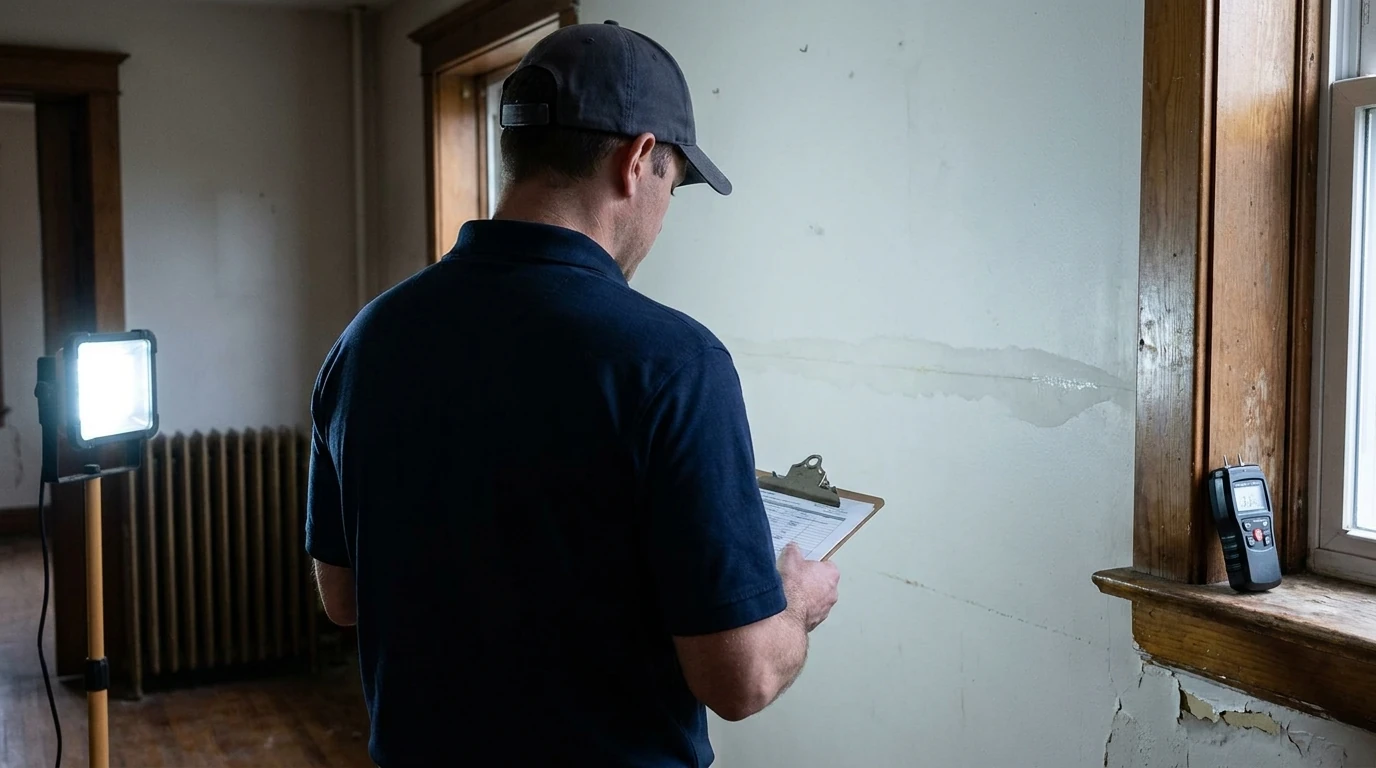
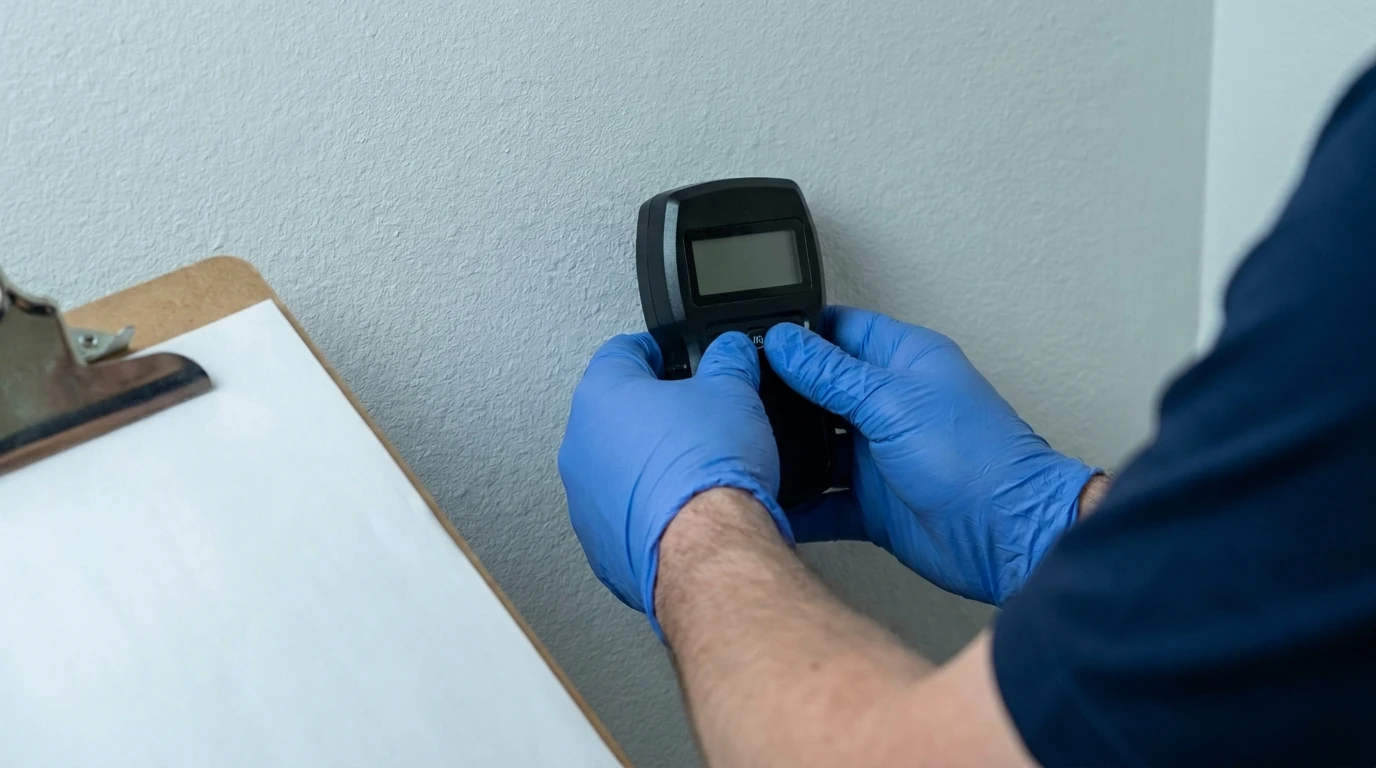
- Will you document moisture readings daily, and will I get copies? This paperwork is what your adjuster uses to approve the claim, and what protects you if a dispute comes up later.
- Who does the rebuild after mitigation, your crew or a sub you hire separately? Some companies handle tear-out and drying only, then hand you off. Others carry the job through reconstruction.
- What does the work authorization actually authorize? A vague one-page form that says “all necessary services” with no scope attached is a problem. A specific scope with square footage, equipment count, and anticipated drying days is not.
- What happens if I cancel after mitigation starts? Get the cancellation terms in writing before you sign, not after.
If a company won’t put the scope in writing before starting demolition, that’s your answer about whether to hire them.
What are the red flags that mean you should keep looking?
The clearest red flag is a company that showed up unsolicited after a storm and wants cash upfront before doing any mitigation work.
Other patterns worth walking away from:
- No local address, just a call center or a P.O. box
- Can’t or won’t produce an IICRC certification number when asked
- Pushes you to sign a blank or vague authorization “so we can get started”
- Never mentions moisture documentation, drying logs, or a drying standard
- Quotes a flat price for water damage mitigation before even inspecting the structure (the actual cost depends on category of water, square footage, and how far moisture traveled, which no one can know without an inspection)
- Discourages you from calling your insurance company at all
None of these alone is automatically disqualifying, but two or more together is a reason to call someone else.
Should you just use the company your insurance adjuster recommends?
You are not required to use your insurer’s preferred vendor; you’re allowed to hire your own restoration company as long as the work fits your policy’s covered scope.
Preferred vendor lists exist mostly for the insurer’s convenience, and the companies on them aren’t necessarily wrong choices, but they also aren’t your only option. The Insurance Information Institute’s guide to settling claims after a disaster confirms policyholders have the right to choose their own contractor in most states. If you want a second opinion or prefer a local crew you can reach directly, you can say so. Just make sure whoever you hire documents the loss the way your adjuster expects, since that paperwork is what gets the claim paid.
For a side-by-side breakdown of the mitigation-versus-rebuild decision, our guide to choosing a restoration company walks through how to compare quotes without getting steered toward unnecessary work.
What does a reliable company do differently once you’ve narrowed the list?
A reliable company treats the paperwork as seriously as the drying equipment, because the documentation is what gets your claim paid and protects you if a dispute comes up later.
In the Shenango Valley, DISS Restoration is an IICRC Certified Firm that provides a written scope before any demolition, documents moisture readings daily, and bills insurers directly on most jobs. If you’re comparing options across the Youngstown-Warren market specifically, our ranked local shortlist of water damage restoration companies in Youngstown, OH goes deeper on individual companies in that area. For the broader service footprint across Pennsylvania and Ohio communities, see the full service area list.
Whichever company you choose, ask to see the water damage restoration process laid out before you sign anything. A company confident in its process will walk you through it without being asked twice.
About DISS Restoration
The company is an IICRC Certified Firm serving Farrell, PA and the surrounding Shenango Valley since 2021, holding IICRC WRT, FSRT, AMRT, and ASD credentials along with EPA Lead-Safe certification. It operates licensed and insured, around the clock, with technicians handling water damage restoration, mold remediation, fire and smoke restoration, and reconstruction across western Pennsylvania and the Mahoning Valley in Ohio.
Need help now? Call DISS Restoration at (724) 981-1441.