24/7 Emergency Storm Damage Restoration in Farrell
24/7 emergency storm damage restoration in Farrell and surrounding areas. IICRC-certified, insurance billing accepted. Call (724) 981-1441.
Storm damage emergency in Farrell? We answer 24/7 and work to get a crew on-site fast. A downed tree on the roofline, wind-driven rain forcing its way under shingles, or a flooded basement after a Shenango River area storm front all start the same clock: the longer water and debris sit against framing, drywall, and insulation, the more of the structure has to come out instead of just dry out. Call now and we start the damage assessment before the next rain band moves through.
What Storm Damage Restoration actually involves
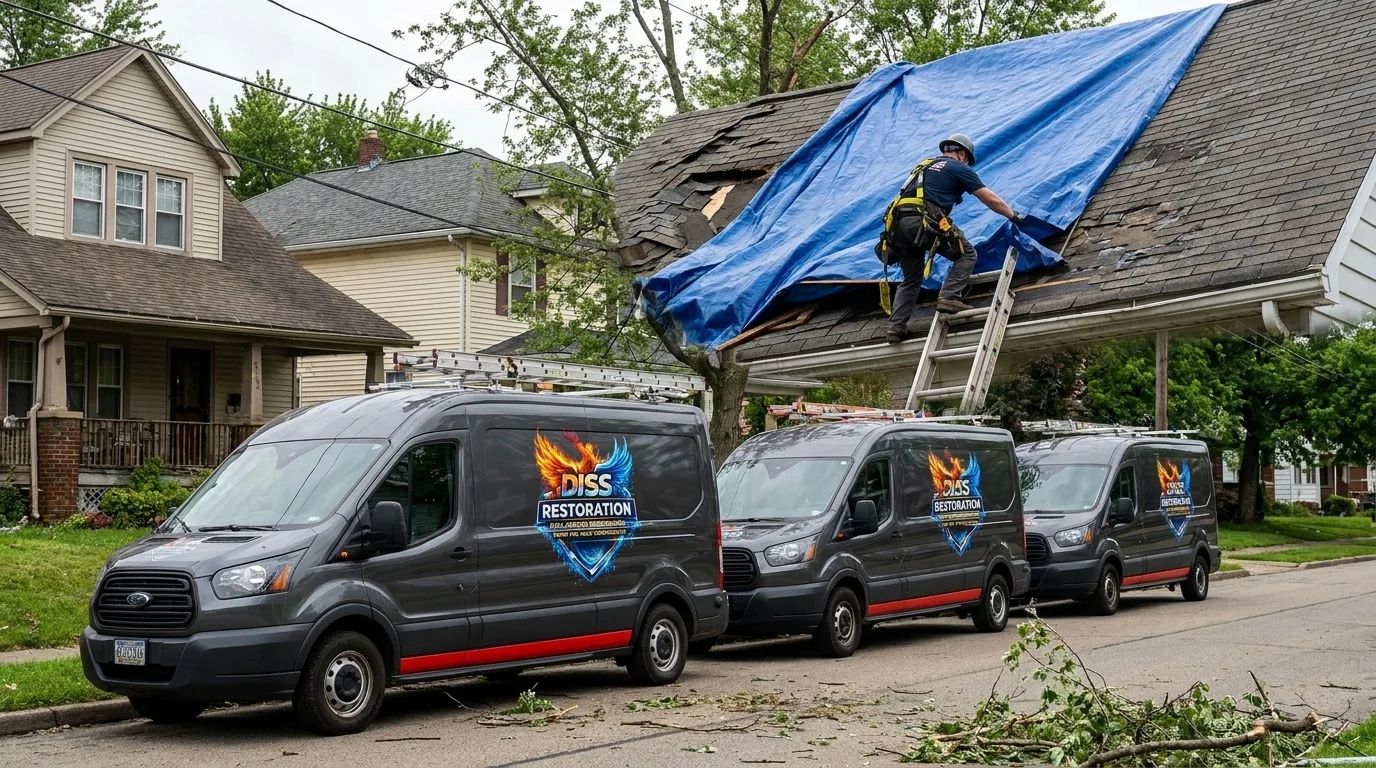
Storm damage restoration covers the mix of wind, water, and impact damage that hits a property all at once: shingles torn off and the deck exposed, a tree limb punched through a roof plane, gutters ripped loose and dumping water against the foundation, or a sewer backup from a storm surge overwhelming the municipal line. It’s rarely one problem. A single severe weather event in this part of Pennsylvania can combine roof penetration, interior water intrusion, downed trees against siding, and flooded crawlspaces on the same job. The work starts with stopping further intrusion (tarping, board-up, temporary drainage) and only then moves into extraction, drying, and repair. Equipment includes extraction units for standing water, air movers and dehumidifiers set up per IICRC S500 drying principles, moisture meters to track what’s happening inside wall cavities, and tarping or board-up materials rated to hold through follow-on weather, not just the first night.
Our process
- Safety and intrusion control. Before anything else, we check for compromised structural elements, downed power lines, and active roof or window breaches, and install emergency tarping or board-up to stop additional water and debris from entering.
- Tree and debris clearance from the structure. Limbs or trunks resting against a roofline or wall get stabilized or removed in a way that doesn’t collapse weakened framing further, coordinated with structural trades where the damage is load-bearing.
- Water extraction and drying. Any water that made it inside, from roof penetration, wind-driven rain, or flooding, gets extracted and the affected materials are dried and monitored using the same moisture-tracking approach applied on interior water losses.
- Damage documentation for the claim. Photos, moisture readings, and a written scope of the storm-specific damage (wind versus water versus impact) are compiled, since adjusters evaluate these causes differently under most policies.
- Repair and reconstruction scope. Once the property is dry and secured, we scope what needs to be rebuilt, from roof decking to drywall to flooring, and hand over a written plan before work begins.
What separates a good storm damage response from a bad one
The most common mistake after a storm is treating the roof tarp as the end of the job instead of the start of it. Wind-driven rain pushes water sideways under shingles and around flashing, and it tracks along rafters and down into wall cavities far from the visible hole. An operator who only patches the obvious breach and doesn’t check attic insulation, top plates, and ceiling drywall for hidden moisture leaves the structure set up for a mold problem weeks later. Insurance adjusters pay close attention to the distinction between wind damage (often covered broadly) and water damage that follows (sometimes subject to different sublimits or exclusions), so documentation needs to separate cause from effect clearly: this shingle line was torn by wind, this drywall stain followed from the resulting roof breach. Another common gap is skipping moisture mapping on framing that looks dry at the surface. Lumber can read dry on the face while the core is still saturated, and closing up a wall too soon traps that moisture behind new drywall.
What does Storm Damage Restoration cost?
Costs vary widely because storm losses are rarely a single type of damage; a tarp-and-dry job is a different scope than one that includes tree removal, roof decking replacement, and interior reconstruction. Every loss gets a written scope from DISS Restoration before work begins, since no two storms damage a property the same way. Most residential storm losses are covered under the wind and hail or water damage sections of a homeowners policy, though coverage for tree removal and certain flood-related water intrusion can depend on the specific policy language.
| Scenario | Typical range |
|---|---|
| Emergency tarping, single roof section | $400 - $1,500 |
| Board-up for broken windows or doors | $300 - $1,200 |
| Tree removal from structure, no major framing damage | $1,500 - $5,000 |
| Water extraction and drying, one to two rooms | $1,500 - $4,500 |
| Roof deck repair and reshingling, partial roof | $4,000 - $12,000 |
| Full interior reconstruction after major storm intrusion | $15,000 - $50,000+ |
Seasonal & regional considerations
Western Pennsylvania sees its heaviest storm activity in late spring and summer, when fast-moving thunderstorm lines bring high wind gusts and short, intense downpours that overwhelm aging gutters and downspouts faster than a steady rain would. Mature tree canopy in older Farrell-area neighborhoods means wind events carry a higher risk of limb and trunk damage to roofs than in newer developments with younger trees. Winter nor’easters and ice accumulation add a second risk window, where ice damming on older roof lines can force meltwater back under shingles well after the storm itself has passed.
Service area
DISS Restoration responds to storm damage throughout Farrell and the surrounding Shenango Valley communities, including Sharon, Hermitage, and the greater Mercer County area.
If a storm has left your roof, siding, or basement compromised, don’t wait on the next weather system to make the damage worse. Call (724) 981-1441 to start emergency tarping and a full storm damage assessment.
Services We Handle
- Emergency Storm Damage Repair
- Hurricane Damage Restoration
- Storm & Wind Damage Restoration
- Wind Damage Repair
- Wind Damage Restoration
Frequently Asked Questions
Does homeowners insurance cover storm damage restoration?
How do you tell the difference between wind damage and water damage on a roof?
How quickly does a downed tree need to come off a roof?
What happens if water got into the walls during the storm but the drywall looks fine?
Can you board up broken windows and doors the same day as a storm?
Looking for the best storm damage restoration company in Farrell?
DISS Restoration provides storm damage restoration in Farrell, PA and the surrounding area, and has served local property owners since 2021. Customers rate us 4.6 out of 5 stars across 87 Google reviews. We answer calls 24/7 — call (724) 981-1441 for immediate help.
Need Storm Damage Restoration now?
We respond 24/7 across Farrell and surrounding PA cities.
Related Coverage
- Our Restoration Services
- Contact DISS Restoration
- 24/7 Emergency Storm Damage Restoration in Austintown
- 24/7 Emergency Storm Damage Restoration in Boardman
- 24/7 Emergency Storm Damage Restoration in Campbell
- 24/7 Emergency Storm Damage Restoration in Canfield
- 24/7 Emergency Storm Damage Restoration in Girard
- 24/7 Emergency Storm Damage Restoration in Greenville
- 24/7 Emergency Storm Damage Restoration in Hilltop
- 24/7 Emergency Storm Damage Restoration in Hubbard
- 24/7 Emergency Storm Damage Restoration in Lowellville
- 24/7 Emergency Storm Damage Restoration in McKinley Heights
- 24/7 Emergency Storm Damage Restoration in Mineral Ridge
- 24/7 Emergency Storm Damage Restoration in New Castle