24/7 Emergency Fire Damage Restoration in Farrell
24/7 emergency fire damage restoration in Farrell and surrounding areas. IICRC-certified, insurance billing accepted. Call (724) 981-1441.
Fire damage in Farrell or Shenango Valley? Call now, we answer 24/7. Smoke damage spreads fast after the flames are out, acidic soot etches glass and metal within hours, and the smell works its way into drywall, insulation, and subfloor the longer it sits. If a fire department just cleared your home or you’re staring at a charred kitchen wondering what’s salvageable, the clock on soot damage is already running.
What Fire Damage Restoration actually involves
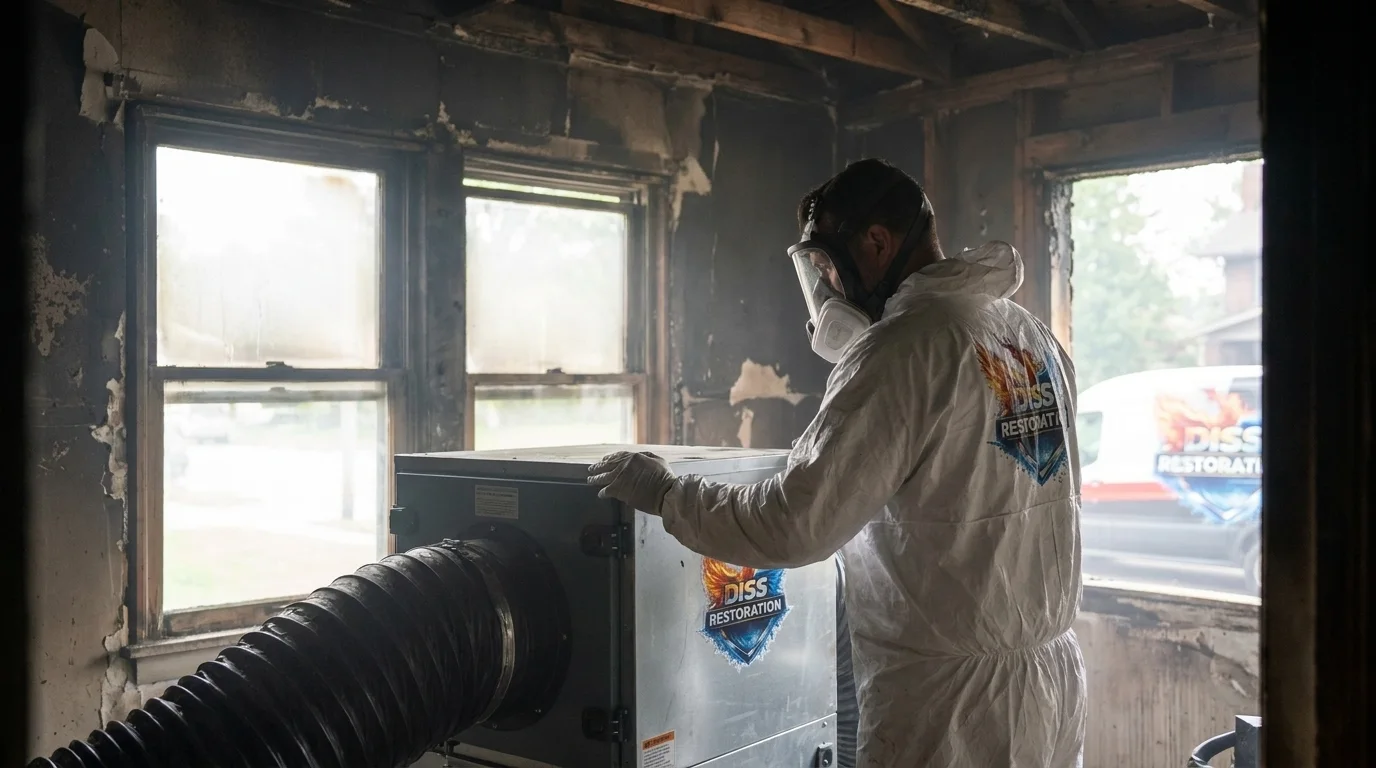
Fire cleanup is not one job, it’s several overlapping ones: structural cleaning, odor control, contents handling, and often a hand-off to reconstruction once the affected materials are out. The work starts with identifying what kind of soot you’re dealing with, because dry protein residue from a kitchen fire behaves completely differently than the thick, oily synthetic soot left by burning plastics and foam furniture. Equipment on a typical loss includes HEPA vacuums, chemical sponges for dry soot, degreasing agents for wet residue, and thermal foggers or ozone generators to break down smoke odor trapped in porous materials. Depending on how far smoke traveled through the HVAC system, ductwork may need cleaning too. A contained residential fire with isolated smoke travel might run a few days of active work; a structure fire with water damage from suppression efforts often stretches into weeks once reconstruction is factored in.
Our process
- Soot characterization. We identify protein, synthetic, or wet smoke residue, since the cleaning agents and techniques differ for each and using the wrong one can set residue deeper into porous surfaces.
- Pre-cleaning and structural triage. HEPA vacuuming removes loose surface soot before any wet cleaning begins, preventing smearing that makes later cleanup harder and more expensive.
- Content pack-out. Salvageable furniture, textiles, and belongings are inventoried and removed to a controlled cleaning environment, both to protect them from further exposure and to give crews clear access to walls, floors, and ceilings.
- Thermal fogging and ozone treatment. Odor-causing particles that have bonded to surfaces or absorbed into materials get treated to neutralize smoke smell at the source rather than masking it.
- Final cleaning and documentation. Surfaces are wiped, sealed, or primed as needed, and everything is photographed and logged to support the insurance claim before reconstruction begins.
What separates a good fire damage response from a bad one
The most common mistake is treating soot removal like general cleaning. Scrubbing dry soot with water or an all-purpose cleaner can drive residue into the pores of drywall, grout, and wood finishes, turning a surface-level stain into a material that has to be replaced instead of restored. Another frequent miss is skipping HVAC and duct inspection, which means smoke odor gets recirculated through the house for months after the visible soot is gone. Adjusters pay close attention to documentation: photos of soot patterns before cleaning, a clear accounting of what was salvaged versus discarded, and a written scope that separates cleaning from reconstruction line items. Structural fire damage also demands judgment calls, charred framing that looks sound can have lost significant strength, and that assessment should come from someone trained to evaluate it, not guessed at.
What does Fire Damage Restoration cost?
Every fire loss is different, and DISS Restoration provides a written scope of work before any cleaning or repair begins so there are no surprises once the job starts. Costs vary based on how much square footage was affected, whether the fire was contained to one room or traveled through walls and attic space, and how much smoke odor has absorbed into porous materials like insulation and carpet padding. Homeowners insurance typically covers fire and smoke damage restoration when the cause is covered under the policy, though coverage for contents versus structure can differ, so it’s worth reviewing your policy’s specifics with your adjuster.
| Scenario | Typical range |
|---|---|
| Smoke odor treatment, single room | $300 - $800 |
| Soot cleaning, contained kitchen fire | $2,000 - $6,000 |
| Whole-house smoke damage, HVAC included | $8,000 - $20,000 |
| Structural fire damage with reconstruction | $20,000 - $60,000+ |
| Contents pack-out and cleaning | $1,500 - $5,000 |
Seasonal & regional considerations
Western Pennsylvania winters bring a spike in heating-related fires, space heaters, chimney flues, and older furnaces in the area’s many pre-1960s homes all carry higher ignition risk once temperatures drop. Farrell’s housing stock includes a good number of older frame and brick structures with original plaster and lath, materials that absorb smoke odor differently than modern drywall and often need more aggressive treatment to fully clear.
Service area
DISS Restoration handles fire and smoke restoration across Farrell and the surrounding Shenango Valley, including Sharon, Hermitage, and Wheatland. Crews are equipped to move quickly between these communities when a fire has just been extinguished and materials are still absorbing smoke damage.
If you’re dealing with soot, smoke odor, or structural fire damage anywhere in the Farrell area, call (724) 981-1441 to begin smoke and soot removal before residue sets deeper into your home’s materials.
Services We Handle
- Fire & Smoke Restoration
- Fire and Smoke Damage Cleanup
- Fire Damage Cleanup
- Fire Damage Cleanup Repair
- Fire Damage Repair
- Fire, Smoke, and Soot Damage
Frequently Asked Questions
Does homeowners insurance cover fire damage restoration?
What's the difference between protein soot and synthetic soot, and why does cleanup vary?
Can smoke odor be removed without replacing drywall or insulation?
How soon after a fire should cleanup start?
What happens to furniture and belongings during fire cleanup?
Looking for the best fire damage restoration company in Farrell?
DISS Restoration provides fire damage restoration in Farrell, PA and the surrounding area, and has served local property owners since 2021. Customers rate us 4.6 out of 5 stars across 87 Google reviews. We answer calls 24/7 — call (724) 981-1441 for immediate help.
Need Fire Damage Restoration now?
We respond 24/7 across Farrell and surrounding PA cities.
Related Coverage
- Our Restoration Services
- 24/7 Emergency Smoke Damage Restoration in Farrell
- Odor Removal and Deodorization in Farrell
- Reconstruction Services in Farrell
- Contact DISS Restoration
- 24/7 Emergency Fire Damage Restoration in Austintown
- 24/7 Emergency Fire Damage Restoration in Boardman
- 24/7 Emergency Fire Damage Restoration in Campbell
- 24/7 Emergency Fire Damage Restoration in Canfield
- 24/7 Emergency Fire Damage Restoration in Girard
- 24/7 Emergency Fire Damage Restoration in Greenville
- 24/7 Emergency Fire Damage Restoration in Grove City
- 24/7 Emergency Fire Damage Restoration in Hermitage
- 24/7 Emergency Fire Damage Restoration in Hubbard
- 24/7 Emergency Fire Damage Restoration in Mercer
- 24/7 Emergency Fire Damage Restoration in Mineral Ridge
- 24/7 Emergency Fire Damage Restoration in New Castle
- How To Choose a Restoration Company in Youngstown (Without Getting Burned)
- The Fire Damage Restoration Process, Explained