Mold Remediation in Farrell
24/7 mold remediation in Farrell and surrounding areas. IICRC-certified, insurance billing accepted. Call (724) 981-1441.
A musty smell in a basement that won’t go away after the dehumidifier runs for a week. Dark speckling creeping along a bathroom ceiling corner. A sump pump that kept up fine until the June rains left the crawlspace damp for three straight weeks. These are the calls that turn into mold remediation jobs, and the window between “we should probably look at that” and “this is now a containment job” is usually measured in days, not months, once conditions are right.
What Mold Remediation actually involves
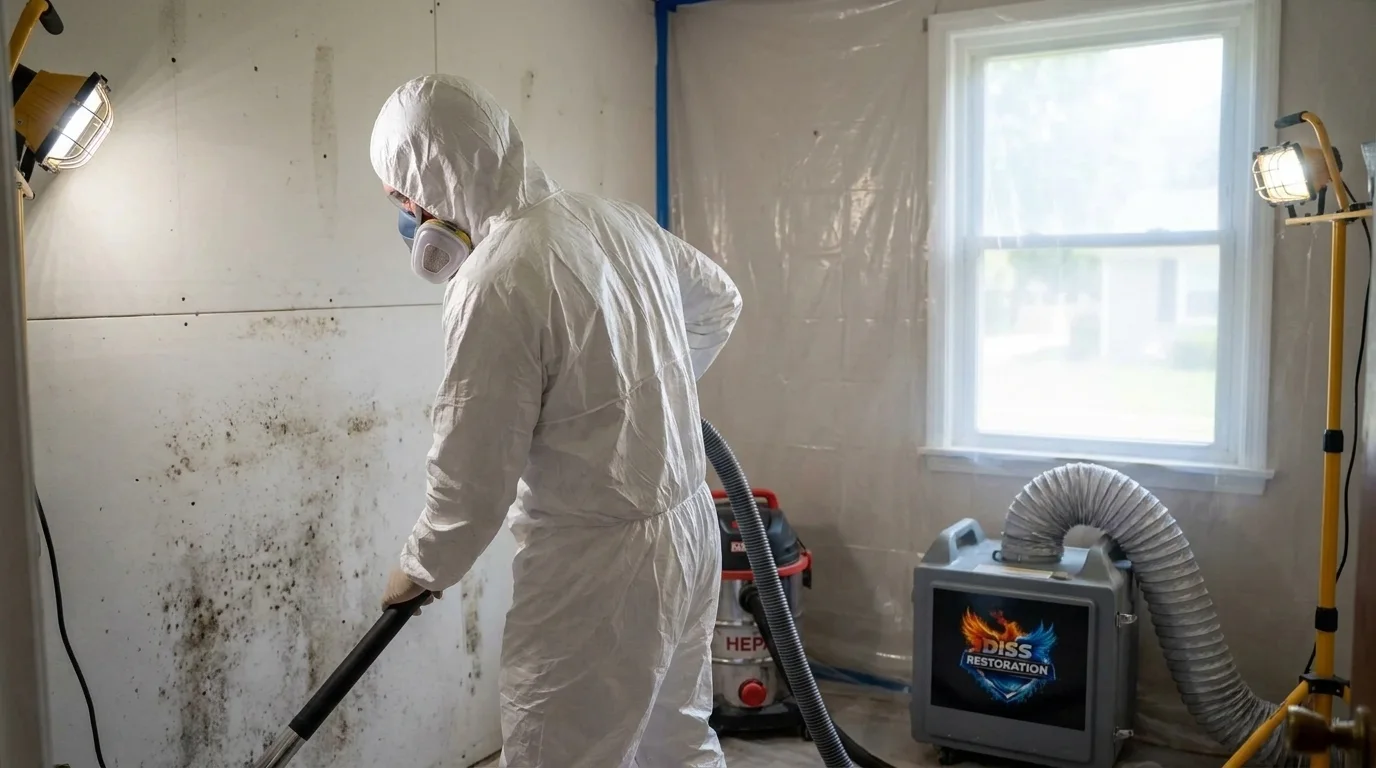
Mold remediation is not the same job as scrubbing a bathroom tile with bleach. Once colonization has spread into porous materials, drywall, insulation, subfloor, framing, surface cleaning just knocks down spores without addressing what’s growing inside the material. Real remediation means identifying the moisture source first (mold doesn’t grow without it), isolating the affected area so spores don’t travel through the HVAC system or into adjoining rooms, removing and bagging contaminated porous material, and treating the remaining structure with antimicrobial agents before anything gets rebuilt. Depending on the square footage and how far the growth has traveled behind walls or under flooring, a job can run from a single afternoon for a small bathroom patch to several days for a basement or crawlspace with sustained moisture exposure. Air scrubbers with HEPA filtration run throughout, and in most cases a third-party clearance test confirms the space is safe before containment comes down.
Our process
- Moisture and extent assessment. We find the source, whether it’s a slow plumbing leak, grading that pushes water toward the foundation, or condensation from a poorly insulated crawlspace, and map how far the mold has actually spread using moisture meters and visual inspection, not just what’s visible on the surface.
- Containment setup. Affected areas get sealed off with poly sheeting and negative air pressure so spores don’t migrate into clean parts of the home while work is underway. The level of containment scales with the size of the affected area, per IICRC S520 guidelines.
- Air sampling and material removal. We document conditions before removal begins, then take out contaminated drywall, insulation, carpet, or trim that can’t be salvaged, bagging it for disposal rather than carrying it through the living space.
- HEPA filtration and antimicrobial treatment. Air scrubbers run continuously to capture airborne spores while remaining structural materials are treated to inhibit regrowth.
- Clearance testing. Before containment comes down, air quality testing confirms spore counts have returned to normal background levels, giving you documentation that the space is clear, not just visually clean.
What separates a good mold remediation response from a bad one
The most common mistake is treating mold as a surface problem and painting over it with a stain-blocking primer without ever finding the moisture source. It comes back, usually worse, because the material underneath is still wet. A second common gap is skipping containment on jobs that look small. Disturbing mold-colonized drywall without sealing the area first is how a one-room problem becomes a whole-floor problem. Insurance adjusters pay close attention to documentation: photos of the moisture source, moisture meter readings, and before/after air sampling results. A remediation job without a clearance test is hard to verify after the fact, which matters if a buyer’s inspector or a future contractor finds a problem again down the line. Our teams hold IICRC AMRT mold certification and work as part of an IICRC Certified Firm, so containment and documentation follow the same standard an adjuster expects to see.
What does Mold Remediation cost?
Costs depend heavily on how far the mold has spread, whether it’s in a finished living space or an unfinished basement, and how much material has to come out versus just treated. Every loss is different, which is why DISS Restoration provides a written scope before any work begins, so you know what’s included and why. Homeowners insurance typically covers mold remediation when it results from a sudden, covered event like a burst pipe, but generally excludes mold caused by long-term neglect or ongoing leaks, so your policy language matters here.
| Scenario | Typical range |
|---|---|
| Small bathroom patch, surface only | $500 - $1,500 |
| Single room, contained growth behind drywall | $1,500 - $4,000 |
| Basement or crawlspace, moderate spread | $3,000 - $8,000 |
| Whole-floor containment with HVAC involvement | $6,000 - $15,000+ |
| Clearance testing (third-party air sampling) | $300 - $600 per round |
Seasonal & regional considerations
Western Pennsylvania’s humid summers and older housing stock, much of it with original fieldstone or block foundations, create ideal conditions for basement and crawlspace mold between late spring and early fall. Homes built before modern vapor barrier standards often lack any moisture control in the crawlspace at all, so a wet season can turn into a mold call even without an obvious leak. Winter brings its own version: condensation on poorly insulated rim joists and attic spaces where warm, moist indoor air meets a cold surface.
Service area
DISS Restoration handles mold remediation for homeowners and property managers in Farrell and throughout the surrounding Shenango Valley, including Sharon, Hermitage, and the greater Mercer County area.
If you’re seeing discoloration, smelling that persistent musty odor, or just had a leak that sat too long before anyone noticed, request an air quality test and get a clear answer on what’s actually growing and where. Call DISS Restoration at (724) 981-1441.
Services We Handle
- Attic Mold Removal
- Basement Mold Removal
- Bathroom Mold Removal
- Black Mold Removal
- Crawl Space Mold Removal
- Emergency Mold Removal
- Mold Removal Behind Walls
- Water Damage Mold Removal
Frequently Asked Questions
Does homeowners insurance cover mold remediation?
What level of mold remediation requires IICRC S520-compliant containment?
How do you know if mold removal worked, or if it's just hidden?
Can I stay in my home during mold remediation?
What's the difference between mold cleanup and mold abatement?
How long does a typical mold remediation job take?
Looking for the best mold remediation company in Farrell?
DISS Restoration provides mold remediation in Farrell, PA and the surrounding area, and has served local property owners since 2021. Customers rate us 4.6 out of 5 stars across 87 Google reviews. We answer calls 24/7 — call (724) 981-1441 for immediate help.
Need Mold Remediation now?
We respond 24/7 across Farrell and surrounding PA cities.
Related Coverage
- Our Restoration Services
- 24/7 Emergency Water Damage Restoration in Farrell
- Mold Inspection and Testing in Farrell
- Odor Removal and Deodorization in Farrell
- Contact DISS Restoration
- Mold Remediation in Austintown
- Mold Remediation in Boardman
- Mold Remediation in Campbell
- Mold Remediation in Canfield
- Mold Remediation in Girard
- Mold Remediation in Greenville
- Mold Remediation in Grove City
- Mold Remediation in Hermitage
- Mold Remediation in Hilltop
- Mold Remediation in Hubbard
- Mold Remediation in McKinley Heights
- Mold Remediation in Mercer
- How To Choose a Restoration Company in Youngstown (Without Getting Burned)
- How To Test for Mold in Your Home (DIY Kits vs a Pro Inspection)
- 7 Signs You Have Hidden Mold (and What To Do Next)