
TL;DR: Biohazard cleanup in Farrell, PA typically costs $400 to $10,000 or more. Small blood cleanups on hard surfaces run on the low end, while unattended deaths involving decomposition, flooring removal, and regulated medical waste disposal push costs higher. The final number depends on square footage, how long fluids sat, how many porous materials need to be removed, and disposal volume.
If you’re dealing with a death in the family home, a violent incident, or a sewage backup that’s left bodily waste on floors and furniture, you’re not just facing a mess. You’re facing a legal and health hazard that household cleaning supplies can’t safely handle. This guide breaks down what actually drives the cost, so you know what to expect before anyone sets foot in your home.
What Counts as Biohazard Cleanup?
Biohazard cleanup covers any situation involving blood, bodily fluids, or human and animal waste that poses an infection risk. That includes unattended deaths, suicides, violent crime scenes, and severe sewage backups that bring contaminated water into living spaces.
These jobs are different from routine cleaning because the materials involved can carry bloodborne pathogens. IICRC training and the OSHA Bloodborne Pathogens standard both govern how technicians handle, contain, and dispose of this kind of contamination. Biohazard cleanup and trauma scene cleanup are related but not identical: trauma scenes often involve more structural demolition, while general biohazard calls can include sewage or unattended-death situations with less physical damage.
How Much Does Biohazard Cleanup Cost in Farrell, PA?
Most biohazard cleanup jobs in the Shenango Valley fall between $400 and $10,000, with the final price set by affected area, how long contamination sat, and how much material has to be removed and disposed of as regulated waste.
| Scenario | Typical Cost Range |
|---|---|
| Minor blood cleanup, small area, non-porous surfaces | $400 - $800 |
| Moderate blood or bodily fluid cleanup, multiple rooms, some porous material removal | $1,000 - $3,000 |
| Unattended death, short discovery window | $3,000 - $6,000 |
| Unattended death, extended decomposition, flooring or subfloor removal | $6,000 - $10,000+ |
| Sewage backup contaminating living space | $1,500 - $4,000 |
| Trauma scene with significant drywall, flooring, or structural removal | $4,000 - $8,000+ |
These are typical industry ranges, not a quote. Every scene is different, and a reputable company should walk the property and provide a written scope before any work starts.
What Changes the Price?
The biggest cost driver is time: how long fluids or tissue sat before cleanup began. The longer contamination has contact with flooring, subfloor, and wall materials, the more has to come out rather than be disinfected in place.
Other factors include:
- Square footage affected, including whether contamination spread to adjoining rooms or down through floor joists
- Porous materials involved, like carpet, padding, drywall, and upholstered furniture, which usually can’t be sanitized and must be removed
- Odor remediation, often requiring ozone or hydroxyl treatment after visible contamination is gone
- Disposal volume, since regulated medical waste is billed separately from standard demolition debris
- Access and containment needs, such as setting up negative air pressure to protect the rest of the home
A small bathroom incident on tile and non-porous surfaces might stay near the bottom of the range. A bedroom with carpet, a mattress, and several weeks of decomposition moves toward the top.
Why Can’t You Just Clean This Yourself?
Biohazard waste can’t go in household trash because it may carry bloodborne pathogens like hepatitis B, hepatitis C, or HIV, and most municipal waste systems aren’t equipped to handle it safely.
Regulated medical waste has to be packaged, transported, and destroyed by a licensed hauler, following standards referenced in OSHA’s bloodborne pathogens guidance. This is also why DIY cleanup is risky: standard gloves and disinfectant wipes don’t protect against pathogens that can live on surfaces for days, and improper handling can spread contamination to parts of the home that were never affected. A severe sewage backup carries similar risk; our post on sewage damage restoration covers how that type of contamination is handled and priced.
Will Insurance Cover Biohazard Cleanup?
Homeowners and landlord policies sometimes cover biohazard cleanup when it follows a covered event, like an accidental death or a crime, but coverage varies widely by policy and insurer.
Most standard policies were written with property damage in mind, not biohazard remediation specifically, so it’s worth asking your agent directly whether cleanup, contents disposal, and odor treatment are included. The Insurance Information Institute’s overview of standard homeowners coverage is a useful starting point for understanding what a typical policy does and doesn’t cover. Keep photos, an itemized scope of work, and all receipts; that documentation is what an adjuster will ask for regardless of the outcome.
What Happens During the First Visit?
A first visit for biohazard cleanup starts with a quiet, private assessment, not a crew showing up in a wrapped van. The technician evaluates the affected area, outlines what can be sanitized versus what has to be removed, and provides a written scope before any work begins.
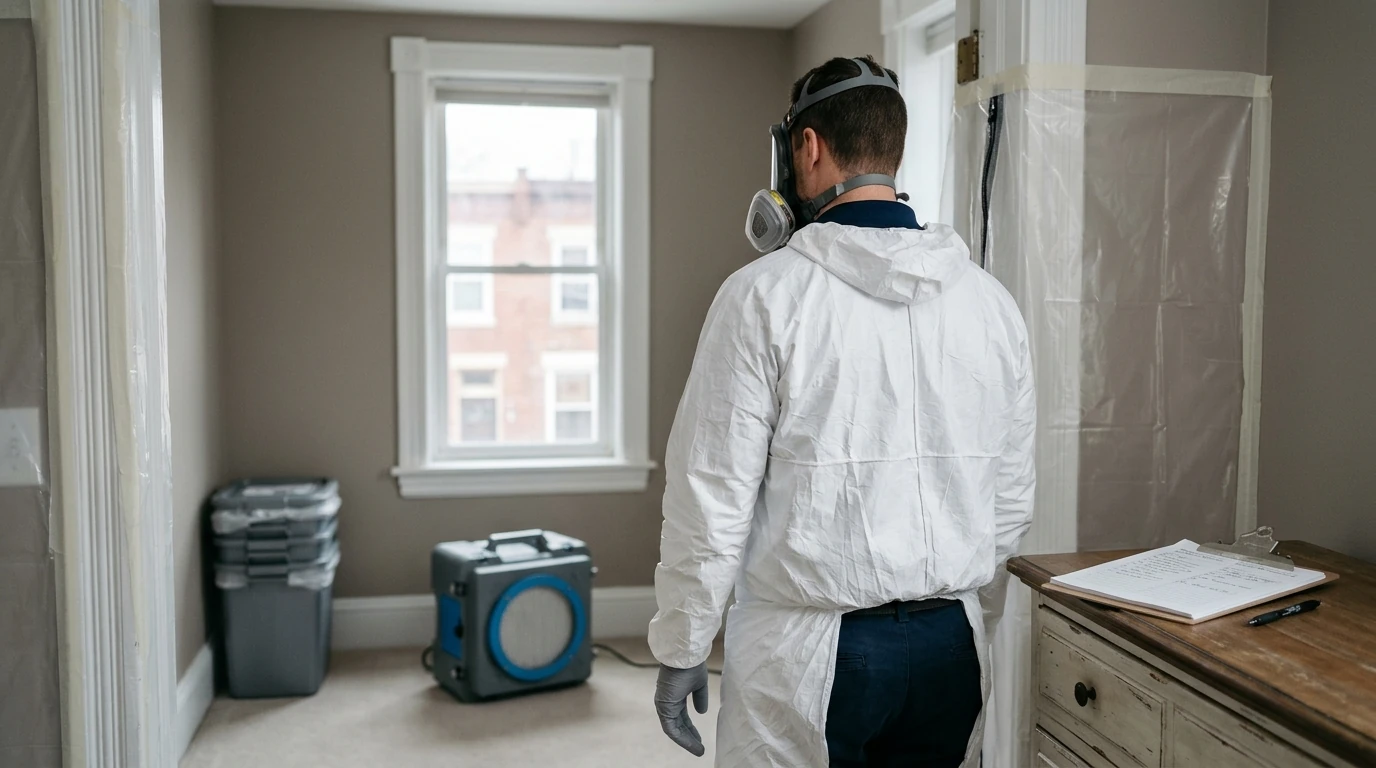
Expect the crew to arrive in full PPE, including Tyvek suits, respirators, and double gloves, and to set up containment before disturbing any contaminated material. In Farrell, DISS Restoration handles these calls with that same discretion, arriving in unmarked vehicles and coordinating directly with family members or property managers so the rest of the process stays private.
If you’re facing this situation right now, the most useful first step is a direct conversation about scope and cost, not a guess based on a general price list. Call DISS Restoration at (724) 981-1441 to schedule an assessment and get a written scope before anything is disturbed.