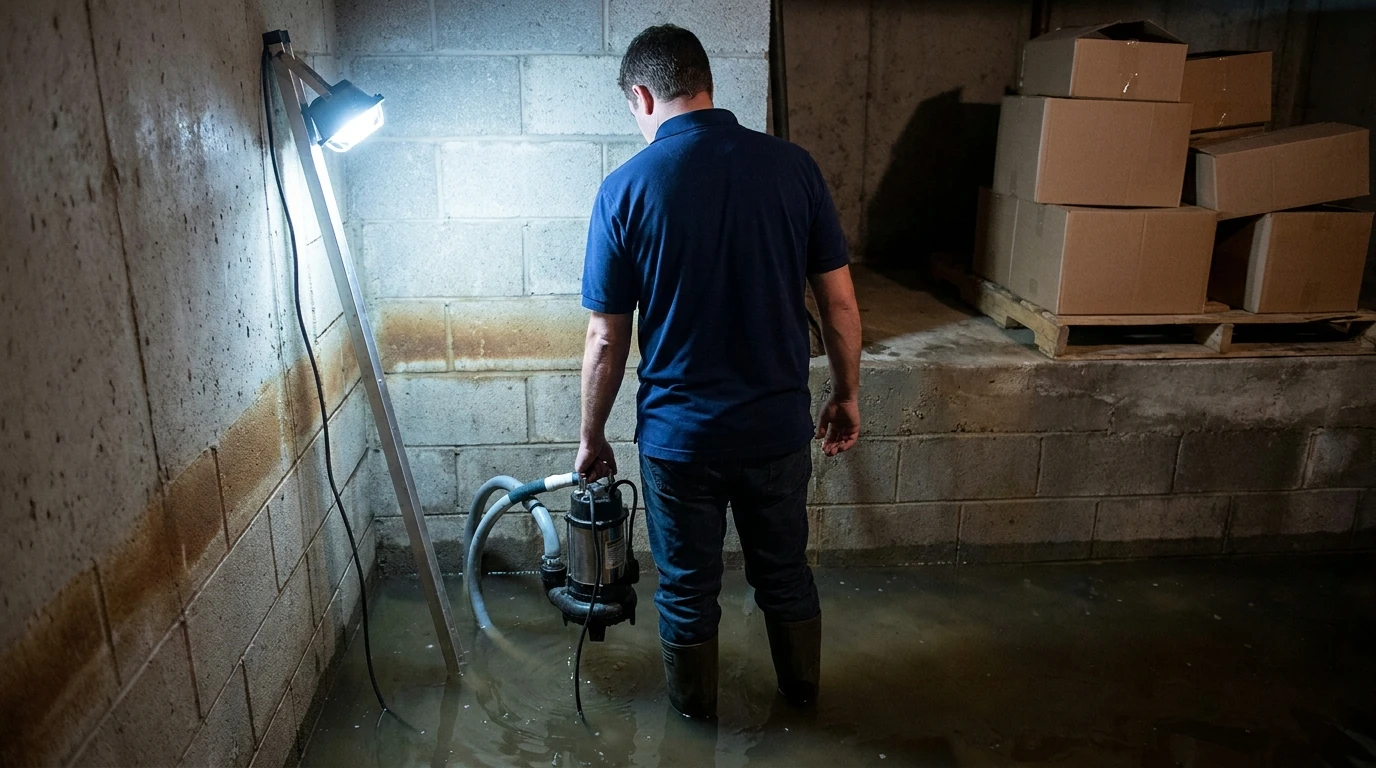
If water is pooling in your Farrell basement right now, call DISS Restoration at (724) 981-1441. The company answers 24/7 and its crews carry IICRC Water Damage Restoration (WRT) and Applied Structural Drying (ASD) certification, the two credentials that matter most once standing water is involved. That call stops the clock on damage spreading into framing, insulation, and anything stored on the floor.
Basement floods in the Shenango Valley come from a few repeat causes: a failed sump pump during heavy rain, a cracked foundation wall letting groundwater seep through an older block foundation, a burst supply line, or a sewer backup after the Shenango River runs high. The source changes who you call first, so don’t dial the same number for every scenario.
Do you call a plumber, a restoration company, or 911 first?
Call 911 or your utility only if there’s standing water near an active electrical panel or you smell gas; call a plumber if water is still actively running from a fixture you can’t shut off yourself; call a restoration company the moment standing water covers any part of the floor, no matter the source.
Here’s the breakdown by scenario:
- Sump pump failed during a storm: call a restoration company first to start extraction, then get a plumber out to repair or replace the pump so the next rain doesn’t repeat it.
- Water heater or supply line burst: shut the water off at the source if you safely can, then call a restoration company for extraction and drying.
- Sewer or septic backup: this is black water under the IICRC classification system, and it carries real health risk. Don’t touch it without PPE. Call a restoration company that handles sewage cleanup, not a general cleaning service.
- Groundwater seepage through foundation walls: this usually isn’t a plumbing emergency, but the standing water still needs extraction and the wall needs a long-term fix, which may mean a contractor visit after the water’s gone.
If you’re unsure which bucket you’re in, a restoration crew can usually tell you over the phone whether you also need a plumber on site.
What do you do in the first 10 minutes, before anyone arrives?
Shut off power to the basement circuit at the breaker if water is anywhere near outlets or baseboard heaters, then stop touching anything electrical in the space. The Ready.gov flood guidance specifically warns against entering floodwater until you’ve confirmed power is off.
After that: locate your main water shutoff if the source is a pipe or appliance, move boxes and furniture off the floor if you can do it without stepping into the water, and take photos or a short video walking through the space before anything is moved or dried. Those photos matter later for the insurance claim. If the water looks gray or has any odor, assume it’s contaminated and stay out until a crew with proper PPE arrives. Our burst pipe checklist covers the same first-10-minutes steps if the source is a pipe specifically.
Should you call your insurance company before or after the restoration company?
Call the restoration company first, then open the claim once mitigation is underway. Most homeowners policies actually require you to take reasonable steps to prevent further damage, and the mitigation invoice plus moisture readings become part of the documentation that supports your claim.
Waiting to call anyone until you’ve reached an adjuster usually just means more time for water to spread. A reputable crew will document moisture levels, affected materials, and the water source as they work, which gives you a clean paper trail for the adjuster instead of a verbal description of what the basement looked like three days ago. For more on what’s typically covered, see our plain-English guide to homeowners insurance and water damage.
What happens once the crew is on scene?
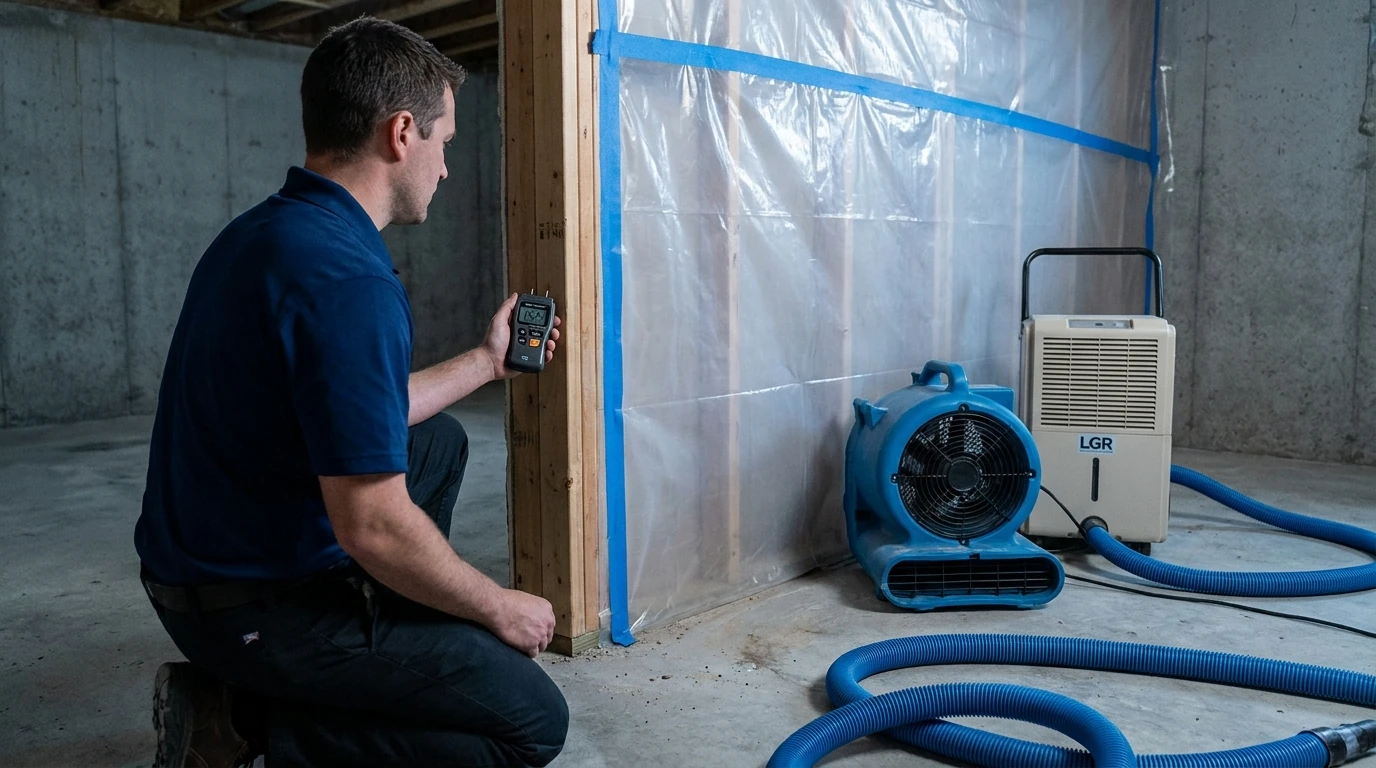
A technician inspects the basement, identifies the water category (clean, gray, or black), and starts extraction with truck-mounted or portable pumps depending on the volume. From there, air movers and a dehumidifier go in to bring humidity and material moisture content down to a dry standard, usually checked daily with a moisture meter against unaffected areas of the home.
If the water came from a sewer backup, the process shifts to include sanitizing affected surfaces and may involve removing porous materials that can’t be safely disinfected; that’s handled under our sewage cleanup service rather than standard extraction. For a clean-water basement flood, the water damage restoration process is usually extraction, drying, and a moisture-verified sign-off before anything gets rebuilt.
Call now at (724) 981-1441 if water is already on the basement floor; a same-day inspection is the fastest way to find out what you’re actually dealing with.
Frequently asked questions
Who should I call first for a flooded basement in Farrell, PA? Call DISS Restoration at (724) 981-1441. The company is available 24/7 and holds IICRC water damage and structural drying certification, so the same call that answers your questions can also get extraction equipment moving same day.
Should I call my insurance company before a restoration company? No. Call the restoration company first to stop the damage from spreading, then open the insurance claim once extraction and drying have started. Most policies expect you to mitigate further loss anyway, and the mitigation documentation strengthens the claim.
What if the basement water smells bad or looks gray or dark? Treat it as contaminated water and stay out of it. Gray or black water, often from a sewer backup, carries bacteria and needs PPE and sanitizing procedures, not just extraction and fans.
Do I need a plumber if my sump pump failed? Yes, eventually. Call a restoration company first for extraction and drying, then schedule a plumber to repair or replace the pump so the next heavy rain doesn’t put you back in the same spot.