TL;DR: Mold remediation in Youngstown, OH typically involves containment, HEPA air filtration, physical removal of affected materials, and post-clearance testing. A certified crew following the IICRC S520 standard can usually complete a single-room job in one to three days. Costs vary by square footage and material type, but most residential jobs run $1,500 to $6,000. If you see visible growth, smell musty odors in a basement or crawl space, or just had water damage, get a professional assessment before the problem spreads.
You noticed dark spots along the basement wall near the old coal-chute door, or maybe the musty smell in the upstairs bathroom has been getting worse since that slow roof leak last spring. Youngstown’s older housing stock, much of it built before 1970 in neighborhoods like Wick Park and the North Side, tends to have the conditions mold loves: older plumbing, unfinished basements, and limited vapor barriers. If you’re trying to figure out what happens next and whether your insurance will cover any of it, this is the right place to start. Full service details are on the Youngstown mold remediation page.
What Does Mold Remediation Actually Involve?
Professional mold remediation is the controlled removal of mold-contaminated materials and the treatment of affected surfaces, performed in a way that prevents spores from spreading to clean areas of the home. It is not the same as mold testing, and it is not just spraying bleach on a wall.
A remediation job following the IICRC S520 standard typically moves through these phases:
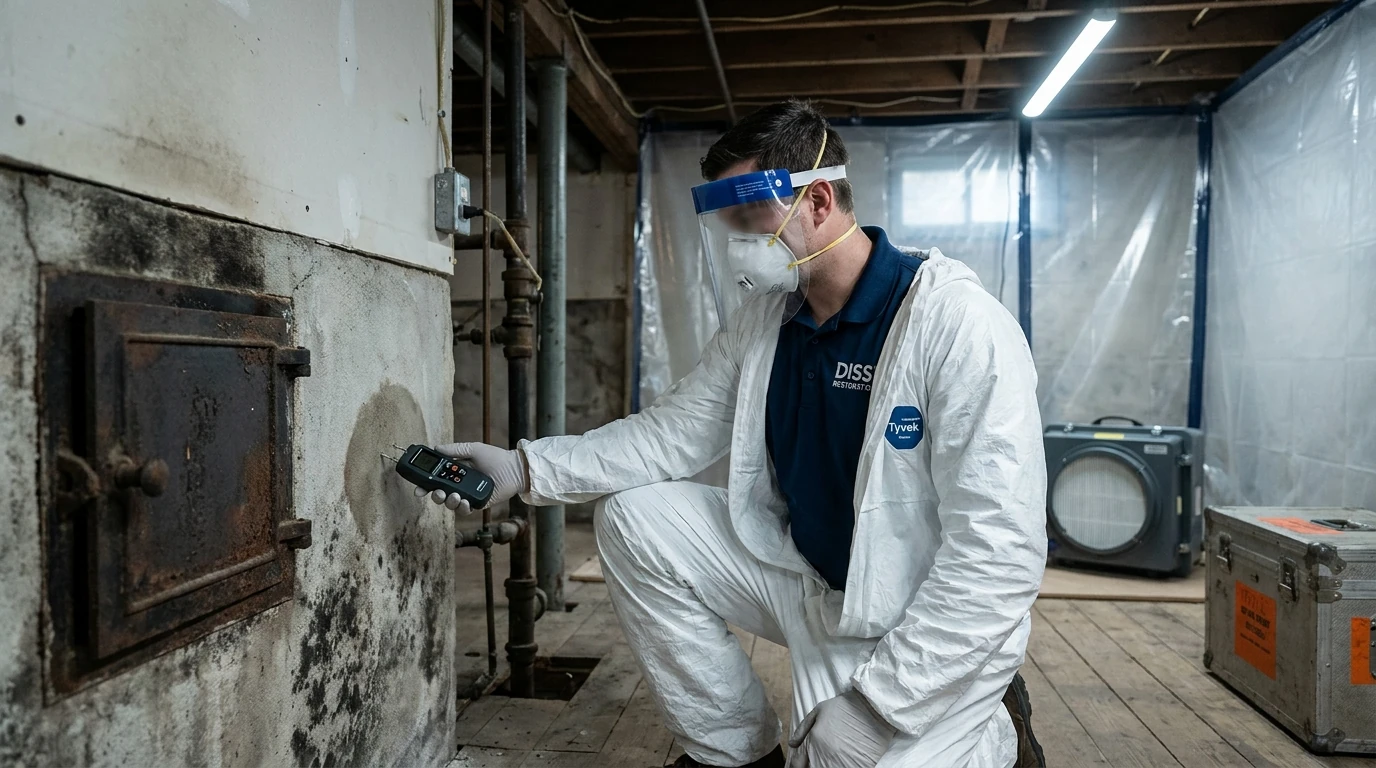
- Containment setup. The crew seals off the work area with poly sheeting and establishes negative air pressure using an air scrubber with HEPA filtration. This keeps disturbed spores from migrating into living spaces.
- Personal protective equipment. Workers in full Tyvek suits, N95 or P100 respirators, and face shields enter the containment zone. The PPE level matches the contamination class.
- Material removal. Drywall, insulation, subfloor, or other porous materials with active growth are cut out and double-bagged for disposal. Non-porous surfaces (concrete, metal studs) are HEPA-vacuumed and wiped with an EPA-registered antimicrobial.
- Drying the source. If moisture is still present, the underlying cause has to be fixed first. Remediating mold without addressing the moisture source is a temporary fix at best.
- Post-remediation verification. A clearance test, typically an air sample or surface swab sent to an independent lab, confirms spore counts have returned to normal background levels before containment comes down.
For a deeper look at what visible growth actually means before you call anyone, the post on 7 Signs You Have Hidden Mold covers the warning signs worth knowing.
How Long Does Mold Remediation Take in Youngstown?
Most single-room residential mold jobs in the Youngstown area take one to three days from containment setup to clearance testing. Larger jobs, or jobs involving crawl spaces and HVAC systems, can run three to five days.
The timeline depends on a few variables:
- Size of the affected area. The EPA’s mold guidance uses 10 square feet as the rough threshold below which a careful homeowner can handle cleanup themselves. Above that, professional remediation is recommended.
- Material type. Drywall and insulation come out fast. Structural framing, subfloor, or finished cabinetry takes longer to assess and remove without damaging adjacent structure.
- Moisture levels. If the source of moisture is still active or the building materials are still wet, drying time adds days before remediation can begin. An IICRC-certified technician will take moisture readings before scoping the work.
- Lab turnaround for clearance testing. Most labs return results in 24 to 48 hours. Some crews use on-site ATP testing for a faster read, but a third-party air sample is the standard for insurance documentation.
If you’re also dealing with the water damage that caused the mold, the post on what to do in the first 24 hours after water damage is worth reading alongside this one.
Will Homeowners Insurance Cover Mold Remediation?
Homeowners insurance in Ohio typically covers mold remediation only when the mold is a direct result of a covered peril, such as a burst pipe or storm-related water intrusion. It almost never covers mold caused by long-term leaks, condensation, or deferred maintenance.
Here is how the coverage question usually plays out:
- Sudden and accidental water damage (burst pipe, appliance failure, ice dam): mold that develops as a result is often covered, subject to your deductible and policy limits. Some policies cap mold coverage at $5,000 to $10,000 regardless of actual cost.
- Gradual leaks or chronic moisture: typically excluded. If the adjuster determines the leak was slow and ongoing, the claim is likely denied.
- Flood damage: standard homeowners policies do not cover flood. Mold from a basement flood requires a separate NFIP or private flood policy.
Documentation matters more than most homeowners realize. A written scope of work from a certified remediator, moisture readings taken before and after, and photos of the containment setup all support your claim. Ask the crew for a detailed written scope before work begins, not just a verbal estimate.
For a broader look at what Ohio homeowners policies actually cover for water-related losses, the water damage insurance guide breaks it down clearly.
How Do You Know If You Need Remediation or Just Cleaning?
The size and location of the growth, and whether porous materials are involved, determine whether this is a DIY cleaning job or a professional remediation.
The EPA’s general guidance: if the affected area is less than about 10 square feet and the surface is non-porous (tile, glass, metal), a careful cleaning with an EPA-registered product and proper ventilation is reasonable for a healthy adult. If the area is larger, if it’s inside a wall cavity or HVAC system, if the affected person has respiratory conditions, or if you cannot identify and fix the moisture source, professional remediation is the right call.
A few situations that almost always require a certified crew:
- Mold inside ductwork (spores distribute through the entire house every time the system runs)
- Growth on structural framing or subfloor
- Any contamination following a sewage backup (Category 3 water, which carries pathogens in addition to mold risk)
- Growth that returned after a previous DIY attempt
Not sure what you’re looking at? The post on black mold vs. regular mold explains what the color and texture of growth can and cannot tell you, and the post on how to test for mold covers your options before you commit to a full remediation scope.
What Should You Do Right Now?
If you have visible mold growth in your Youngstown home, the most important first step is to stop the moisture source and avoid disturbing the growth until a professional can assess it. Disturbing mold without containment in place spreads spores.
Do not run fans or your HVAC system in the affected area. Do not paint over it. Do not use bleach on porous materials like drywall or wood, which only addresses surface color without killing the root structure.
Call a crew that holds the IICRC AMRT (Applied Microbial Remediation Technician) credential. That certification is the industry’s specific qualification for mold work, separate from general water damage training. Ask for a written scope before any work begins, and ask whether the clearance test will be performed by an independent third party.
For mold remediation in Youngstown and the surrounding Mahoning Valley, DISS Restoration is an IICRC-certified firm (AMRT, WRT, FSRT) serving the area 24/7. Reach them at (724) 981-1441 to schedule an assessment.
About DISS Restoration
DISS Restoration is an IICRC-certified firm serving Youngstown, OH and the broader Mahoning Valley since 2021, licensed and insured in both Ohio and Pennsylvania. Their certified crews handle mold remediation, water damage restoration, fire damage restoration, sewage cleanup, storm damage, biohazard cleanup, and related services across the region. IICRC certifications held include AMRT (mold), WRT (water), FSRT (fire and smoke), and ASD (structural drying). Available 24/7 at (724) 981-1441.