
24/7 Emergency Water Damage Restoration in Pittsburgh
24/7 emergency water damage restoration in Pittsburgh, PA. IICRC-certified, insurance billing accepted. Call (724) 981-1441.
Our IICRC-certified technicians are dispatched from our Farrell, PA headquarters and are typically on-site in Pittsburgh within 60 minutes of your call.
Water damage emergency in Pittsburgh? Call now, we answer 24/7. Pittsburgh’s steep topography and river valleys mean water rarely stays where it lands, a cracked supply line on an upper floor can travel through balloon-frame walls and settle in a basement built into a hillside long before anyone notices the ceiling stain. Whether it’s a burst pipe during a January freeze or backup from a heavy spring storm, DISS Restoration handles water removal, extraction, and structural drying for homes and commercial buildings across the region.
Why Pittsburgh Properties See Water Damage Issues
Much of Pittsburgh’s housing stock predates 1950, which means cast iron drain lines, galvanized supply pipes, and plaster walls that behave very differently from modern construction when they get wet. Galvanized pipe corrodes from the inside out over decades and tends to fail without warning, often at a joint hidden inside a wall or under a slab. Add in the region’s freeze-thaw winters, where temperatures swing above and below freezing repeatedly through January and February, and exposed or poorly insulated pipe runs in older additions and unheated crawlspaces are at real risk of splitting. Pittsburgh’s hilly terrain also means a lot of basements are cut into the hillside itself, which brings groundwater pressure against foundation walls after sustained rain, a slow seep that homeowners sometimes mistake for condensation until the drywall starts to wick.
Our Water Damage Restoration Process in Pittsburgh
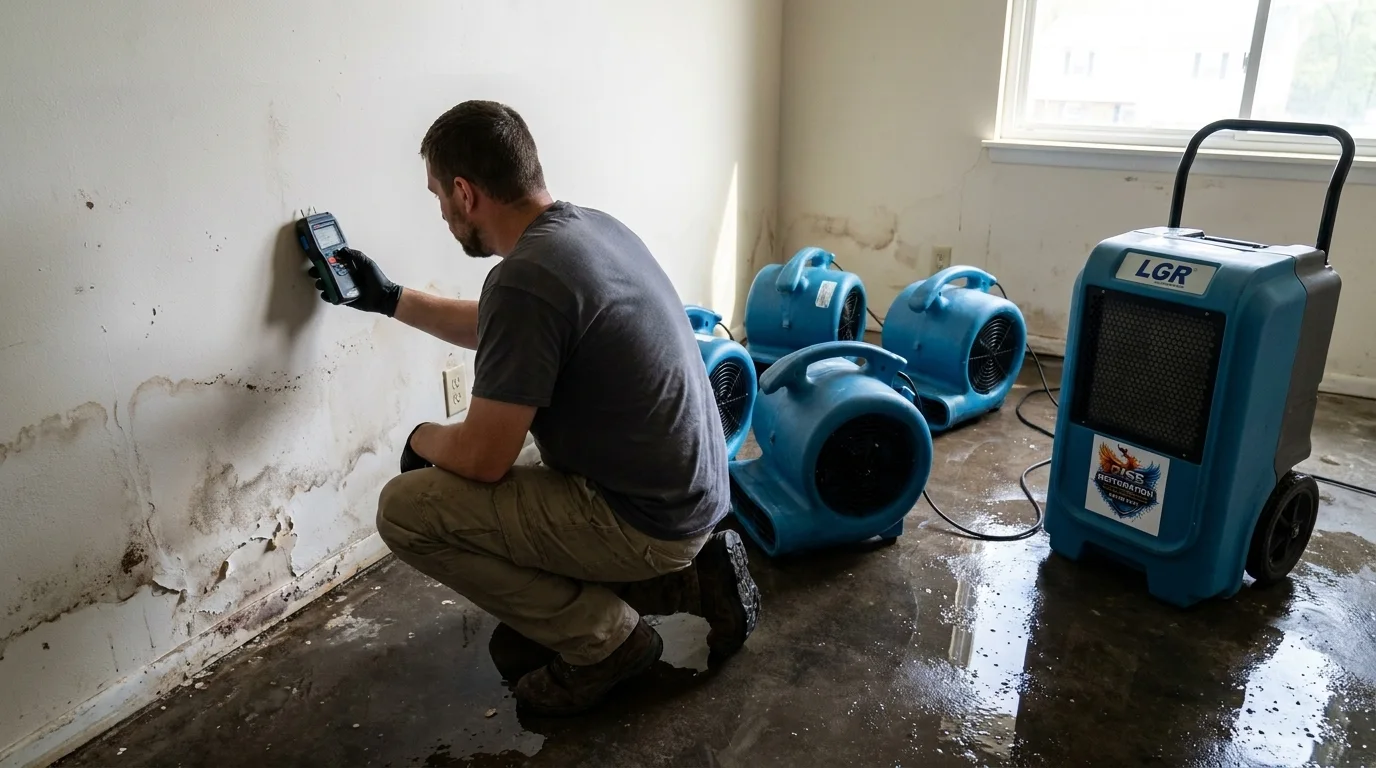
We start by identifying the water category and extent of migration, which in older Pittsburgh homes often means checking behind plaster and lath rather than just pulling baseboards. Extraction comes first, using truck-mount and portable units depending on access, since a lot of these properties have narrow staircases or tight basement entries that limit equipment size. From there we set containment and drying equipment calibrated to the materials involved: plaster releases moisture more slowly than drywall, so a room that reads dry on a moisture meter at the surface can still be holding water in the lath behind it. We document moisture readings daily and follow IICRC S500 drying standards until materials reach a stable, dry baseline, not just until the surface looks fine.
Reaching Pittsburgh from Farrell
DISS Restoration is based in Farrell, with crews running the I-79 corridor into Pittsburgh and the surrounding Allegheny County area. Because we operate 24/7, a call that comes in overnight gets a crew dispatched immediately rather than queued for the next business day, which matters when standing water is actively spreading into subfloor and framing. We coordinate arrival around the property’s access, since hillside lots and shared driveways in some Pittsburgh neighborhoods require a bit of planning for where equipment and hoses can stage.
Local Note
A detail that catches a lot of Pittsburgh homeowners off guard: parts of the city and surrounding municipalities run on combined sewer systems, meaning stormwater and sanitary sewage share the same pipe. During a heavy rain event, that system can surcharge and push wastewater back up through basement floor drains and low-lying fixtures, which turns a routine wet basement into a Category 3 loss requiring different handling, disposal, and PPE than a clean water intrusion. If your basement backs up specifically during or right after a storm rather than from an obvious plumbing failure, that’s usually the cause, and it changes how we approach extraction and sanitizing.
Water sitting in a wall cavity or under flooring doesn’t wait for a convenient time, and every hour it sits increases the chance that drywall, subfloor, or framing has to be replaced rather than dried. If you’re dealing with a burst pipe, a sewer backup, or a slow hillside seep anywhere in the Pittsburgh area, call DISS Restoration at (724) 981-1441 and we’ll get a crew moving.
Serving Pittsburgh from our Farrell headquarters — ★ 4.6 · 87 Google reviews
“First class customer service. The work was done in a timely fashion and to our satisfaction. The workers were polite and helpful.” — Ron, October 2026Read our reviews on Google →
Water Damage Restoration in Pittsburgh: Service Coverage
Frequently Asked Questions
How fast can you arrive for water damage restoration in Pittsburgh?
Does Pittsburgh's older housing stock change how you handle water extraction?
Can a storm cause sewage backup instead of regular water damage in Pittsburgh basements?
Are hillside homes in the Pittsburgh area more prone to basement water intrusion?
How does freeze-thaw weather affect pipe failures in the Pittsburgh region?
What equipment do you use for structural drying in tight or older Pittsburgh properties?
Will my homeowners insurance cover water damage restoration in Pittsburgh?
Water Damage Restoration response in Pittsburgh
Most Pittsburgh calls see a technician on-site within 60 minutes from our Farrell headquarters.