24/7 Emergency Flood Damage Restoration in Farrell
24/7 emergency flood damage restoration in Farrell and surrounding areas. IICRC-certified, insurance billing accepted. Call (724) 981-1441.
Flood damage in Farrell? We answer 24/7. Floodwater is a different animal than a burst pipe: it brings silt, sewage, and groundwater contamination into a home, and it keeps spreading into wall cavities and subflooring long after the water outside has receded. The longer it sits, the more materials have to be removed instead of dried. Call (724) 981-1441 to get a crew assessing the structure and starting extraction.
What flood damage restoration actually involves
Flood damage restoration deals with water that entered a structure from outside, storm surge, river or creek overflow, flash flooding, or overwhelmed storm drains, rather than a clean interior pipe failure. That distinction matters because floodwater is almost always classified as Category 3, meaning it’s considered grossly contaminated: it can carry sewage backflow, agricultural or lawn chemicals, and whatever it picked up on the way into the house. Porous materials that touch Category 3 water (carpet, carpet pad, drywall below the waterline, insulation) typically can’t be sanitized and have to come out, not just dried.
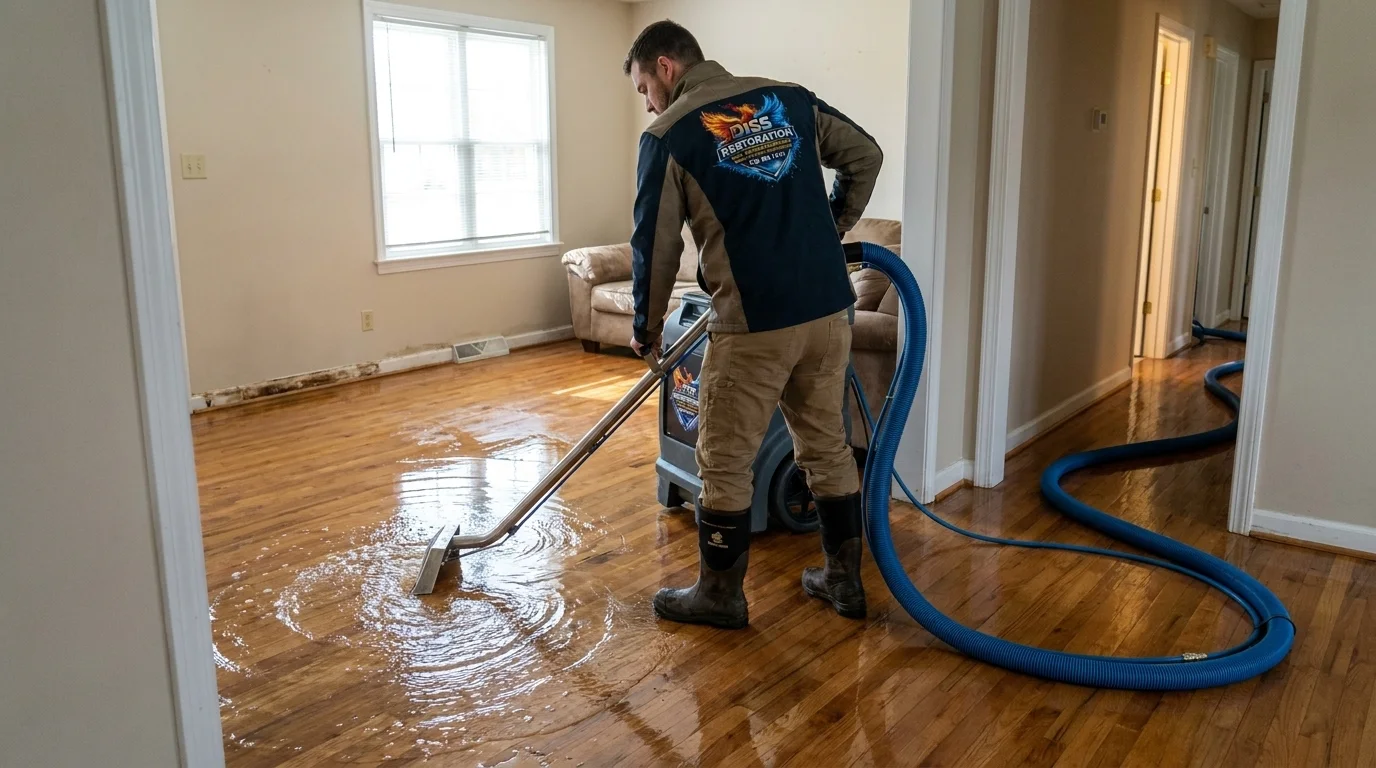
The work starts with pumping and extracting standing water, then moves into moisture mapping with thermal imaging and penetrating moisture meters to find out how far water traveled into walls, subfloors, and framing. Structural drying follows, using air movers and desiccant or refrigerant dehumidifiers sized to the space, with moisture readings logged daily until materials return to a dry standard. Depending on how saturated the structure was, drying can run anywhere from a few days to over a week.
Our process
- Pump-out and bulk extraction of standing water, prioritizing areas where water is still rising or trapped (basements, crawlspaces, below-grade rooms).
- Contamination assessment and controlled demolition of materials that absorbed Category 3 water and can’t be reliably sanitized, documented before removal for the claim file.
- Antimicrobial treatment of framing, subfloor, and remaining structure to address bacterial and mold risk introduced by the floodwater itself.
- Structural drying and daily moisture monitoring, following IICRC S500 guidelines, with equipment repositioned as readings change.
- Handoff to reconstruction once drying is verified complete, with a written scope for rebuilding what was removed.
What separates a good flood response from a bad one
The most common mistake is treating flood damage like a clean-water loss: drying materials that should have been removed because they were exposed to contaminated water, not just wet water. A crew that skips water categorization, or doesn’t test for it, can leave contamination sealed behind drywall that looks dry on a moisture meter but still carries bacteria. Another frequent miss is drying the visible surface while ignoring wall cavities, subfloor, and insulation that stayed wet because nobody opened the wall to check.
Adjusters generally want to see moisture logs showing readings over time, not just a single reading, along with photos of affected materials before demolition and a clear line between what was dried and what had to be removed. Good operators document all of this as they go, not after the fact, because it’s hard to prove contamination level once the material is already gone.
What does flood damage restoration cost?
Costs vary widely based on how much water entered the structure, how long it sat before extraction started, and how much demolition is needed versus straight drying. These are typical industry ranges, not a quote: every loss is different, and DISS Restoration provides a written scope before any work begins.
| Scenario | Typical range |
|---|---|
| Basement, shallow standing water, quick extraction | $1,500 - $4,000 |
| Single-story home, several inches of floodwater | $5,000 - $12,000 |
| Whole-house flooding with contaminated water | $12,000 - $30,000+ |
| Drywall and insulation removal, multiple rooms | $3,000 - $8,000 |
| Antimicrobial treatment and structural drying only | $2,000 - $5,500 |
Standard homeowners insurance typically does not cover flood damage from rising outside water, that’s usually a separate flood policy, though water damage from a burst pipe or roof failure during a storm is often covered under a standard policy. DISS Restoration works directly with insurance carriers either way and documents the loss to support whatever claim applies.
Seasonal & regional considerations
Spring snowmelt combined with heavy rain puts pressure on the Shenango River watershed and on older stormwater systems throughout Mercer County, and that combination is the most common trigger for flood damage calls in this area. Homes with below-grade basements sit closer to the water table here than newer construction on higher ground, which means even a heavy summer storm can push groundwater in through foundation cracks and window wells, not just through doors.
Service area
DISS Restoration responds to flood damage throughout Farrell and nearby Mercer County communities, including Sharon, Hermitage, Sharpsville, and Wheatland.
If water has entered your home from outside, schedule your flood damage assessment now by calling (724) 981-1441 so extraction and contamination control can start before drying time is lost.
Services We Handle
- Flooding Damage
Frequently Asked Questions
Does homeowners insurance cover flood damage restoration?
What's the difference between flood damage and a regular water damage claim?
How soon does mold start after a flood, and does that change the timeline?
Can wet drywall and insulation be dried out, or does flood damage always mean removal?
What should I do before DISS Restoration arrives after a flood?
Looking for the best flood damage restoration company in Farrell?
DISS Restoration provides flood damage restoration in Farrell, PA and the surrounding area, and has served local property owners since 2021. Customers rate us 4.6 out of 5 stars across 87 Google reviews. We answer calls 24/7 — call (724) 981-1441 for immediate help.
Need Flood Damage Restoration now?
We respond 24/7 across Farrell and surrounding PA cities.