
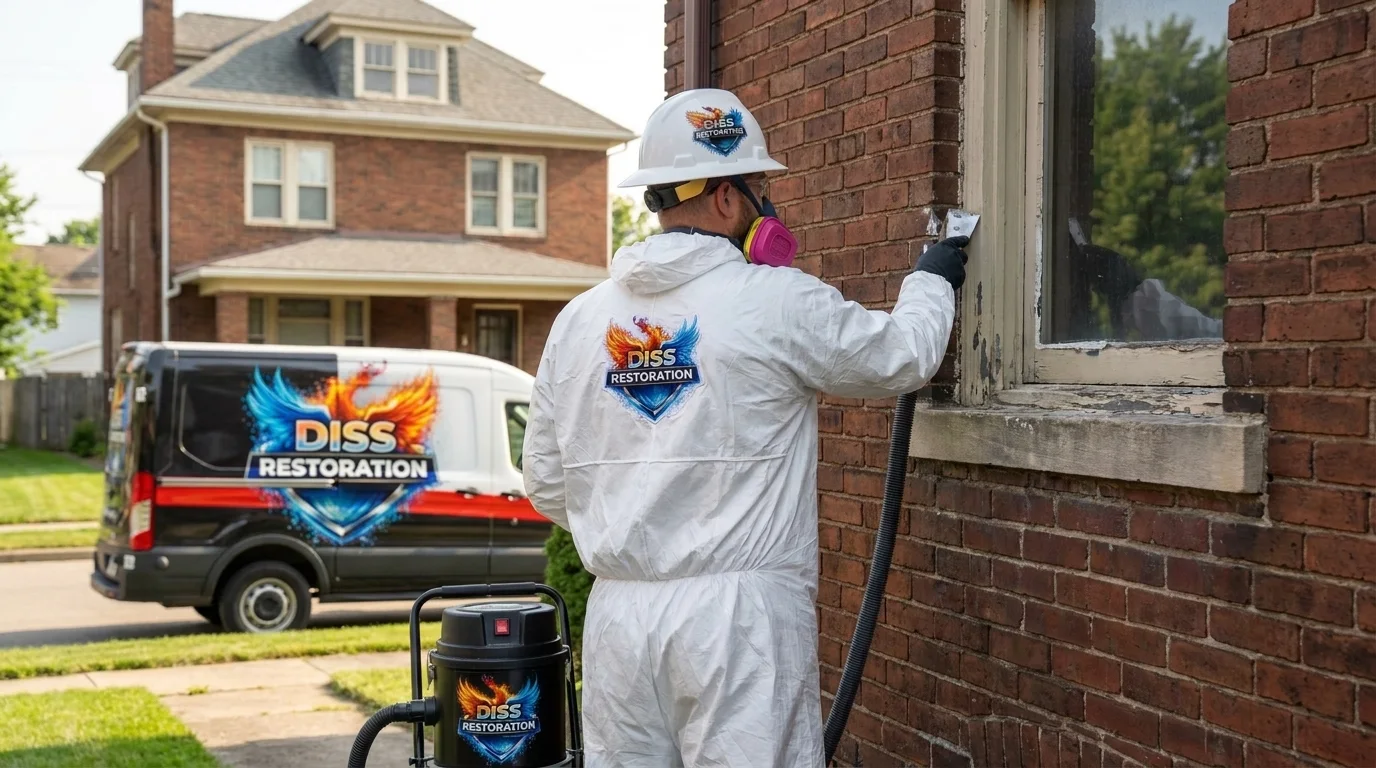
Lead Paint Abatement in Farrell
24/7 lead paint abatement in Farrell and surrounding areas. IICRC-certified, insurance billing accepted. Call (724) 981-1441.
Paint that was applied before 1978 in a lot of the housing stock around Farrell carries a real chance of lead, and the risk isn’t the paint sitting quietly on a windowsill. It’s the dust. Friction surfaces like window sashes, door jambs, and stair treads grind lead paint into fine dust every time they’re used, and that dust settles into carpets, HVAC returns, and window wells where kids and pets make contact with it daily. If you’re planning a renovation that disturbs painted surfaces, or a home inspection flagged deteriorating paint, the work needs to be handled under EPA RRP rules, not sanded down with a shop vac and good intentions.
What Lead Paint Abatement actually involves
Lead paint abatement covers a few distinct scopes: full removal of lead-painted components, encapsulation or enclosure of surfaces that don’t need to come out, and interim controls that make a surface safe between now and a future renovation. Before any of that starts, the work area gets tested. XRF (X-ray fluorescence) testing can identify lead in paint layers without destroying the surface, and for areas where XRF isn’t conclusive, paint chip samples go to a lab. Once lead is confirmed, the space is sealed with poly sheeting and negative air containment so dust doesn’t migrate into living areas or the HVAC system. Work itself might mean wet-scraping and repainting, chemical stripping, component removal (a whole window unit instead of sanding the sash in place), or encapsulant coatings rated for lead-safe work. Timelines vary with square footage and method: a single window or door can be a one-day job, while whole-room abatement with HEPA cleanup and clearance testing usually runs several days.
Our process
- Lead paint testing - XRF scanning of suspect surfaces (pre-1978 trim, doors, windows, siding) to confirm presence and location before any disturbance begins.
- Containment setup - poly sheeting, critical barriers, and negative air pressure to isolate the work zone from the rest of the home, following EPA RRP work practice standards.
- Lead paint removal or encapsulation - wet methods, HEPA-attached sanding tools, or full component removal depending on the surface and the client’s renovation plans. Dry sanding and open-flame burning are never used.
- HEPA cleanup and dust clearance - HEPA vacuuming of all surfaces, wet wiping, and visual inspection before containment comes down.
- Clearance verification - dust wipe sampling sent to a lab to confirm the space is safe for reoccupancy before the area is turned back over.
What separates a good lead paint abatement response from a bad one
The most common mistake on older homes is treating lead paint work like a normal repaint: dry sanding a window sash, scraping onto open ground, or running a renovation without testing first because the paint “looks fine.” Deteriorating isn’t always visible to the eye; a surface can be smooth and intact and still shed lead dust under friction. A lead-safe approach uses wet methods specifically because dry sanding aerosolizes lead particles that settle throughout the house, not just in the room being worked on. Another gap shows up at cleanup: a shop vac without a HEPA filter just redistributes lead dust through its exhaust. Clearance testing is the step that gets skipped most often by unqualified contractors, and it’s the one documentation an insurer, a buyer’s inspector, or a future tenant will ask to see. A written scope of work before the job starts, and lab-verified clearance before it ends, is what separates a defensible lead-safe renovation from a liability.
What does Lead Paint Abatement cost?
Costs depend heavily on how many surfaces are affected, whether full removal or encapsulation is appropriate, and whether lab testing and clearance sampling are required. Every property is different, so DISS Restoration provides a written scope of work with testing results before any abatement begins. Homeowners insurance typically does not cover routine lead paint abatement since it’s considered a maintenance and safety issue rather than a sudden loss, though some policies may contribute if lead disturbance resulted from a covered event like fire or water damage.
| Scenario | Typical range |
|---|---|
| XRF lead paint testing, single room | $250 - $600 |
| Single window or door component removal | $500 - $1,500 |
| Encapsulation, one room | $1,200 - $3,000 |
| Whole-room abatement with clearance testing | $3,000 - $8,000 |
| Whole-house lead-safe renovation prep | $8,000 - $20,000+ |
Seasonal & regional considerations
Farrell’s housing stock leans heavily toward homes built well before 1978, which means lead paint testing is a common step ahead of any exterior repaint, window replacement, or interior demolition. Exterior abatement work is easiest to schedule in warmer months when containment materials and coatings cure properly; cold winter temperatures can affect encapsulant adhesion on outdoor surfaces, so exterior jobs often get scheduled for spring through fall while interior work continues year-round.
Service area
DISS Restoration handles lead paint testing and abatement for homeowners and property managers in Farrell and the surrounding Shenango Valley communities, including older housing stock throughout Mercer County.
If a renovation, inspection report, or peeling paint has you wondering what’s underneath, start with lead paint testing before anyone picks up a scraper. Call DISS Restoration at (724) 981-1441 to schedule testing and get a written lead-safe scope of work.
Frequently Asked Questions
Does homeowners insurance cover lead paint abatement?
How do I know if my home has lead paint?
Is it safe to sand or scrape lead paint myself?
What's the difference between lead paint removal and encapsulation?
How long does lead paint abatement take?
Looking for the best lead paint abatement company in Farrell?
DISS Restoration provides lead paint abatement in Farrell, PA and the surrounding area, and has served local property owners since 2021. Customers rate us 4.6 out of 5 stars across 87 Google reviews. We answer calls 24/7 — call (724) 981-1441 for immediate help.
Need Lead Paint Abatement now?
We respond 24/7 across Farrell and surrounding PA cities.