Reconstruction Services in Farrell
24/7 reconstruction services in Farrell and surrounding areas. IICRC-certified, insurance billing accepted. Call (724) 981-1441.
When a water, fire, or storm claim moves past drying and cleanup, the property is often left with cut-out drywall, exposed framing, missing flooring, or a roof section that’s been tarped rather than rebuilt. That gap between mitigation and a livable home again is where reconstruction services come in. Farrell homeowners dealing with a burst pipe that flooded a finished basement, or a kitchen fire that took out cabinetry and subfloor, need a contractor who can carry the project from demolition through final paint without handing it off to someone new halfway through.
What reconstruction services actually involve
Structural reconstruction covers everything required to return a damaged structure to pre-loss condition or better: framing repairs, subfloor and flooring replacement, drywall and insulation, trim and millwork, cabinetry, doors and windows, and finish work like paint and flooring installation. Fire damage reconstruction often adds a layer most homeowners don’t expect: removing and replacing materials that absorbed smoke odor even where there’s no visible char, because porous materials like drywall and insulation can hold soot compounds deep in the material. Timelines vary widely. A single room with a damaged section of flooring might close out in a couple of weeks. A multi-room post-disaster rebuild involving load-bearing framing, electrical, and plumbing coordination can run several months, especially once permitting and inspection schedules are factored in.
Our process
- Scope of work and documentation. Before any demolition, we document existing damage with photos and measurements and write a detailed scope that lines up with the insurance estimate, so there’s a clear record of what’s being replaced and why.
- Permits and code review. Mercer County and local Farrell building requirements apply to most structural and electrical work. We pull the permits the job requires and build to current code, not just to match what was there before.
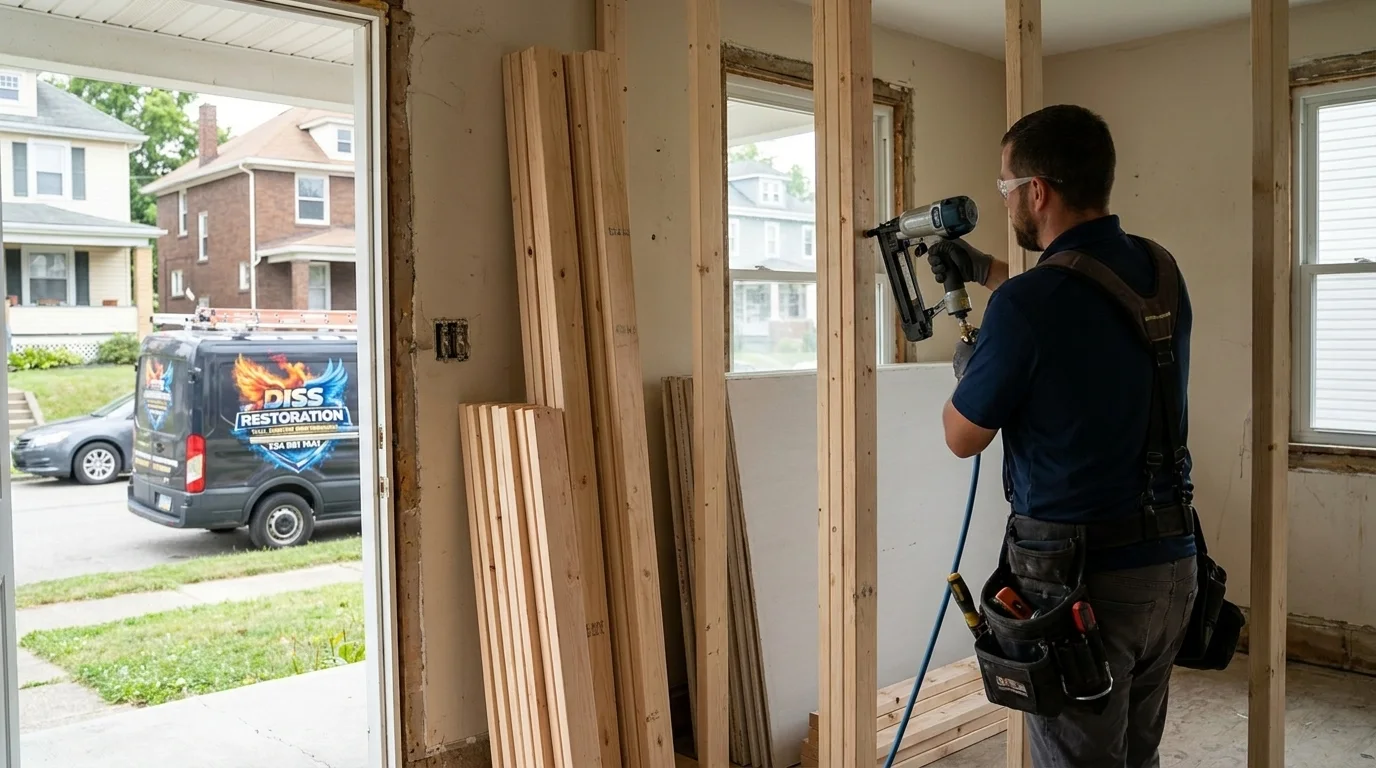
- Framing and rough-in. Damaged studs, joists, and subfloor are replaced first. Electrical, plumbing, and HVAC rough-in happens before anything gets closed up, so inspectors can sign off at the right stage instead of after the fact.
- Drywall, insulation, and finish carpentry. Walls and ceilings go back up, insulation is replaced where it was compromised, and trim, doors, and cabinetry are installed to match the original finish where possible.
- Final finishes and walkthrough. Paint, flooring, and fixtures go in last. We walk the space with the homeowner before calling the job complete, comparing it against the original scope line by line.
What separates a good reconstruction response from a bad one
The most common mistake is closing up walls before an inspector has signed off on rough electrical or plumbing, which forces a contractor to cut back open work that should have been final. Another is skipping moisture verification before framing goes back in: if subfloor or framing members weren’t fully dried and tested, new finishes get installed over material that’s still elevated, and problems resurface months later as warped flooring or a musty smell. On fire jobs, a rebuild that doesn’t address smoke-affected materials behind the visible damage, inside wall cavities, under subfloor, in ductwork, tends to leave lingering odor that no amount of paint will cover. Insurance adjusters generally want to see itemized scopes that match like-for-like materials and grade, along with photo documentation at each stage; a contractor who can’t produce that paperwork slows down the claim and puts the homeowner in the middle of a dispute they didn’t cause.
What does reconstruction cost?
Reconstruction costs depend heavily on the extent of structural damage, the materials being replaced, and whether permits and inspections are required. Every loss is different, and DISS Restoration provides a written scope of work before any rebuild begins so there are no surprises once the project is underway. Most homeowners insurance policies cover reconstruction tied to a covered peril, such as fire, a burst pipe, or wind damage, though coverage for upgrades beyond original materials is typically the homeowner’s responsibility.
| Scenario | Typical range |
|---|---|
| Single room, drywall and flooring replacement | $3,000 - $8,000 |
| Kitchen rebuild after fire or water damage | $15,000 - $40,000 |
| Basement reconstruction after flooding | $10,000 - $30,000 |
| Structural framing repair, one or two rooms | $8,000 - $20,000 |
| Whole-floor post-disaster rebuild | $40,000 - $100,000+ |
Seasonal & regional considerations
Western Pennsylvania’s freeze-thaw winters can delay exterior reconstruction work, particularly roofing, siding, and foundation repairs, since materials and sealants need workable temperatures to cure properly. Projects that start in late fall sometimes get sequenced so interior rough-in and finish work continue through winter while exterior items wait for a milder stretch. Older housing stock common around Farrell and the Shenango Valley, plaster walls, balloon framing, knob-and-tube remnants, also means reconstruction sometimes uncovers conditions that weren’t part of the original damage, which gets documented and addressed as a scope change rather than assumed away.
Service area
DISS Restoration handles reconstruction projects in Farrell and throughout the surrounding Shenango Valley area, including Sharon, Hermitage, and neighboring Mercer County communities.
If your property is sitting mid-repair, or you’re waiting on a rebuild plan after a fire, flood, or storm claim, get a reconstruction scope of work from DISS Restoration before you commit to a contractor. Call (724) 981-1441 to get the project moving.
Services We Handle
- Water Damage Remodeling
Frequently Asked Questions
Does homeowners insurance cover reconstruction after water or fire damage?
Do I need a permit for structural reconstruction in Farrell?
How do you know if framing or subfloor is dry enough to rebuild over?
What's different about fire damage reconstruction compared to a standard remodel?
Can reconstruction start before the insurance claim is fully settled?
Looking for the best reconstruction services company in Farrell?
DISS Restoration provides reconstruction services in Farrell, PA and the surrounding area, and has served local property owners since 2021. Customers rate us 4.6 out of 5 stars across 89 Google reviews. We answer calls 24/7 — call (724) 981-1441 for immediate help.
Need Reconstruction Services now?
We respond 24/7 across Farrell and surrounding PA cities.