
Water Leak Detection in Farrell
24/7 water leak detection in Farrell and surrounding areas. IICRC-certified, insurance billing accepted. Call (724) 981-1441.
Water leak detection in Farrell? If your water bill jumped for no obvious reason, you hear a hiss behind drywall, or a warm spot has shown up on an otherwise cold slab floor, that’s not something to wait on. A hidden leak that runs for weeks can soak framing, warp flooring, and set up conditions for mold long before it ever shows itself on the surface. DISS Restoration locates the source without guesswork and without tearing the house apart to do it.
What water leak detection actually involves
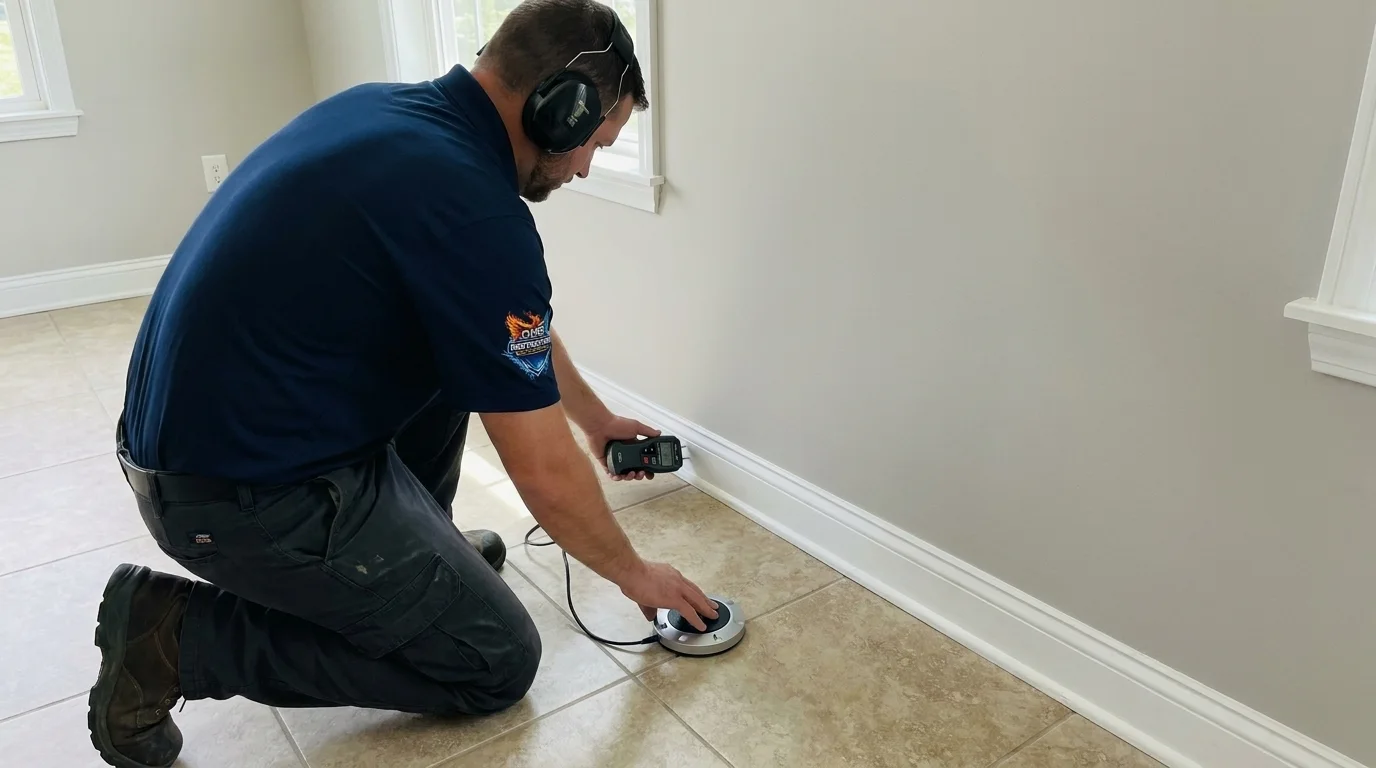
Leak detection is a diagnostic service, not a repair. The goal is to find exactly where water is entering a wall cavity, slab, or ceiling before any demolition or drying work starts. Our technicians use acoustic listening devices to pick up the sound of pressurized water moving through pipe under flooring or behind tile, thermal imaging cameras to spot temperature differences caused by moisture migration, and non-invasive moisture meters to map how far water has traveled from its source. For suspected slab leaks, we can run a line trace to pinpoint depth and location along the pipe run before anyone cuts concrete. The whole process is usually a few hours on-site, and in most cases we can tell you the leak’s location, likely cause, and the extent of secondary moisture before we leave.
Our process
- Interview and visual inspection. We start by asking what you’ve noticed, when it started, and whether anything changed recently (a renovation, a new appliance, a hard freeze). We check visible plumbing, fixtures, and any obvious staining or bubbling.
- Moisture mapping. Using penetrating and non-penetrating meters, we walk the suspect area and chart where moisture levels rise, which narrows the search before we bring in specialized equipment.
- Acoustic and thermal detection. Acoustic sensors isolate the sound signature of a pressurized leak through pipe, slab, or wall assembly, while infrared imaging flags thermal anomalies consistent with water intrusion.
- Confirmation and documentation. Once we’ve isolated the likely source, we document it with photos and moisture readings. This becomes the written record you hand to your plumber for the repair and, if needed, to your insurance adjuster.
- Scope handoff. If drying or reconstruction is also needed, we provide that scope separately so you know exactly what detection found versus what remediation will cost.
What separates a good leak detection response from a bad one
The most common mistake in leak detection is treating it as a demolition-first job: cutting open drywall or slab in multiple spots hoping to get lucky. That approach costs homeowners money and leaves unnecessary repairs behind. A properly equipped technician narrows the location first, using acoustic and thermal tools, and only opens material once the source is confirmed. Another frequent miss is stopping at the first sign of moisture instead of tracing how far it’s traveled. Water behind a wall or under a slab often moves laterally along framing, vapor barriers, or utility trenches, so the stain on your ceiling may not sit directly above the actual leak. Insurance adjusters reviewing a claim want to see moisture readings, photos, and a clear explanation of how the leak was located, not just a repair invoice. Documentation at the detection stage is often what determines whether a claim gets approved cleanly.
What does water leak detection cost?
Costs vary depending on how accessible the suspected leak is and what equipment is needed to confirm it. A straightforward check behind an accessible wall costs less than tracing a leak under a concrete slab or beneath finished flooring. Every property is different, so DISS Restoration provides a written scope before any work begins, and most homeowners insurance policies cover the cost of locating a leak when it’s tied to a covered water loss, though coverage for the leak detection itself can vary by policy.
| Scenario | Typical range |
|---|---|
| Single accessible wall or ceiling check | $150 - $400 |
| Whole-house moisture survey | $300 - $600 |
| Slab leak detection (line trace) | $400 - $900 |
| Leak behind tile or finished flooring | $350 - $750 |
| Combined detection plus moisture mapping report for insurance | $400 - $800 |
Seasonal & regional considerations
Farrell’s winters bring hard freezes that can crack copper and PEX lines inside exterior walls or in unheated crawlspaces, and those cracks often don’t show visible water until a thaw sends it through the wall cavity. Older housing stock in the Shenango Valley area, much of it built with galvanized or early copper plumbing, is also more prone to pinhole leaks developing at joints over time. Slab leaks tend to surface more often in homes built on grade without a basement, where supply lines run directly beneath the concrete.
Service area
DISS Restoration provides water leak detection from our Farrell, PA base out to Sharon, Hermitage, Sharpsville, and the surrounding Shenango Valley communities.
If you’re seeing unexplained water stains, a spiking water bill, or a warm patch on your floor, don’t wait for it to surface on its own. Schedule a water leak detection visit with DISS Restoration and get a clear answer on where the water is coming from before it causes more damage.
Frequently Asked Questions
Does homeowners insurance cover water leak detection?
How does slab leak detection work without breaking up my floor?
Can you find a leak inside a wall without cutting it open?
How long does a water leak detection visit take?
What are the early signs of a hidden water leak I shouldn't ignore?
Looking for the best water leak detection company in Farrell?
DISS Restoration provides water leak detection in Farrell, PA and the surrounding area, and has served local property owners since 2021. Customers rate us 4.6 out of 5 stars across 89 Google reviews. We answer calls 24/7 — call (724) 981-1441 for immediate help.
Need Water Leak Detection now?
We respond 24/7 across Farrell and surrounding PA cities.