TL;DR: Emergency board-up and tarping in Farrell, PA typically costs $150 to $700 for a window or door opening and $400 to $2,500 or more for a roof tarp, depending on size, pitch, and whether the work happens after hours. Most homeowners policies treat this as an emergency measure to prevent further damage after a covered loss (fire, wind, a falling tree), and the cost is usually billed separately from repair work.
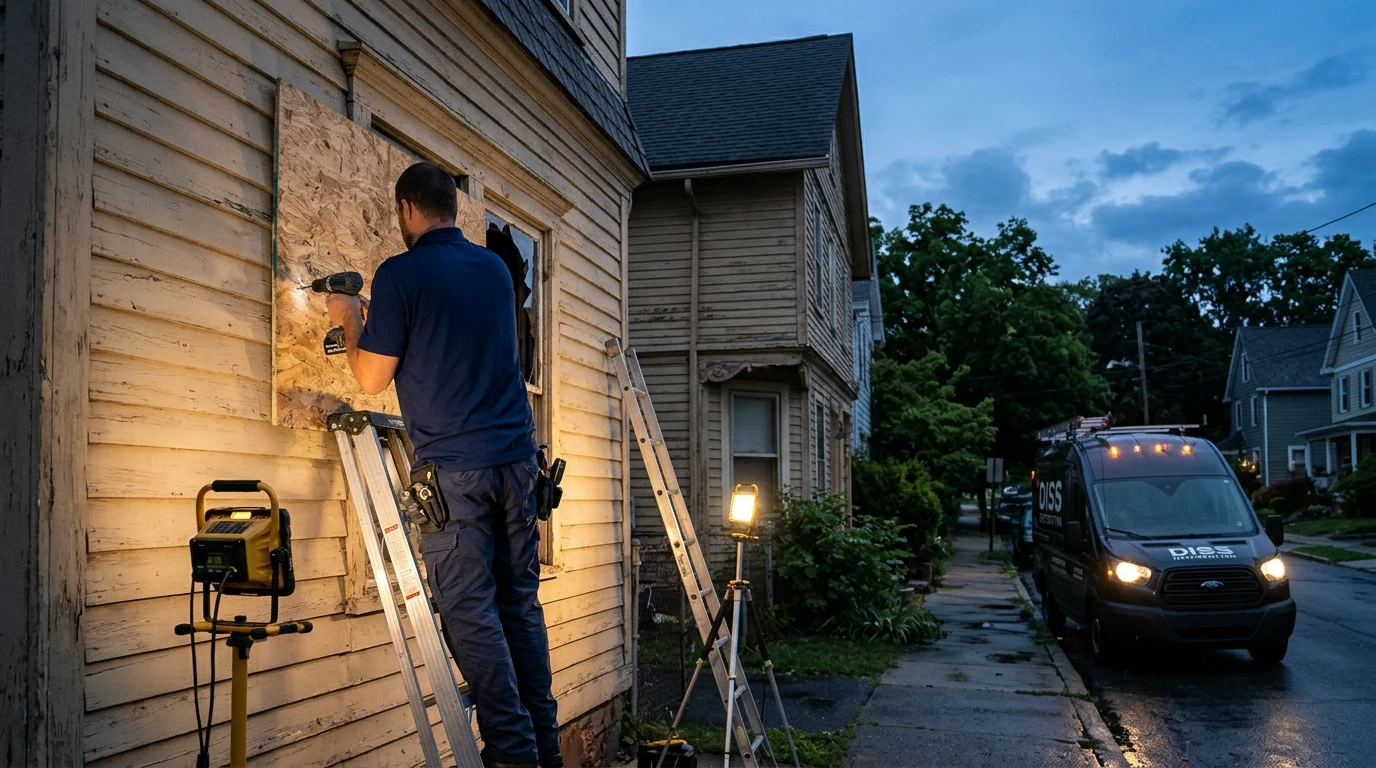
If a storm just tore shingles off your roof, a tree limb punched through a window, or a break-in left an opening in your Farrell home, boarding it up or tarping it fast matters more than getting the cheapest quote. Every hour an opening sits exposed, rain, wind, and pests get further into the structure, and that turns a one-room repair into a multi-room one. Here’s what the work actually costs and what decides the final number.
How Much Does Board-Up and Tarping Cost in Farrell, PA?
Most single-opening board-up jobs in Farrell run $150 to $350, and roof tarps run $400 to $2,500 depending on size and pitch. Combined jobs (a storm or fire that damaged both a roof section and one or more windows) typically land between $800 and $2,000 or more.
The spread is wide because “board-up and tarping” covers very different jobs. Boarding a single broken basement window is a 20-minute task. Tarping a full slope of a steep Victorian-era roof, which is common in older Shenango Valley housing stock, takes a crew, ladders, and enough material to span the whole damaged section.
| Scenario | Typical Cost Range |
|---|---|
| Single broken window, plywood board-up | $150 - $350 |
| Multiple windows or a door opening | $300 - $700 |
| Small roof tarp (one slope section) | $400 - $900 |
| Full roof tarp (large or steep-pitch roof) | $900 - $2,500+ |
| Combined roof + window board-up (fire or storm loss) | $800 - $2,000+ |
| After-hours or overnight response | add $100 - $300 to the above |
These are typical industry ranges for the region, not a quote. Every property is different, and DISS Restoration provides a written scope before any work starts so you know the number before you agree to it.
What Changes the Price of a Board-Up or Tarp Job?
Five things move the number most: how many openings need covering, the size and pitch of the roof, the materials used, how hard the structure is to access, and whether the call comes in during business hours or overnight.
Number and size of openings. A single broken window costs far less than boarding an entire first floor after a break-in or covering multiple blown-out windows after high winds. Each opening adds material and labor time.
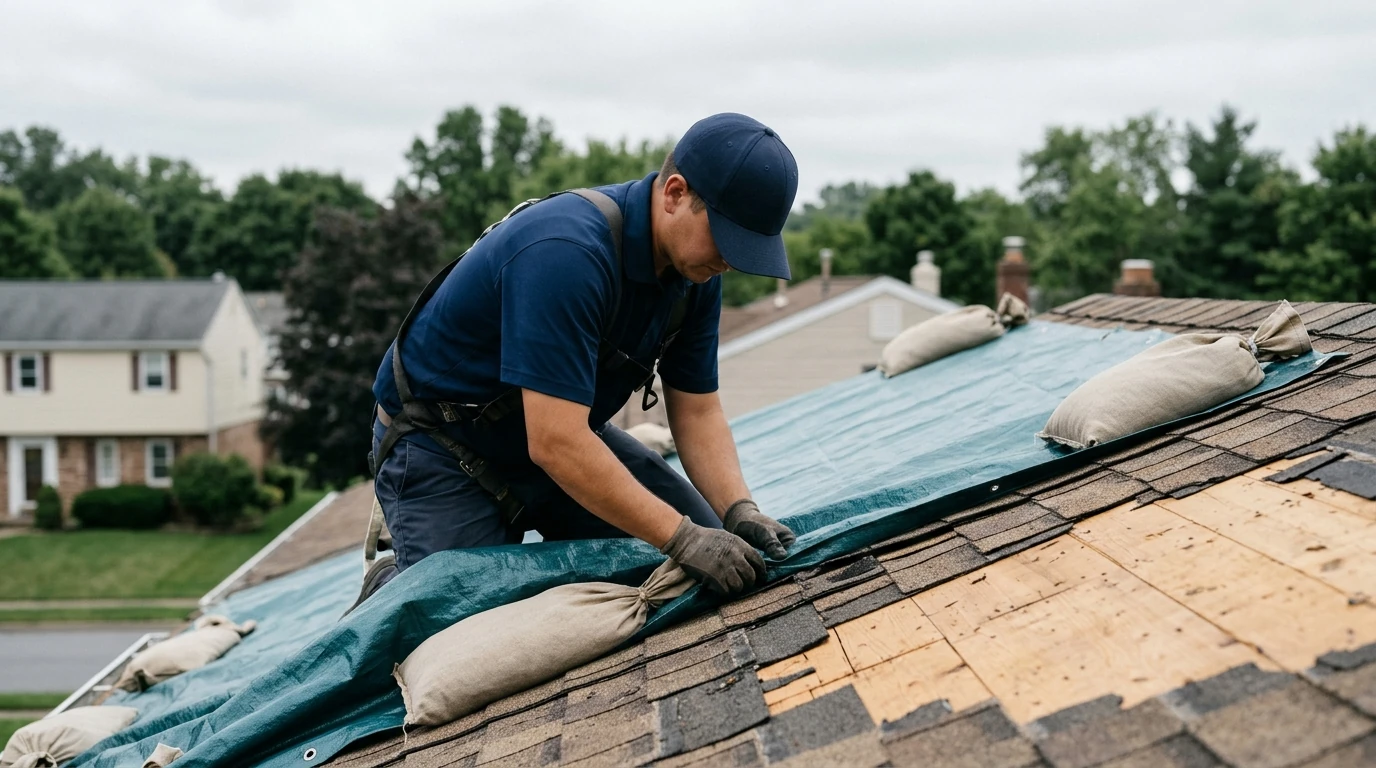
Roof size and pitch. A low-slope ranch roof is faster and safer to tarp than a steep two-story pitch. Steeper roofs need more rigging, more time, and sometimes a second crew member just for safety, which raises the price.
Materials. Plywood thickness (typically 1/2” to 3/4” OSB or CDX for board-ups) and tarp grade (reinforced poly versus standard) both affect material cost. Heavier-duty materials hold up longer against wind and rain, which matters if repairs are weeks out.
Access. A ground-floor window is quick. A third-story dormer or a roof section behind a tree canopy takes longer and may need specialized ladder or lift access.
Timing. Emergency board-up and tarping is time-sensitive work, and most companies charge a premium for nights, weekends, and holidays. If the damage happened during a storm overnight, expect that to factor into the bid.
Does Homeowners Insurance Cover Board-Up and Tarping?
Most homeowners policies cover emergency board-up and tarping when it follows a covered peril, like wind, fire, or a fallen tree, because insurers consider it a reasonable step to prevent further damage. Coverage details vary by insurer and policy, so it’s worth confirming with your adjuster.
Insurers generally expect policyholders to take reasonable steps to protect the property once damage occurs. That’s not a courtesy: most policies include language requiring the homeowner to mitigate further loss, and failing to act (leaving a hole in the roof open through another rainstorm, for example) can complicate a claim. The Insurance Information Institute outlines how insurers generally handle claims after a disaster, including the expectation to prevent additional damage.
Keep photos of the damage before the board-up or tarp goes on, save the invoice, and note the date and time. That documentation is what separates a smooth reimbursement from a disputed one. If the opening came from a fire, see our fire damage restoration cost guide for how that claim typically unfolds from this point forward.
What Happens After the Tarp Goes Up?
Board-up and tarping is a temporary stabilization measure, not a repair. Once the opening is secured, the next steps are drying out any water that already got in, documenting the damage for the claim, and scheduling permanent repairs.
- Secure the opening. Plywood over windows and doors, tarp weighted and fastened over roof damage, so wind and rain can’t get further in.
- Assess what’s already wet. If water got into the attic, walls, or a room below, that needs drying before mold has a chance to start, which can begin within 24 to 48 hours on wet materials according to the EPA.
- Document everything. Photos of the damage, the temporary protection installed, and an itemized invoice, all of which support the insurance claim.
- Schedule permanent repair. Roofing, window replacement, or structural reconstruction, depending on what caused the opening in the first place.
A storm that’s bad enough to need a tarp is often bad enough to cause other damage too, so it’s worth having the same crew assess the whole property rather than patching one opening and missing another. Our storm damage restoration page covers what that broader assessment typically involves.
If you’re staring at an open window or a tarp-ready roof in Farrell right now, the fastest path forward is getting someone out to secure it today and get a written scope for what comes next. Call DISS Restoration at (724) 981-1441 to get the opening covered before the next round of weather or another freeze-thaw cycle makes it worse.
About DISS Restoration
Founded in 2021 and based in Farrell, PA, the company is an IICRC Certified Firm serving Farrell, Sharon, Hermitage, and the wider Shenango Valley and Mahoning Valley region. Technicians hold IICRC credentials in water, fire and smoke, mold, and structural drying, and the crew handles emergency board-up and tarping, storm damage restoration, fire damage restoration, water damage restoration, and reconstruction for homes and businesses across the area.