TL;DR: In Farrell, PA, fire damage restoration typically runs $2 to $4 per square foot for smoke and soot cleanup alone, and $6 to $8+ per square foot once charred structure, framing, or drywall has to be rebuilt. A single-room kitchen fire often lands between $5,000 and $15,000. A whole-structure loss can reach six figures. The final number depends on soot type, how far smoke traveled, and how much rebuild is involved, and it’s almost always set after an inspection and billed through the homeowner’s insurance claim rather than paid out of pocket up front.
If a grease fire just scorched the cabinets in your Farrell kitchen, or a chimney fire sent smoke through a rental property near the Shenango Valley, you’re probably standing in a room full of char and soot trying to guess what the repair bill looks like before the adjuster calls back. Fire damage restoration cost swings hard based on fire size and soot type, not just square footage burned. Here’s how the real ranges break down, what pushes a bill higher, and what usually gets paid by insurance versus out of pocket.
How Much Does Fire Damage Restoration Cost in Farrell, PA?
Fire damage restoration in Farrell typically costs between $2 and $8+ per square foot, with the low end covering smoke and soot cleaning on surfaces that weren’t burned and the high end covering structural rebuild after charring, framing loss, or roof damage.
These ranges reflect typical industry pricing for this type of work, not a fixed quote. Every fire is different, and a licensed restoration company should give you a written scope after walking the property, not a number over the phone.
| Scenario | Typical Cost Range |
|---|---|
| Smoke/soot cleanup only, no structural burn (whole house) | $2,000 - $6,000 |
| Small kitchen fire, single room, light char | $3,000 - $8,000 |
| Single-room fire with structural char damage | $5,000 - $15,000 |
| Multi-room fire, smoke pulled through HVAC ductwork | $15,000 - $40,000 |
| Whole-structure fire with significant rebuild | $40,000 - $150,000+ |
| Cost per square foot, light smoke cleanup | $2 - $4/sq ft |
| Cost per square foot, structural fire damage | $6 - $8+/sq ft |
A fire damage restoration cost calculator you find online can give you a rough ballpark, but it can’t account for soot type, hidden smoke travel, or code-required upgrades during rebuild, which is why these numbers only firm up after someone has actually been inside the structure.
What Drives Fire Restoration Costs Up?
The biggest cost drivers are soot type, how far smoke traveled, and how much structural material has to be removed instead of cleaned. Those three factors matter more than total square footage.
Soot type. Protein soot from a kitchen grease fire is nearly invisible but has an intense, sticky odor that spreads through grout lines and HVAC systems, often requiring more odor-removal work than cleaning. Dry smoke soot from a fast, hot fire (paper, wood) wipes off more easily. Wet smoke soot from a slow, smoldering fire involving synthetics (furniture foam, plastics) smears and penetrates porous materials, which usually means more gets torn out rather than cleaned.
Smoke travel. If the HVAC system ran during the fire, soot and odor can spread to rooms that never saw flame. That turns a one-room job into a whole-house smoke damage restoration job, which raises both labor and equipment hours.
Structural loss. Charred studs, burned-through roof decking, or compromised drywall can’t just be cleaned; they have to come out and get rebuilt to code. That shifts cost from cleaning rates (per square foot, lower) to reconstruction rates (per square foot, higher, and tied to lumber and labor pricing at the time of the job).
Contents affected. Furniture, electronics, clothing, and personal items that survived the fire but took on smoke odor typically get inventoried and either cleaned off-site or deemed a total loss. Contents restoration costs are usually billed separately from the structural scope, which is why two fires of the same size can have very different total bills depending on what was in the room.
Older Mercer County housing stock, including a lot of the balloon-frame construction common in Farrell’s steel-era neighborhoods, can also mean smoke and heat traveled further through wall cavities than they would in newer, more compartmentalized framing, which sometimes adds hidden scope once walls are opened up.
Does Insurance Pay the Full Restoration Cost?
Most standard homeowners policies cover sudden, accidental fire damage as a named peril, but “covered” doesn’t automatically mean “paid in full.” Your deductible, policy limits, and documentation all affect the final number you’re responsible for.
Fire is one of the perils typically included on a standard homeowners policy, according to the Insurance Information Institute, but coverage details, including whether code-upgrade costs or additional living expenses are included, vary by carrier and policy. You’ll pay your deductible regardless, and if the restoration scope exceeds your dwelling coverage limit, the difference comes out of pocket.
Documentation matters more than people expect. Photos of the damage before cleanup starts, a detailed room-by-room inventory of affected contents, and a written restoration scope from the company doing the work all strengthen the claim. Most restoration companies that regularly work fire claims will coordinate directly with your adjuster and bill the approved scope to the carrier, so the homeowner typically isn’t fronting the full restoration cost, just the deductible.
What Does the Fire Damage Restoration Process Actually Involve?
Fire restoration generally moves through board-up, inspection, cleaning, structural drying if water was used to fight the fire, odor treatment, and rebuild, roughly in that order. Skipping steps or doing them out of sequence is one of the fastest ways a job goes over budget.
- Emergency board-up and tarping. Broken windows and roof openings get secured the same day to stop weather and theft exposure from adding a second loss on top of the fire.
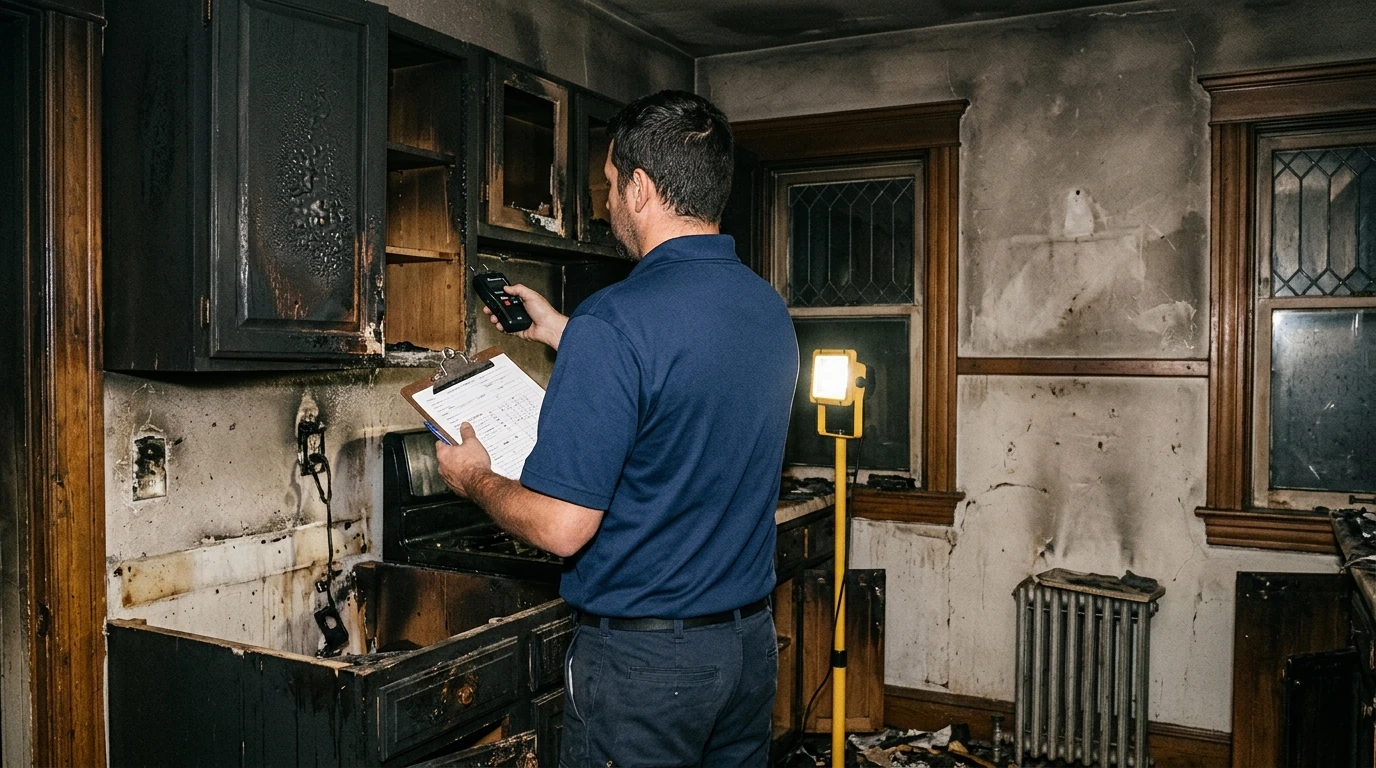
- Inspection and scope. A technician documents every affected area, soot type, and smoke path, and writes the scope the insurance claim will be based on.
- Soot and smoke cleaning. Surfaces get cleaned using techniques matched to the soot type; this follows the ANSI/IICRC S700 standard for fire and smoke restoration.
- Structural drying. If firefighting water soaked framing or flooring, that water has to come out and the structure has to dry before rebuild starts, or mold becomes a second problem.
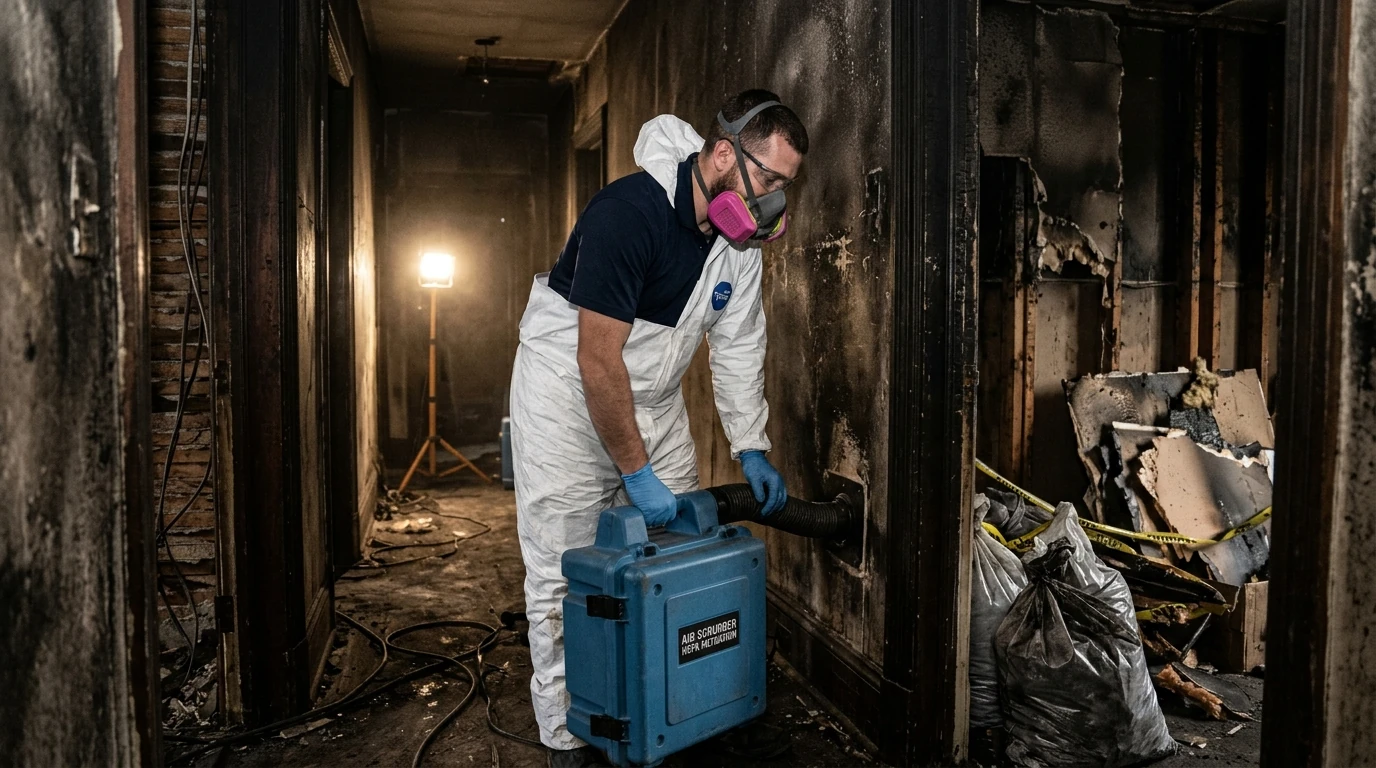
- Odor removal. Thermal fogging, hydroxyl generators, or ozone treatment address smoke odor trapped in porous materials and HVAC ductwork. Our fire damage restoration process breakdown walks through this stage in more detail.
- Reconstruction. Charred framing, drywall, flooring, and finishes get rebuilt to current code.
Who Should You Call First After a House Fire in Farrell?
Call your insurance company to open the claim, and call a fire restoration company before you start cleaning anything yourself; soot residue reacts to improper cleaning attempts and can make the damage worse. In Farrell, DISS Restoration handles the inspection, the written scope, and the direct coordination with your adjuster, so the documentation lines up from day one instead of getting disputed later.
Don’t run fans through soot-covered rooms, don’t wipe soot with a damp cloth (it smears and sets), and don’t throw away damaged items before they’re inventoried for the claim. Those three mistakes are the ones that most often cost homeowners money on an otherwise covered loss.
If your property in Farrell or the surrounding Shenango Valley just had a fire, a documented inspection is the first real step toward a number you can trust. Call DISS Restoration at (724) 981-1441 to schedule one.
About DISS Restoration
DISS Restoration is an IICRC Certified Firm serving Farrell, PA and the surrounding Shenango Valley since 2021, licensed and insured, with crews holding IICRC credentials in fire and smoke restoration (FSRT), water damage (WRT), and structural drying (ASD). The company handles fire damage restoration, smoke damage restoration, reconstruction, and contents restoration for area homes and businesses, and operates on a 24/7 emergency basis.