TL;DR: In Farrell, PA, mold remediation typically costs between $450 for a small, contained spot (a single bathroom or closet) and $10,000 or more for a whole-basement or whole-house job. Most Shenango Valley homeowners land between $1,500 and $6,500. The final number depends on square footage, how far the contamination has spread into wall cavities or insulation, and whether the moisture source, often an older block foundation, has already been fixed.
If you just found a patch of mold in your basement or crawl space and you’re trying to figure out what this is going to cost before you call anyone, you’re in the right place. Farrell’s housing stock skews older, with block and rubble-stone foundation walls that hold humidity long after a wet spring or a muggy summer off the Shenango River. That combination is the single most common reason homeowners here end up researching remediation cost, so here’s what the actual price ranges look like, what moves them, and what your insurance will and won’t pay for.
How Much Does Mold Remediation Cost by Area?
Most mold jobs fall into one of five rough scope bands, and the price scales with square footage and how contained the area is. These are typical industry ranges, not a quote: every job gets a written scope before work starts.
| Scope | Typical Cost Range |
|---|---|
| Small spot (bathroom corner, closet, under 10 sq ft) | $450 - $1,200 |
| Attic (full treatment, roof deck and rafters) | $1,500 - $5,500 |
| Basement (300-800 sq ft, block or poured walls) | $2,000 - $6,500 |
| Full crawl space | $2,500 - $7,000 |
| Whole-house or major structural infestation | $10,000 - $30,000+ |
Cost per square foot typically runs $10 to $25, with the low end covering surface cleaning on non-porous materials and the high end covering demolition, HEPA air scrubbing, and rebuild of porous materials like drywall and insulation. A 400-square-foot basement with moderate wall-cavity growth often lands in the $4,000-$6,000 range once you factor in containment and material removal, not just the visible surface area.
What Actually Drives the Price Up or Down?
The price isn’t really about square footage alone, it’s about how much has to be removed and how carefully the air has to be managed while that happens. Five factors move the number most:
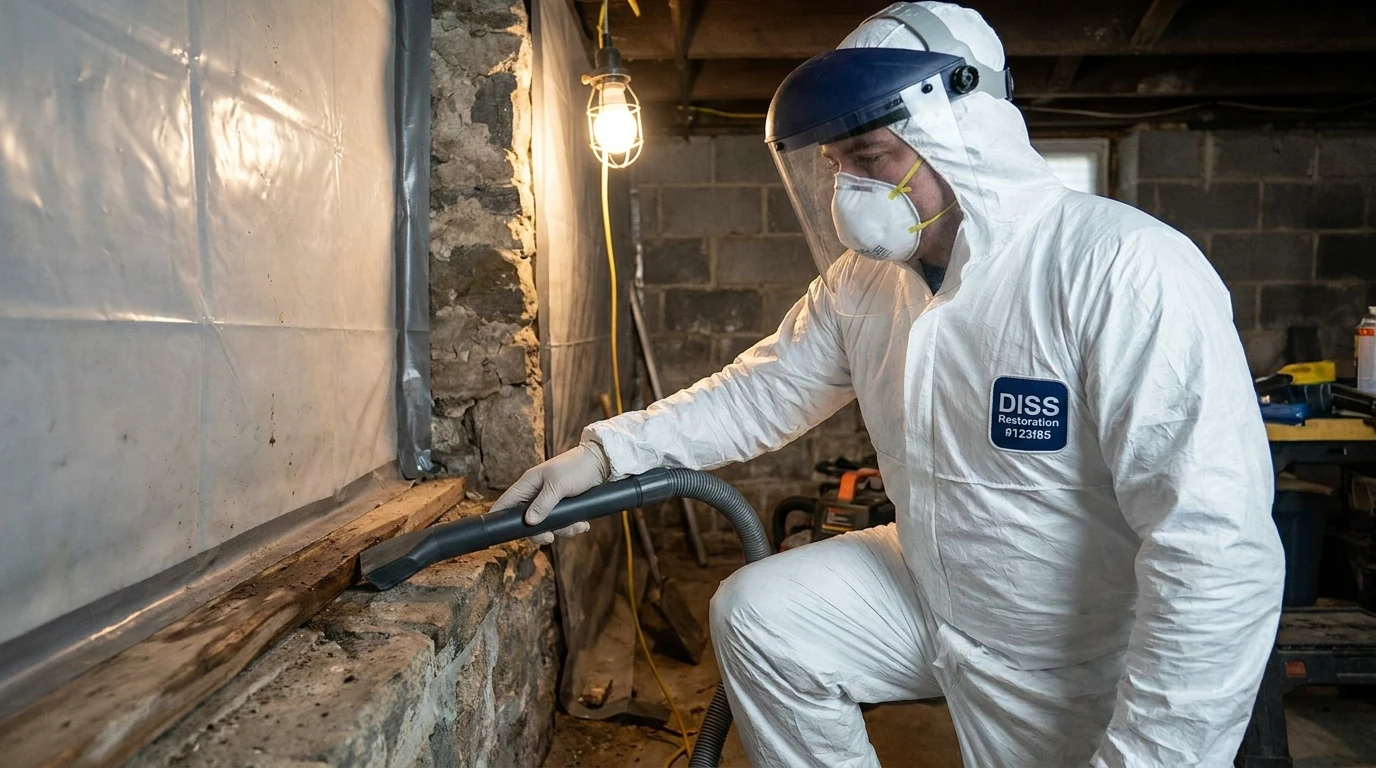
- Containment. Sealing the work area in poly sheeting with negative air pressure keeps spores from spreading to the rest of the house during demolition. A single contained room costs far less to set up than a basement that connects directly to living space HVAC returns.
- HEPA air scrubbing. Running negative-air machines for the duration of the job adds equipment and labor time, but it’s what keeps spores from re-settling once the drywall comes down.
- Material removal. Drywall, insulation, and carpet padding that absorbed moisture almost always get cut out and replaced rather than cleaned, per IICRC S520 guidance. This is usually the single biggest line item.
- Moisture source repair. A dehumidifier and a scrubber don’t fix a cracked foundation wall or a clogged gutter. If the water source isn’t addressed, the mold comes back, often within weeks, and you pay for remediation twice.
- Clearance testing. A post-remediation verification, usually a third-party air or surface sample, confirms the space is back to normal fungal ecology before the containment comes down. This typically adds a few hundred dollars but it’s the only objective proof the job worked.
Does Black Mold Cost More to Remediate Than Other Types?
Not really, the species of mold doesn’t change the remediation process. What changes the cost is the same thing that changes cost for any mold: how much material is contaminated and how it’s contained, not whether lab testing comes back as Stachybotrys (often called black mold) versus a more common species like Cladosporium or Penicillium. The EPA doesn’t recommend routine sampling to identify species before remediation, because the cleanup protocol is the same either way: contain it, remove what can’t be cleaned, dry it, verify it’s gone. If you’re trying to tell the two apart visually first, our post on black mold vs regular mold walks through the difference. The one place species identification genuinely matters is health-sensitive households (infants, immunocompromised residents), where a physician may want documentation of what was present.
Does Homeowners Insurance Cover Mold Remediation?
Usually only when the mold traces back to a sudden, accidental covered event, like a burst pipe, not from a slow leak or long-term humidity. Most standard homeowners policies carry mold exclusions or sublimits (often $5,000-$10,000) even when a covered loss caused the moisture, according to the Insurance Information Institute. Mold from an ongoing basement seepage issue, a leaky foundation, or a condensation problem that built up over months is typically treated as a maintenance issue and denied outright.
The practical takeaway: document the water source the moment you find mold, photograph everything before any cleanup starts, and get the claim filed before work begins if there’s any chance the originating event was sudden. If you’re not sure whether what you’re looking at is actually mold or just staining, our guide on how to test for mold covers DIY kits versus a professional inspection, which also produces the documentation an adjuster will want to see.
What Does the Remediation Process Actually Involve?
A standard job follows the same sequence regardless of scope, just scaled up or down:
- Inspection and moisture mapping. A technician identifies the extent of growth and, critically, the moisture source feeding it.
- Containment setup. Poly sheeting and negative air pressure isolate the work area from the rest of the structure.
- Material removal. Porous materials that can’t be cleaned (wet drywall, soaked insulation, contaminated carpet) are cut out and bagged for disposal.
- HEPA vacuuming and surface treatment. Remaining surfaces get HEPA-vacuumed and treated with an antimicrobial.
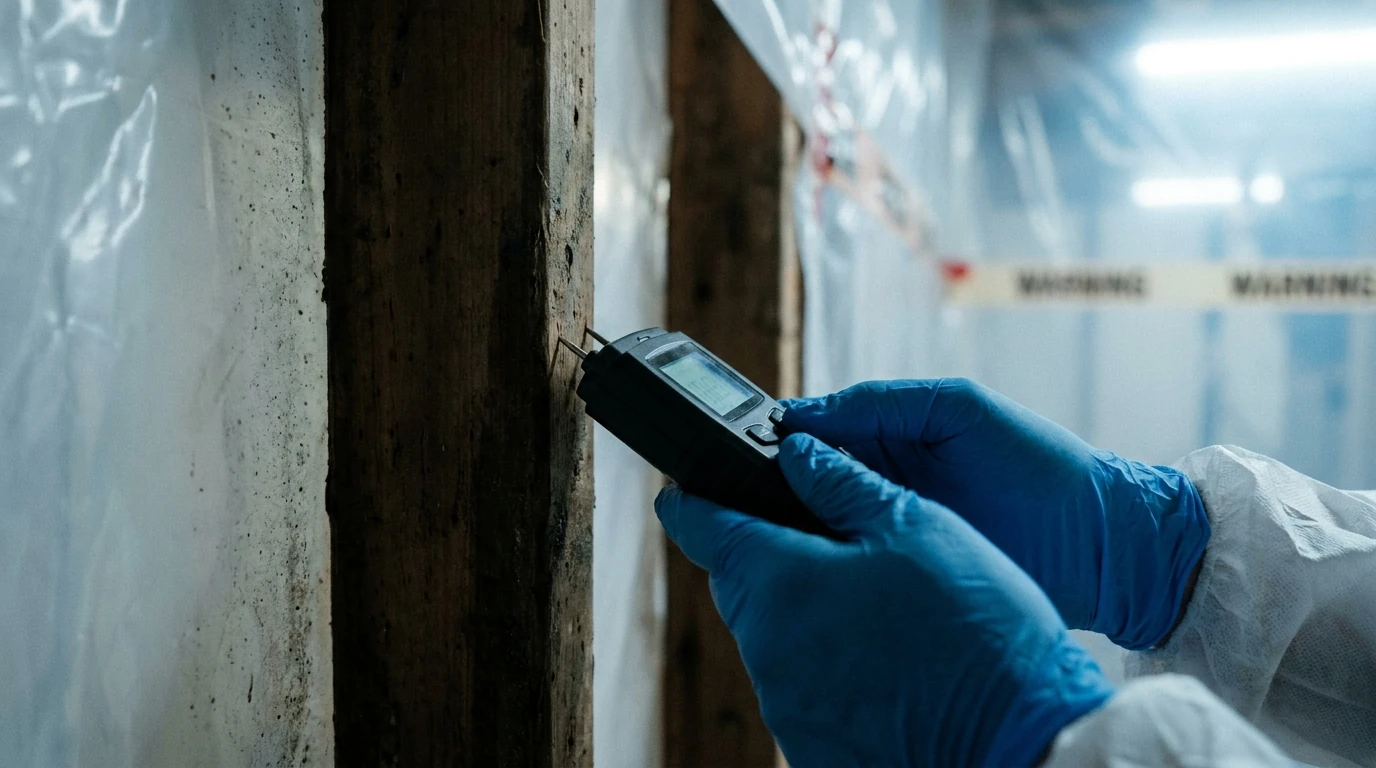
- Drying. Air movers and dehumidifiers bring the space back to a normal moisture reading, confirmed with a moisture meter, not a guess.
- Clearance testing. A final check confirms spore counts are back to a normal range before containment comes down.
- Moisture source repair. This is the step that’s easy to skip and shouldn’t be: a cracked foundation, a missing vapor barrier, or a gutter dumping water against the house needs an actual fix, not just a drier basement this week.
Who Should You Call for Mold Remediation in Farrell?
For a job this size, you want a firm certified to the IICRC S520 mold remediation standard, not a general cleaning service. DISS Restoration, an IICRC Certified Firm based in Farrell, handles mold remediation and the moisture-source water damage work that often goes with it, which matters because the two jobs are rarely separate in Shenango Valley basements. Getting a written scope before anything starts is the best protection you have against surprise charges mid-job.
If you’re still trying to confirm what you’re looking at before you call anyone, start with our rundown of signs of hidden mold to see whether what’s visible is likely the whole problem or just the part you can see.
About DISS Restoration
DISS Restoration is an IICRC Certified Firm serving Farrell, PA and the surrounding Shenango Valley and Mahoning Valley since 2021. The company holds IICRC credentials in water, fire, mold, and structural drying, and its crews handle mold remediation alongside water damage restoration, sewage cleanup, and reconstruction, the service lines that most often overlap on an older block-foundation basement. Licensed and insured, with 24/7 availability for active water intrusion calls.
Need help now? Call DISS Restoration at (724) 981-1441.