
TL;DR: Sewage cleanup in Farrell, PA typically costs $1,000 to $15,000 or more, depending on how much space the water reached, how long it sat before cleanup started, and whether porous materials like drywall and carpet pad have to be removed. Standard homeowners insurance usually excludes sewer and drain backups unless you’ve added a water backup endorsement. A written scope from a licensed restoration company, built around actual square footage and contamination level, is the only way to get an accurate number for your situation.
If sewage is backing up through a floor drain in a Farrell basement right now, you’re probably standing over it trying to figure out two things: how bad is this going to get, and what is it going to cost. Farrell and the surrounding Mercer County area have a lot of homes built from the 1920s through the 1960s, many with clay or cast-iron lateral lines that are decades past their design life. When a line backs up or a city sewer surcharges during heavy rain, the water comes up the lowest drain in the house, almost always the basement floor drain or a basement laundry tub.
How much does sewage cleanup cost in Farrell, PA?
Most sewage backup cleanups in this area run between $1,000 for a small, contained spill and $15,000 or more for a backup that sat for a day or two and spread across a finished basement. The biggest swing factors are square footage affected, how much material has to be removed rather than dried, and whether a lateral line repair is needed on top of the cleanup.
These are typical industry ranges, not a quote. Every sewage loss is different, and a licensed restoration company should walk the space and give you a written scope before any work starts.
| Scenario | Typical cost range |
|---|---|
| Single bathroom or utility room, contained backup, cleaned up promptly | $1,000 - $3,000 |
| Unfinished basement, floor drain backup, concrete floor and minimal finishes | $1,500 - $4,000 |
| Finished basement, backup spreads across 300-500 sq ft of flooring and drywall | $3,000 - $7,000 |
| Backup that sits 24+ hours before cleanup starts (more porous material removal) | $5,000 - $10,000+ |
| Whole-level or multi-room backup in a finished living space | $8,000 - $15,000+ |
| Sewage backup paired with a lateral line repair | Add $3,000 - $10,000+ for the line work |
What drives a sewage cleanup price up or down?
The single biggest factor is contamination level: raw sewage is Category 3 water under the IICRC S500 standard, also called black water, which means it’s grossly contaminated and most porous materials it touches have to be removed rather than dried in place.
That changes the whole scope compared to a clean-water loss. Drywall usually gets cut out 12 to 18 inches above the waterline. Carpet, pad, and any affected subfloor get pulled, not just dried. Baseboards and any wood trim that wicked water have to come off. Every one of those steps adds labor, disposal, and materials to the invoice that a simple water extraction job wouldn’t have.
Square footage affected matters as much as you’d expect: a backup contained to a 6x6 utility closet costs a fraction of one that spread across an entire finished basement. Dwell time matters just as much. Sewage that’s cleaned up within a few hours costs less than the same volume left sitting overnight, because standing black water wicks further into framing, insulation, and subfloor the longer it’s there, and bacteria and odor set in fast.
Finished vs. unfinished space is another real cost driver. An unfinished basement with a bare concrete floor and no drywall is cheaper to decontaminate than a finished basement with carpet, drywall, baseboard, and maybe a drop ceiling, because there’s simply more material to remove, treat, and rebuild. Antimicrobial treatment, containment setup, and the PPE crews wear for Category 3 water (gloves, boot covers, respirators) also add cost compared to a Category 1 clean-water job, but they’re not optional. Skipping them is how bacteria and odor end up trapped behind new drywall.
Will homeowners insurance pay for sewage cleanup?
Usually not, unless you’ve added a water backup (sewer/sump) endorsement to your policy. Most standard homeowners policies exclude damage from a sewer or drain backup and from a failed sump pump unless that endorsement is in place, so it’s worth pulling out your policy and checking for it before you assume you’re covered.
This is one of the most misunderstood pieces of a homeowners policy, and it trips up a lot of people in older Mercer County neighborhoods where aging lateral lines make backups more common. According to the Insurance Information Institute, sudden and accidental water damage from inside the home, like a burst pipe, is typically covered, but a sewer or drain backup is treated differently and needs its own endorsement.
If you do have the endorsement, documentation matters. Photograph the damage before anything is touched, keep every receipt, and get a written scope of work from whoever does the cleanup. That paperwork is what your adjuster will want to see, and it’s also what protects you if the claim gets questioned later. For the broader rules on what a standard policy does and doesn’t cover, our guide on water damage restoration costs breaks down coverage patterns in more depth.
What does the sewage cleanup process actually involve?
A proper Category 3 cleanup follows a specific sequence, not just mopping up and running a fan. Here’s the general order:
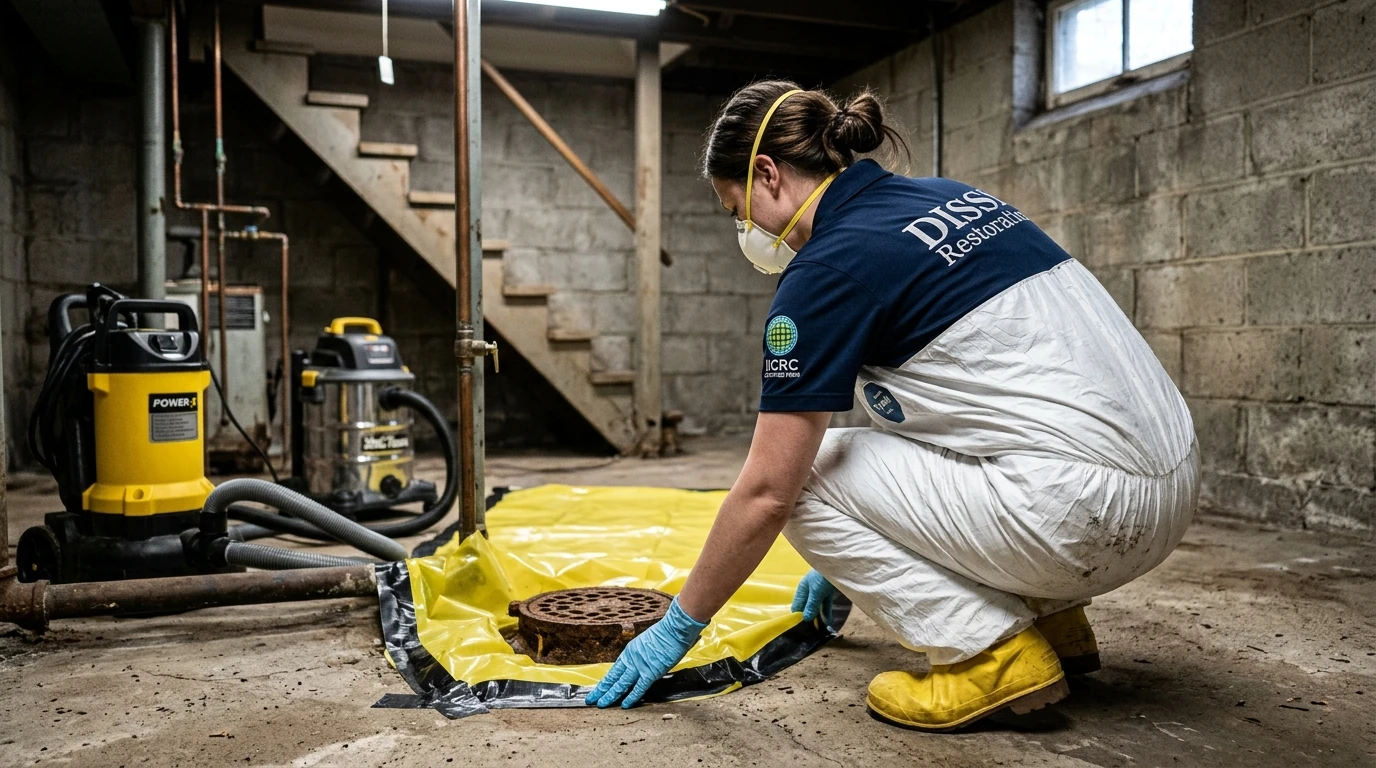
- Containment and PPE. The crew sets up containment barriers to keep contamination from spreading to unaffected rooms and suits up in gloves, boot covers, and respirators before entering the space.
- Extraction. Standing sewage and water get pumped and extracted out, usually with truck-mounted or portable extraction equipment built for contaminated water.
- Removal of affected porous materials. Carpet, pad, drywall up to the waterline, and any saturated insulation or subfloor get cut out and bagged for disposal, following IICRC S500 guidance on Category 3 water.
- Cleaning and antimicrobial application. Remaining structural surfaces get cleaned and treated with an EPA-registered antimicrobial to address bacteria left behind.
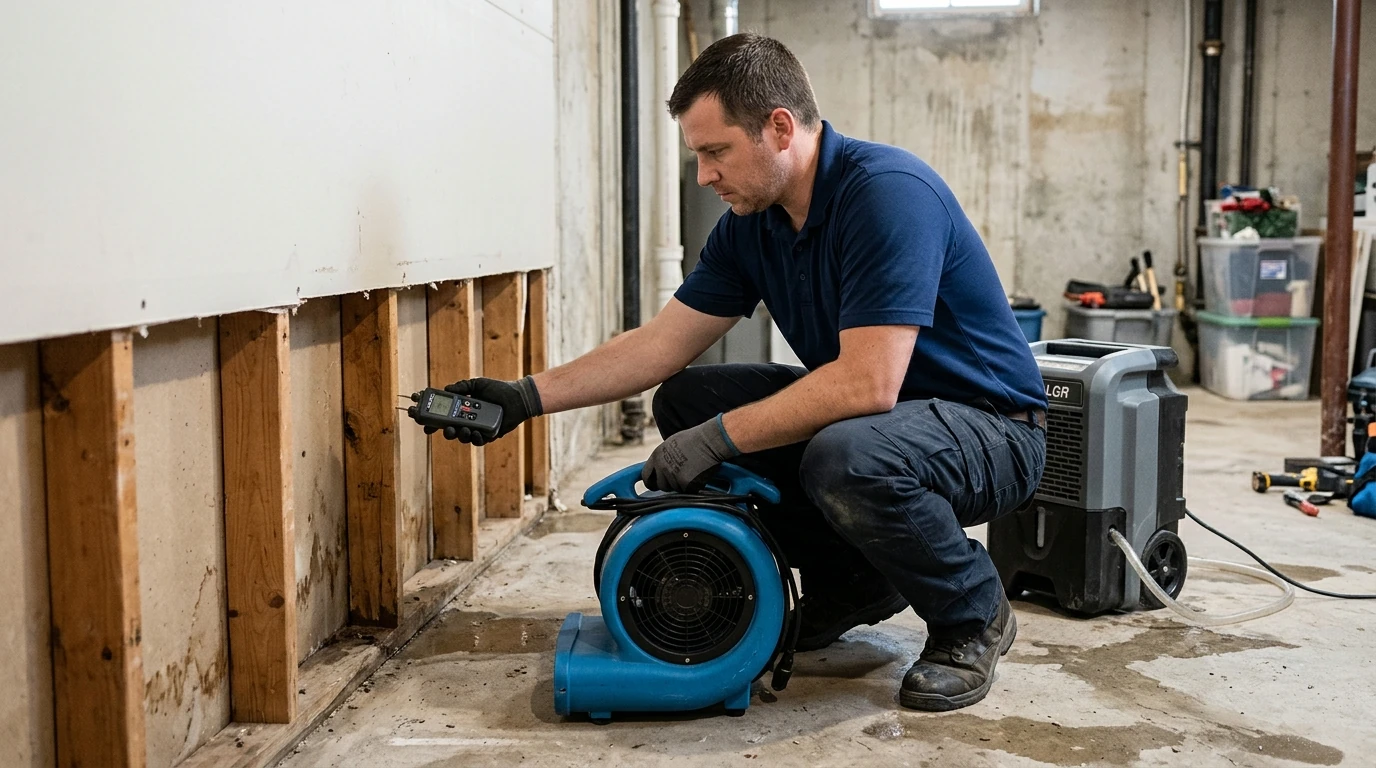
- Drying. Air movers and dehumidifiers run until moisture readings in the remaining materials come back to a dry standard, which is monitored with a moisture meter, not guessed at.
- Odor treatment and rebuild. Lingering odor gets addressed before any reconstruction starts, and drywall, flooring, and trim get rebuilt to match the space.
For homes with lingering smell after cleanup, odor removal is a separate step some companies bundle in and others treat as an add-on, worth asking about up front.
Who should you call for a sewage backup in Farrell?
Call a licensed restoration company with IICRC-certified technicians, not a general cleaning service, because Category 3 water needs specific containment, PPE, and material-removal protocols that a standard cleanup crew isn’t trained for. DISS Restoration, based in Farrell, handles sewage backup cleanup under the IICRC S500 standard and can walk a basement and give you a written scope before any work starts.
Before anyone arrives, stay out of the affected area, shut off water use in the house if the backup is from the main line, and avoid running a wet/dry vac on raw sewage yourself; it aerosolizes contaminants that are better handled with proper extraction equipment and PPE. If the backup is paired with broader flooding, our basement flooding cleanup page covers what that combined scope typically looks like, and our deeper breakdown of the sewage damage restoration process walks through timelines in more detail.
A sewage backup in a Farrell basement is not a DIY weekend project. The combination of contamination risk, aging lateral lines common to the area, and the real chance of hidden bacteria behind drywall is why this is one job worth getting a professional scope on before you touch anything.
About DISS Restoration
This guide was written with the DISS Restoration team, an IICRC Certified Firm based in Farrell, PA, operating since 2021. Their technicians hold IICRC WRT and ASD credentials and handle water, sewage, and related restoration work across Farrell, Sharon, Hermitage, and the broader Mercer County and Mahoning Valley region. DISS Restoration is licensed and insured and operates on a 24/7 basis for emergency calls.
Need help now? Call DISS Restoration at (724) 981-1441.