
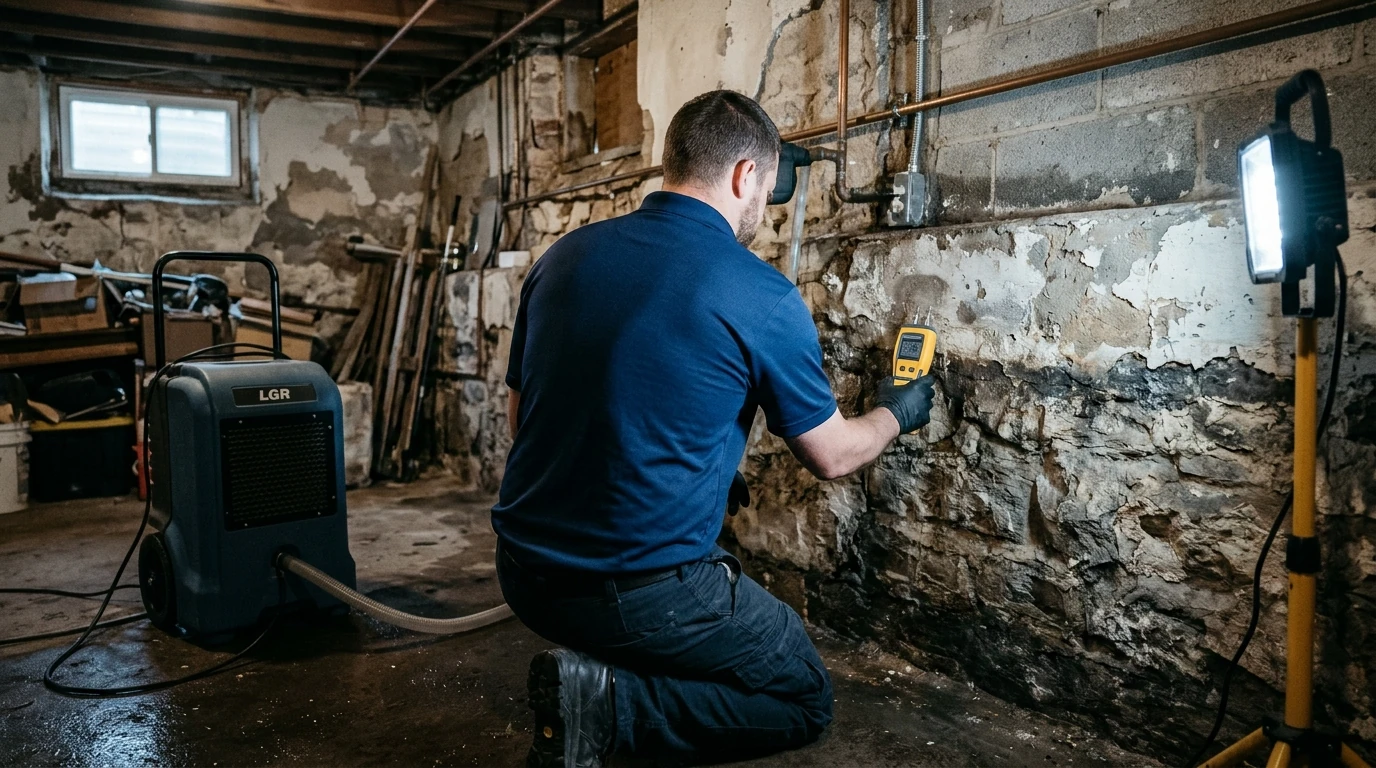
TL;DR: In Farrell, PA, water damage restoration typically costs between $1,300 for a single contained room with clean water and $15,000 or more for a multi-room sewage or black-water loss. The biggest cost drivers are the water category (clean, gray, or black), how many square feet are affected, and whether flooring or drywall has to come out. An inspection, not a phone call, is what gets you an actual number.
If a pipe just split in your basement, or the Shenango River pushed groundwater through an old foundation wall, you’re probably staring at standing water right now and wondering what this is going to run you before you even call anyone. Fair question. The honest answer is a range, not a single figure, because two “water damage” jobs in the same Mercer County neighborhood can cost very different amounts depending on how contaminated the water is and how long it sat before someone started drying.
How Much Does Water Damage Restoration Cost in Farrell, PA?
Most Farrell homeowners pay somewhere between $1,300 and $7,500 for a typical residential water loss, with larger or more contaminated losses running $10,000 to $15,000 or higher. The low end covers a single room with clean, sudden water and no flooring removal. The high end covers multi-room losses involving sewage, extended drying, or structural rebuild.
These are industry-typical ranges, not a quote. A written scope, built from an on-site moisture inspection, is what determines the real number for your home.
| Scenario | Typical Cost Range |
|---|---|
| Single room, Category 1 clean water, carpet dried in place | $1,300 - $3,200 |
| Water heater or appliance failure, contained to one area | $1,500 - $4,000 |
| Category 2 gray water, multiple rooms (washing machine discharge, groundwater seepage) | $3,500 - $7,500 |
| Basement flooding with flooring and drywall removal | $4,000 - $10,000 |
| Category 3 black water / sewage backup | $7,000 - $15,000+ |
| Whole-floor loss with structural drying and rebuild | $10,000 - $25,000+ |
What Drives Water Damage Restoration Pricing?
Three things move the number more than anything else: water category, square footage affected, and response time. A loss caught in hour one costs less than the same loss discovered three days later.
Water category matters because it determines whether materials get dried or removed. Clean water (Category 1) from a supply line or water heater can often be dried in place. Gray water (Category 2), like washing machine discharge or groundwater pushing through a foundation, usually means more aggressive cleaning and sometimes carpet pad or baseboard removal. Black water (Category 3), which includes any sewer or drain backup from beyond the trap, sewage, or rising flood water, requires removing porous materials and treating the area with antimicrobials under IICRC S500 guidelines. You can read more about how categories and classes are assessed on the IICRC’s standards page.
Square footage and how many building layers got wet (subfloor, insulation, drywall, framing) also scale the price directly. A basement with exposed block foundation walls dries differently than a finished living room with carpet and drywall.
What Does Basement Water Damage Cost in Older Shenango Valley Homes?
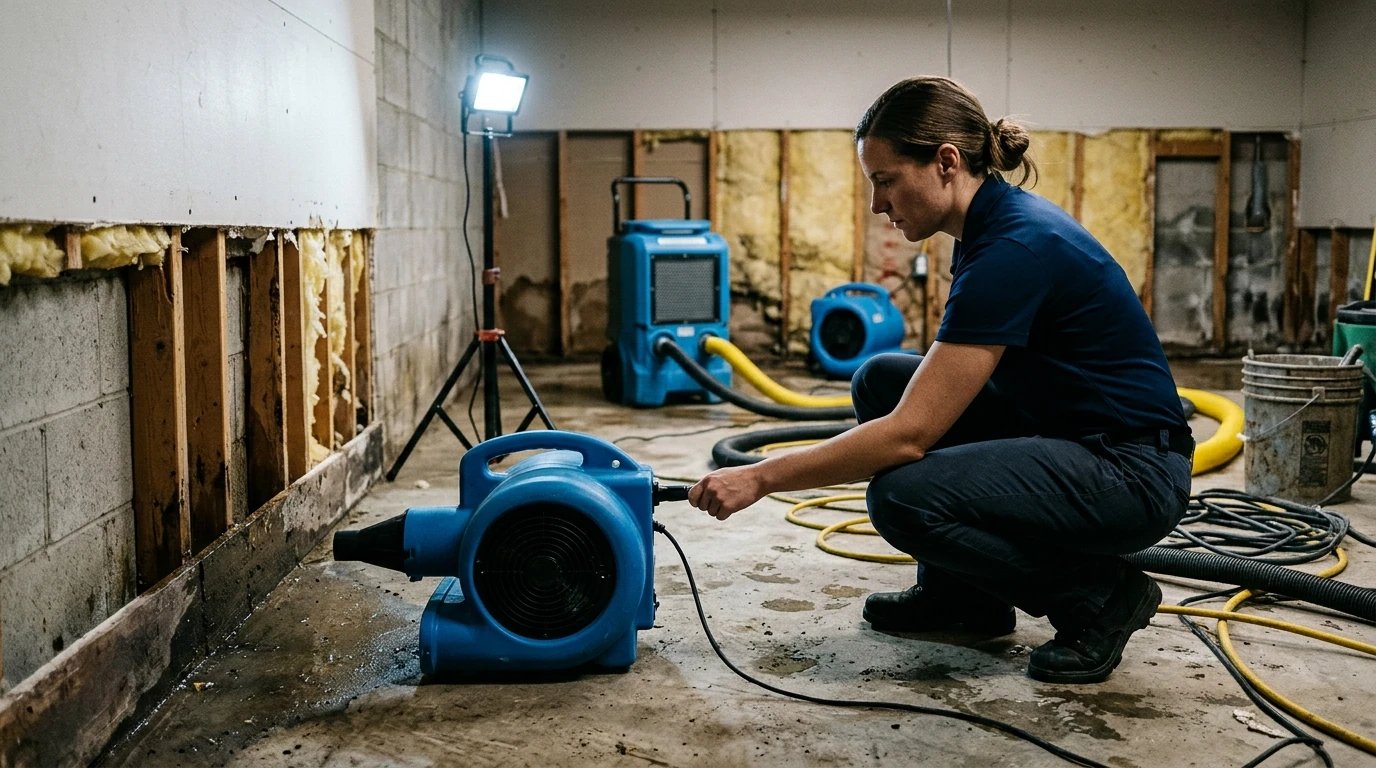
Basement losses in Farrell, Sharon, and Hermitage homes often run higher than a typical ground-floor room because of the age and construction of local housing stock. Many homes in this part of Mercer County were built with stone or block foundations, plaster walls, and limited below-grade waterproofing, which means water finds its way in through mortar joints and old window wells rather than a single clean source.
That kind of entry point is frequently groundwater, which the IICRC classifies as Category 2 gray water due to hydrostatic pressure pushing contaminants through soil and masonry. Older finished basements also tend to have carpet glued directly to concrete or paneling nailed to furring strips, both of which usually have to come out rather than dry in place. If your basement has flooded before, it’s worth reading our flooded basement cleanup guide for what the process and cost structure typically look like in homes like these.
How Long Does Drying Equipment Run, and Does That Affect Cost?
Structural drying typically runs 3 to 5 days, and most restoration pricing includes equipment rental for that window rather than charging per day. Extended drying time, which adds cost, usually comes from hidden moisture in wall cavities or subfloor that wasn’t caught on day one.
A standard setup for a single affected room is one or two air movers per 10-16 linear feet of wet wall, plus one low-grain-refrigerant (LGR) dehumidifier sized to the room’s cubic footage. Technicians check progress daily with a moisture meter and don’t pull equipment until wood framing and drywall read dry to IICRC benchmarks, not just “looks dry.” Pulling equipment too early is one of the most common reasons mold shows up two weeks later.
What Does Homeowners Insurance Usually Cover?
Most standard homeowners policies cover sudden, accidental water damage, like a burst pipe or a failed supply line, but they typically exclude gradual leaks, flooding, and sewer backups unless you’ve added a separate endorsement. That distinction matters a lot for what you’ll pay out of pocket.
A sump pump failure or a sewer backup is only covered when the policy has a specific water backup (sewer/sump) endorsement attached. Without it, that kind of loss is an out-of-pocket repair even though it feels just as sudden as a burst pipe. Surface flooding from a river or heavy rain pooling outside the home falls under flood insurance through the National Flood Insurance Program, not a standard homeowners policy. Our plain-English guide to insurance and water damage walks through this in more detail, and the Insurance Information Institute has a solid overview of what standard policies generally include.
Documenting the loss with photos before cleanup starts, and getting a written scope of work, protects your claim regardless of which category applies.
Why Does an Inspection Come Before a Firm Number?
An inspection comes first because the price depends on what’s actually wet, not what’s visibly damaged. Moisture readings on subfloor, wall cavities, and framing often reveal a bigger (or smaller) job than what’s sitting on the surface.
A technician uses a moisture meter and sometimes a thermal camera to map how far water traveled behind walls and under flooring before writing a scope. That scope becomes the basis for both the restoration estimate and the insurance claim documentation, so skipping it, or accepting a number sight unseen, usually costs more later.
If you’re dealing with active water in Farrell, Sharon, Hermitage, or anywhere in Mercer County right now, DISS Restoration offers 24/7 emergency response and can get a moisture assessment started the same day you call, which is the fastest path to an accurate number and a documented claim.
About DISS Restoration
This guide was prepared by TJ Stoian with the DISS Restoration team. DISS Restoration is an IICRC Certified Firm based in Farrell, PA, serving the Shenango Valley and Mercer County since 2021. Their technicians hold IICRC Water Damage Restoration (WRT) and Applied Structural Drying (ASD) certifications, and the company is licensed, insured, and available 24/7 for emergency water removal and basement flooding cleanup across the region.
Need help now? Call DISS Restoration at (724) 981-1441.