24/7 Emergency Water Removal & Cleanup in Farrell
24/7 emergency water removal & cleanup in Farrell and surrounding areas. IICRC-certified, insurance billing accepted. Call (724) 981-1441.
Water pooling on your floor right now? We answer 24/7, and getting a pump and extraction tools on standing water inside the first few hours is what decides whether you’re dealing with a drying job or a demolition job. Once water sits on hardwood, under carpet pad, or inside a finished basement wall, the clock that matters isn’t days, it’s hours: wicking into drywall, swelling of engineered flooring, and the window before bacteria and mold start colonizing wet cellulose all move faster than most homeowners expect.
What Emergency Water Removal & Cleanup actually involves
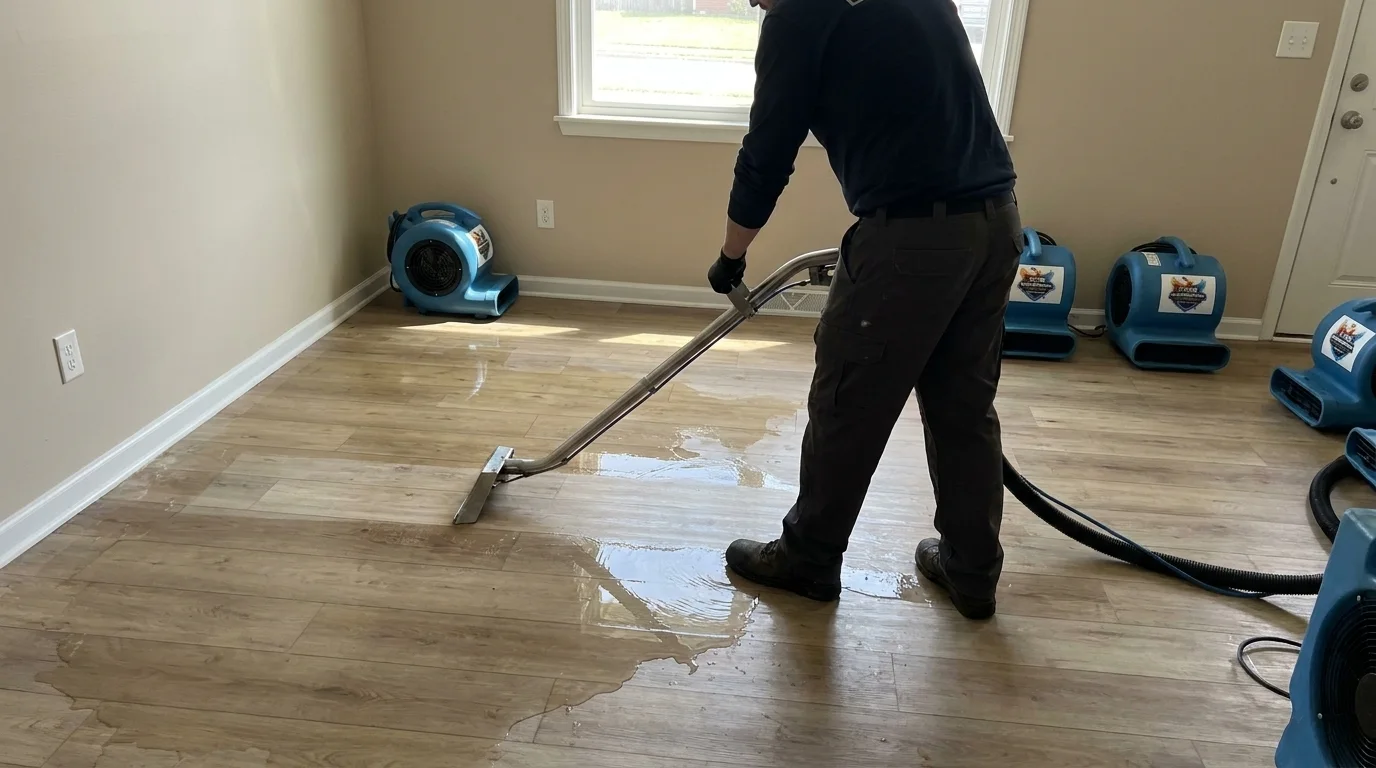
Emergency water removal is the physical extraction of water from a structure, submersible pumps and truck-mounted extractors for standing water, portable extractors for carpet and pad, and specialty tools for water trapped under hardwood or inside wall cavities. It’s distinct from drying. Extraction comes first and happens fast, pulling out bulk water before it migrates further into subfloor, baseboards, and framing. The equipment on site typically includes pumps rated for the volume of water present, moisture meters to map how far water has traveled behind visible surfaces, and in some cases weighted extraction tools that pull water out of hardwood seams without ripping up the flooring. On a typical residential call this phase runs a few hours, not days, but the window for getting it right is narrow.
Our process
- Source control and safety check. Before anything else, we confirm the water source is stopped or contained, and check for electrical hazards or structural risk from water weight on ceilings and floors.
- Water categorization. We identify whether the water is clean (Category 1), gray (Category 2, from appliances or sump backups), or black (Category 3, sewage or floodwater), since this determines what materials can be dried versus what has to be removed.
- Standing water extraction. Pumps and extractors remove bulk water from floors, carpet, and any pooled areas, starting with the deepest water and working outward.
- Sub-surface extraction. For hardwood, tile, or carpet pad, we use specialized extraction tools to pull water trapped beneath the visible surface, which is where most under-extraction mistakes happen.
- Moisture mapping and drying setup. Once bulk water is gone, we document moisture readings in affected materials and set up air movers and dehumidification equipment to begin structural drying, documented per the IICRC S500 standard.
What separates a good water removal response from a bad one
The most common mistake in rushed water removal is treating extraction as finished once the floor looks dry. Carpet pad holds water the carpet surface won’t show, and hardwood can read dry on top while the subfloor underneath stays saturated for days. A good response checks moisture levels in the materials, not just the visible surface, and keeps monitoring until readings confirm the structure is actually dry, not just until it looks dry to the eye.
Another gap shows up with Category 2 and 3 water. Gray and black water require different handling, including removal of porous materials that can’t be sanitized and documentation of what was removed and why, since this is exactly what insurance adjusters scrutinize on a claim. Operators who skip categorization or under-document contamination level create problems later when the claim is reviewed. Fast response matters too: water that sits for 24 to 48 hours before extraction begins has a meaningfully higher chance of secondary damage, including swollen subfloor and the start of microbial growth in wall cavities.
What does Emergency Water Removal & Cleanup cost?
Costs vary with the volume of water, how far it traveled into the structure, and the water category. A single wet room with clean water costs far less to address than a basement flood involving contaminated water and saturated drywall. DISS Restoration provides a written scope of work before any extraction begins, and every loss is different enough that an accurate number only comes after an on-site assessment.
| Scenario | Typical range |
|---|---|
| Single room, clean water, carpet only | $1,200 - $3,500 |
| Multiple rooms, clean water | $3,000 - $7,000 |
| Basement flood, Category 2 water | $4,000 - $10,000 |
| Category 3 (sewage/flood) water, partial structure | $7,000 - $15,000+ |
| Whole-structure flooding with material removal | $15,000 - $40,000+ |
Homeowners insurance typically covers sudden and accidental water damage, such as a burst pipe or failed appliance, but usually excludes gradual leaks or outside flooding without separate flood coverage, so it’s worth checking your policy’s specific language before assuming what’s covered.
Seasonal & regional considerations
Farrell and the surrounding Shenango Valley see a real freeze-thaw pattern each winter, and that’s when pipe bursts spike, frozen supply lines in uninsulated crawlspaces and exterior walls splitting open once temperatures swing back above freezing. Older housing stock in this area, much of it built with plumbing from decades before modern code, adds risk since galvanized and early copper lines are more prone to failure under freeze pressure. Spring thaw and heavy rain events bring a second wave of calls, often tied to sump pump failures and grading issues common in homes built before updated stormwater standards.
Service area
We respond to emergency water removal calls throughout Farrell and the surrounding Mercer County communities, including Sharon, Hermitage, and the greater Shenango Valley area.
Standing water doesn’t wait for a convenient time, and every hour it sits increases what has to be replaced instead of dried. Call (724) 981-1441 to schedule your emergency water extraction and get equipment on site before the damage spreads further into your home.
Services We Handle
- 24/7 Emergency Water Cleanup
- Standing Water Removal
Frequently Asked Questions
Does homeowners insurance cover emergency water removal and cleanup?
How is standing water different from the drying process that comes after?
Can water be fully extracted from hardwood floors without removing them?
What's the difference between Category 1, 2, and 3 water, and why does it matter for cleanup?
What should I do while waiting for emergency water removal to arrive?
Looking for the best emergency water removal & cleanup company in Farrell?
DISS Restoration provides emergency water removal & cleanup in Farrell, PA and the surrounding area, and has served local property owners since 2021. Customers rate us 4.6 out of 5 stars across 87 Google reviews. We answer calls 24/7 — call (724) 981-1441 for immediate help.
Need Emergency Water Removal & Cleanup now?
We respond 24/7 across Farrell and surrounding PA cities.
Related Coverage
- Our Restoration Services
- 24/7 Emergency Flood Damage Restoration in Farrell
- Mold Remediation in Farrell
- Contact DISS Restoration
- 24/7 Emergency Water Removal & Cleanup in Austintown
- 24/7 Emergency Water Removal & Cleanup in Boardman
- 24/7 Emergency Water Removal & Cleanup in Campbell
- 24/7 Emergency Water Removal & Cleanup in Canfield
- 24/7 Emergency Water Removal & Cleanup in Girard
- 24/7 Emergency Water Removal & Cleanup in Hilltop
- 24/7 Emergency Water Removal & Cleanup in Hubbard
- 24/7 Emergency Water Removal & Cleanup in Lowellville
- 24/7 Emergency Water Removal & Cleanup in Niles
- 24/7 Emergency Water Removal & Cleanup in Struthers
- 24/7 Emergency Water Removal & Cleanup in Warren
- 24/7 Emergency Water Removal & Cleanup in Youngstown
- 24/7 Emergency Water Damage Restoration in Farrell