In Pennsylvania, water damage restoration typically costs $1,200 to $7,500 for a contained residential loss, and $7,000 to $15,000 or more when sewage, flooding, or extensive structural drying is involved. The biggest swing factor isn’t square footage, it’s water category: clean water from a burst supply line costs far less to remediate than water carrying sewage or flood contamination.
If you’re standing in a wet basement or living room in Mercer County or the Shenango Valley right now trying to get a number before you call anyone, here’s the real pricing picture, what moves it, and what your homeowners policy is likely to pay for.
What Does Water Damage Restoration Cost in Pennsylvania?
| Scenario | Typical Cost Range |
|---|---|
| Water extraction only, under 500 sq ft, clean water | $400 - $1,000 |
| Minor water damage, single room, clean water (Cat 1) | $1,200 - $3,500 |
| Moderate damage, multiple rooms, drywall and flooring removal | $3,500 - $7,500 |
| Basement flooding with gray or black water contamination | $5,000 - $12,000+ |
| Sewage backup cleanup (Category 3) | $7,000 - $15,000+ |
| Structural drying only, hardwood/plaster/concrete (Class 4) | $1,500 - $4,000 |
These are typical industry ranges for Pennsylvania, not a quote. Every loss is different, and a written scope after an on-site inspection is the only way to know what your specific job will cost.
What Factors Actually Move the Price?
The water’s category and the amount of material that has to be removed, not demolished and dried, drive most of the cost difference between a $1,500 job and a $10,000 one.
Water category. Under the ANSI/IICRC S500 standard, Category 1 is clean water from a sanitary source like a supply line. Category 2 (gray water) includes washing machine discharge or a toilet overflow with urine but no feces. Category 3 (black water) includes any sewer or drain backup from beyond the trap, a toilet overflow with feces, and flood or storm surge water. Category 2 and 3 losses usually require removing porous materials like carpet pad and drywall rather than drying them in place. Category 3 losses additionally require antimicrobial treatment and PPE, which adds labor and disposal cost.
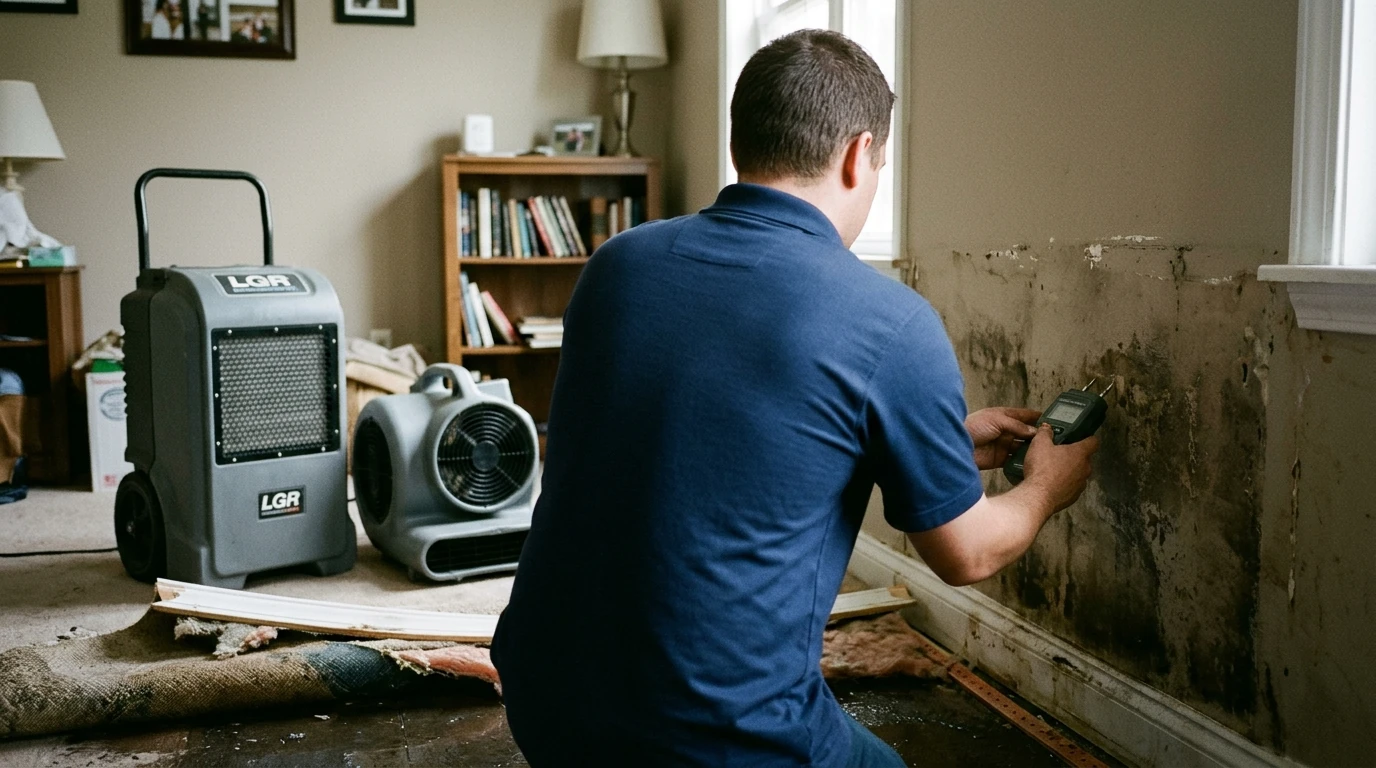
Square footage and materials affected. A single bathroom leak costs far less than water that traveled under hardwood flooring across a first floor. Hardwood, plaster, and concrete are Class 4 materials under S500 and need specialty low-grain-refinement (LGR) drying equipment run longer, which adds to the bill.
How fast the water gets stopped and extracted. Mold can begin growing on wet materials within 24 to 48 hours, according to the EPA. A delayed response often turns a drying job into a drying-plus-mold-remediation job.
Code upgrades during repair. If drywall, insulation, or electrical has to be brought up to current code during reconstruction, that’s a separate line item from the drying and mitigation cost.
Will My Homeowners Insurance Cover It?
Most standard homeowners policies cover sudden, accidental water damage, like a pipe that bursts or an appliance hose that suddenly fails, but they exclude gradual leaks, wear and tear, and poor maintenance, according to the Insurance Information Institute.
Two common gaps catch people off guard. Flood damage, meaning surface water, overflowing creeks, or storm surge, is never covered by a standard homeowners policy; it requires a separate flood policy through the National Flood Insurance Program or a private flood carrier. And sewer or drain backups, along with sump pump failure, are only covered if you’ve added a water backup endorsement; without it, a backed-up floor drain is typically an out-of-pocket repair.
Documentation protects your claim either way. Photograph the damage before anything is moved, keep every receipt, and get a written scope of work from whoever handles the mitigation. Our related guide on whether homeowners insurance covers water damage walks through policy language in more detail.
What Does the Restoration Process Actually Involve?
A standard water damage job moves through five phases, and understanding them explains where the cost comes from.
- Inspection and moisture mapping. A technician uses a moisture meter and sometimes a thermal camera to map how far the water traveled, including behind walls and under flooring.
- Water extraction. Truck-mounted or portable extractors pull standing water and saturated carpet pad before drying begins.
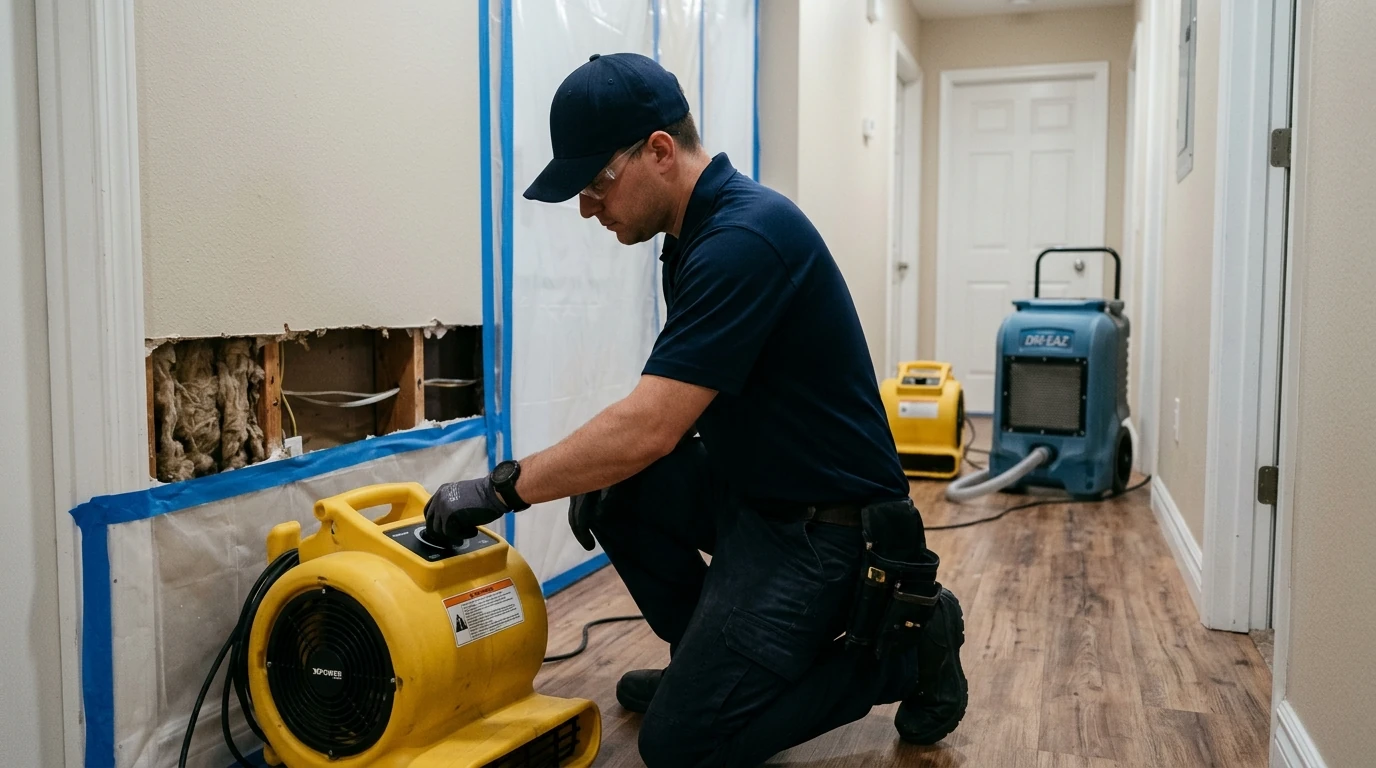
- Controlled demolition. Any material that can’t be dried in place (soaked drywall below the flood line, ruined insulation, contaminated carpet) gets removed.
- Structural drying. Air movers and LGR dehumidifiers run for several days, with daily moisture readings to confirm materials are drying on schedule and to IICRC S500 targets.
- Cleaning, sanitizing, and reconstruction. Affected surfaces are cleaned and treated, and any removed materials are replaced to restore the space.
For the first 24 hours specifically, our guide on what to do after water damage covers the steps before a crew ever arrives.
Who Should You Call First?
Call a restoration company with 24/7 emergency water removal, not a general handyman, the moment you find standing water, because every hour it sits raises both the mold risk and the final bill. DISS Restoration is an IICRC Certified Firm serving Farrell and the surrounding Shenango Valley with 24/7 emergency response, and can provide a written scope before any work begins.
Getting an on-site assessment costs nothing compared to guessing at a number over the phone, and it’s the only way to know which row in the table above actually applies to your home.
Call DISS Restoration at (724) 981-1441 to schedule a water damage assessment, or start with a look at the water damage restoration service page for what’s included.
About DISS Restoration
DISS Restoration is an IICRC Certified Firm serving Farrell, Pennsylvania and the surrounding Shenango Valley and Mahoning Valley since 2021, offering 24/7 emergency response. Their crews hold IICRC credentials in water restoration (WRT), structural drying (ASD), fire and smoke (FSRT), and mold remediation (AMRT), and the company is licensed and insured for residential and commercial restoration work.