
Asbestos Abatement in Farrell
24/7 asbestos abatement in Farrell and surrounding areas. IICRC-certified, insurance billing accepted. Call (724) 981-1441.
A popcorn ceiling that’s never been tested isn’t automatically a problem, but once you start scraping, drilling, or renovating around it, it can become one fast. Suspect materials in pre-1980s construction, textured ceilings, vinyl floor tile, old pipe wrap, and blown-in insulation, all carry a chance of asbestos content. The only way to know is testing before disturbance, and the only way to remove it safely is controlled abatement, not a weekend project with a dust mask from the hardware store.
What Asbestos Abatement actually involves
Asbestos fibers are a hazard specifically because they’re invisible once airborne and can be inhaled without any immediate symptom. The material itself, whether it’s a textured ceiling coating, 9x9 floor tile, pipe insulation, or old transite siding, stays stable as long as it’s intact and undisturbed. The danger starts the moment it’s cut, sanded, scraped, or crushed, which is exactly what happens during a typical renovation, ceiling scrape, or flooring tear-out.
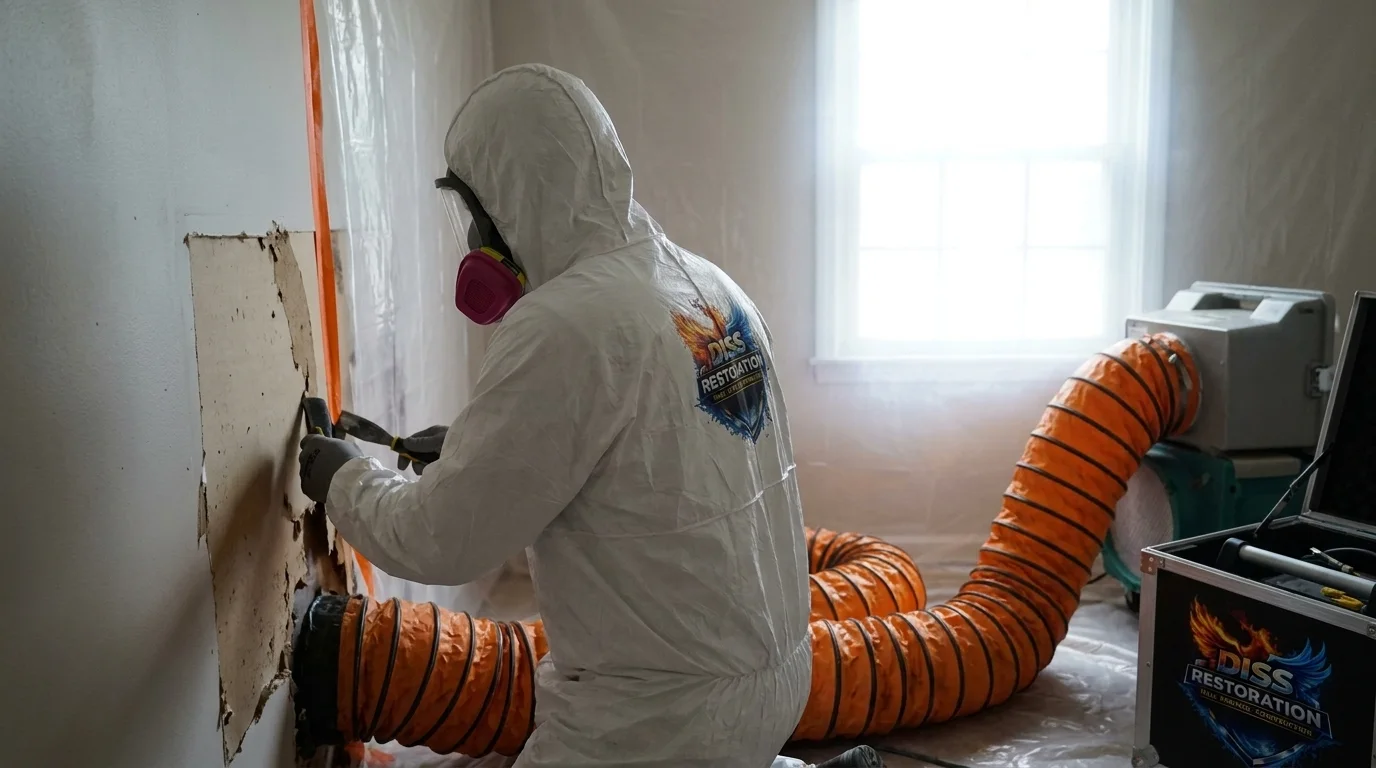
A proper abatement job starts with sampling, not demolition. Material gets tested through an accredited lab before anyone touches it with a tool. If results come back positive, the work area gets sealed off with polyethylene sheeting, negative air machines pull air through HEPA filtration to keep the containment zone under negative pressure relative to the rest of the house, and removal happens using wet methods, amended water misted onto the material to keep fibers from going airborne while it’s being cut or scraped loose. Depending on scope, a single-room popcorn ceiling job can run a day or two; whole-house pipe insulation or flooring across multiple rooms takes longer, driven by square footage and containment complexity, not a fixed schedule.
Our process
- Inspection and sampling. Suspect material is identified, sampled, and sent to a lab for PLM testing before any work plan is set. We don’t guess, and we don’t remove first and test later.
- Containment build. Poly sheeting, taped seams, and a decon chamber for entry and exit isolate the work area. Negative air machines establish and maintain pressure differential for the duration of the job.
- Controlled removal. Material is wetted with amended water and removed using methods that minimize fiber release, not dry scraping or demolition tools.
- HEPA cleanup and air monitoring. Surfaces are HEPA-vacuumed, containment air is monitored during active work, and waste is double-bagged, labeled, and logged for disposal under a manifest.
- Clearance. Before containment comes down and the space is reoccupied, final air clearance confirms fiber levels are back to acceptable background.
What separates a good asbestos response from a bad one
The mistakes that cause real exposure almost always trace back to skipping step one: removing or disturbing material without testing it first, because it “looked fine” or the house “wasn’t that old.” Dry removal is the next most common failure, scraping a ceiling or prying up tile without wetting it first sends fibers into the air that settle on every surface in the house, not just the work area.
Other shortcuts that show up in bad jobs: skipping the decon chamber so contaminated clothing and tools track fibers outside containment, running without negative air so dust migrates into adjacent rooms through HVAC returns or gaps under doors, and disposing of waste without a proper manifest, which creates a paper trail problem if a future buyer, insurer, or regulator asks for documentation. A good abatement crew treats air monitoring and clearance testing as non-negotiable, not optional add-ons, because those are the records that prove the air was actually safe before anyone moved back in.
What does Asbestos Abatement cost?
Cost depends heavily on what material is involved, how much square footage is affected, and how complex the containment needs to be, a small ceiling patch is a different job than whole-house pipe insulation removal. These figures are typical industry ranges, not a quote; every job gets a written scope from DISS Restoration before work begins so you know exactly what’s being removed and why.
| Scenario | Typical range |
|---|---|
| Single-room popcorn ceiling testing and removal | $1,200 - $3,000 |
| Vinyl floor tile removal (per room) | $900 - $2,500 |
| Pipe or duct insulation wrap removal | $1,500 - $4,500 |
| Whole-house asbestos inspection and testing only | $400 - $900 |
| Multi-room or whole-house abatement with full containment | $5,000 - $15,000+ |
Homeowners insurance typically does not cover asbestos abatement tied to routine renovation or aging materials, since it’s treated as a maintenance issue rather than sudden damage; coverage is more likely if asbestos-containing material was disturbed by a covered event like a fire or storm, and we can help document that connection for a claim.
Seasonal & regional considerations
Much of Farrell’s housing stock dates to the early-to-mid 20th century, when the mills were running at full capacity and homes went up fast to house workers. That era of construction commonly used asbestos in ceiling texture, floor tile adhesive, boiler and pipe insulation, and siding, materials that are still intact in plenty of basements and ceilings across Mercer County today. Renovation season, spring and fall when homeowners tackle flooring and ceiling projects, is when undiagnosed asbestos most often gets disturbed by accident.
Service area
DISS Restoration handles asbestos testing and abatement from our base in Farrell, PA, serving homeowners and property managers throughout the surrounding Shenango Valley communities.
If you’re planning a renovation in a home built before 1980, or you’ve already started and hit something that doesn’t look right, stop and get it tested before you go any further. Call (724) 981-1441 to schedule an asbestos inspection.
Services We Handle
- Asbestos & Lead Abatement
- Lead Abatement
Frequently Asked Questions
Does homeowners insurance cover asbestos abatement?
How do I know if my popcorn ceiling has asbestos?
Is it safe to stay in the house during abatement?
What happens to the material after it's removed?
Can I just remove a small area of asbestos tile myself?
Looking for the best asbestos abatement company in Farrell?
DISS Restoration provides asbestos abatement in Farrell, PA and the surrounding area, and has served local property owners since 2021. Customers rate us 4.6 out of 5 stars across 87 Google reviews. We answer calls 24/7 — call (724) 981-1441 for immediate help.
Need Asbestos Abatement now?
We respond 24/7 across Farrell and surrounding PA cities.
Related Coverage
- Our Restoration Services
- Contact DISS Restoration
- Asbestos Abatement in Austintown
- Asbestos Abatement in Boardman
- Asbestos Abatement in Campbell
- Asbestos Abatement in Canfield
- Asbestos Abatement in Girard
- Asbestos Abatement in Hilltop
- Asbestos Abatement in Hubbard
- Asbestos Abatement in Lowellville
- Asbestos Abatement in McDonald
- Asbestos Abatement in McKinley Heights
- Asbestos Abatement in New Castle
- Asbestos Abatement in Niles