
TL;DR: If mold is growing in a Farrell basement, the first call depends on whether water is still coming in. A plumber or restoration crew stops the water source and dries the space before mold has a chance to spread past the 24 to 48 hour window it needs to take hold. A certified mold remediation company handles growth larger than about 10 square feet. An independent tester only comes in afterward, to confirm the air is clear before you move back in.
You just found mold creeping up the block foundation wall behind the water heater, or a home inspector flagged it before a sale closes. Either way, you don’t need a lecture on what mold is, you need to know which phone number to dial. For mold in your basement in Farrell, PA, call DISS Restoration at (724) 981-1441; the crew holds IICRC AMRT certification for mold remediation and WRT certification for the water damage that usually causes it, and takes calls 24/7. If water is still actively feeding the mold, that same call gets someone moving on the leak first, because stopping the water matters more than scrubbing the wall.
Do you call a plumber, a water damage company, or a mold remediation company first?
Call whoever can stop the water source immediately, then worry about the mold. Mold can begin growing on wet drywall or framing within 24 to 48 hours, so the clock that matters started when the water did, not when you noticed the growth.
If a supply line, water heater, or sump pump is still leaking, a plumber or a water damage restoration crew needs to shut it off and start extraction before anyone talks about remediation. If the water already stopped (a storm backup that’s since drained, a sump pump that failed overnight and has been replaced), you can go straight to a mold assessment.
A company that handles both emergency water removal and mold remediation under one roof is usually simpler to coordinate, since the same technician who dries the basement can flag visible growth and scope the remediation in the same visit. Our post on who to call for a flooded basement covers that first call in more detail if the water hasn’t been addressed yet.
When does basement mold need a remediation company instead of a DIY fix?
Basement mold needs a professional crew once visible growth covers more than about 10 square feet, roughly a 3-by-3-foot patch, the point at which the EPA recommends moving past a soap-and-water cleanup.
A few other situations push it past DIY no matter the size: mold that’s grown into porous material like drywall, carpet padding, or insulation (those usually need to be removed, not cleaned); mold that followed a sewer backup or any water that touched sewage, which is always Category 3, or black water, under the IICRC S500 standard and needs antimicrobial treatment handled through sewage cleanup; a musty smell with no visible growth, which often means mold is hiding behind a wall or under flooring; or anyone in the home with asthma or a mold allergy, where waiting isn’t worth the risk.
If you’re not sure which category you’re looking at, our guide to signs of hidden mold walks through what to check before you call anyone.
Mold inspector vs mold remediation company: what’s the difference?
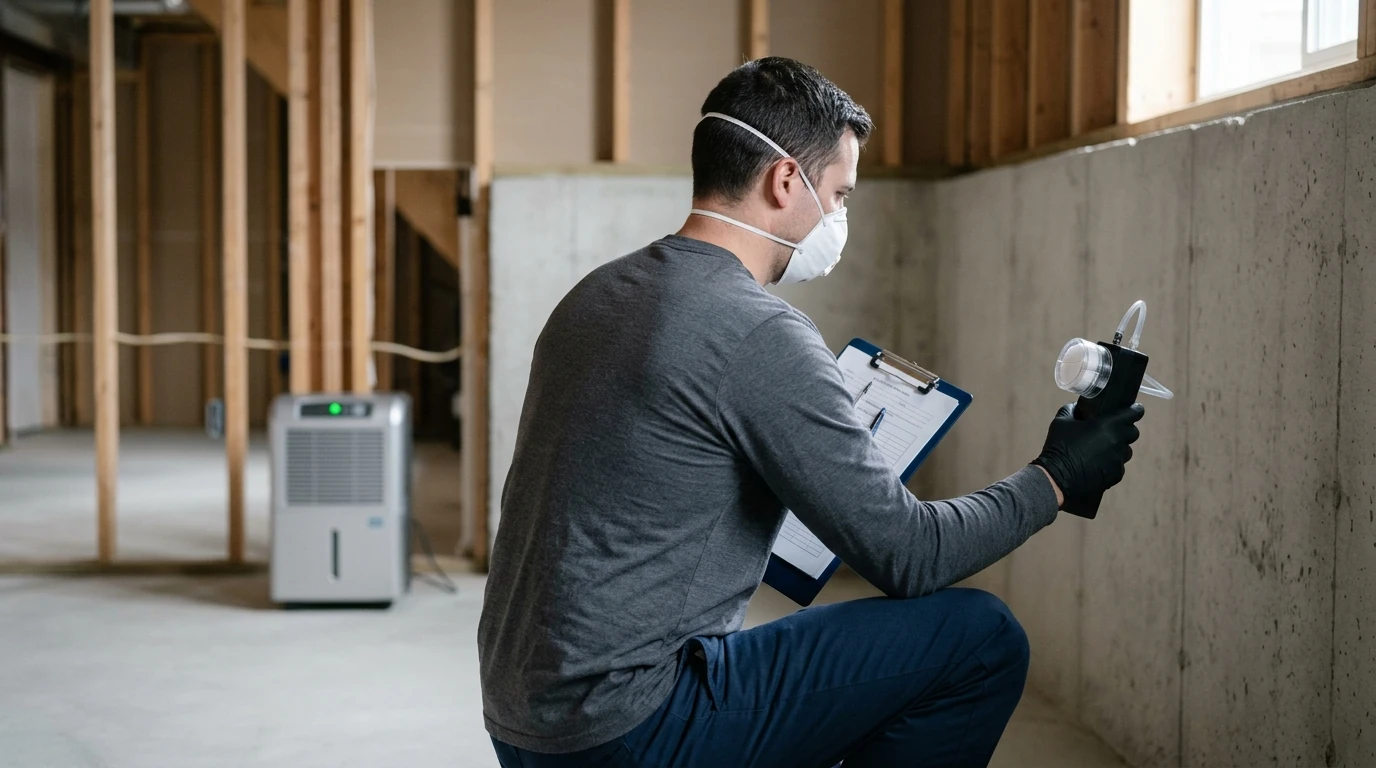
A mold inspector tests air or surface samples to confirm mold is present and estimate how much; a remediation company physically removes the growth and dries the structure. You need an inspector mainly for clearance testing after the work, not before it, if the growth is already visible.
If you can see mold, a test won’t change what happens next, it still needs to come out under containment, following the IICRC S520 standard. An independent third-party tester, one not employed by the remediation company doing the work, is most useful afterward, confirming spore counts have returned to a normal range before you move furniture back into the space.
Is basement mold dangerous?
Basement mold is more of a health concern for sensitive groups, people with asthma, mold allergies, or compromised immune systems, than an acute hazard for everyone in the house, but it’s still worth removing rather than monitoring.
There’s no federal standard for a “safe” level of mold in a home, so nobody can tell you a number that makes it fine to leave alone. The practical answer is the same one above: small, contained, visible mold can often be handled yourself with gloves and a mask; anything larger, recurring, or tied to a Category 2 or 3 water event belongs to a remediation crew.
What does basement mold remediation cost, and what happens on the call?
Basement mold remediation in the Farrell area typically runs from a few hundred dollars for a small, contained patch to several thousand for a job that requires removing drywall, insulation, or flooring. Our mold remediation cost breakdown covers the ranges by scope in more detail.
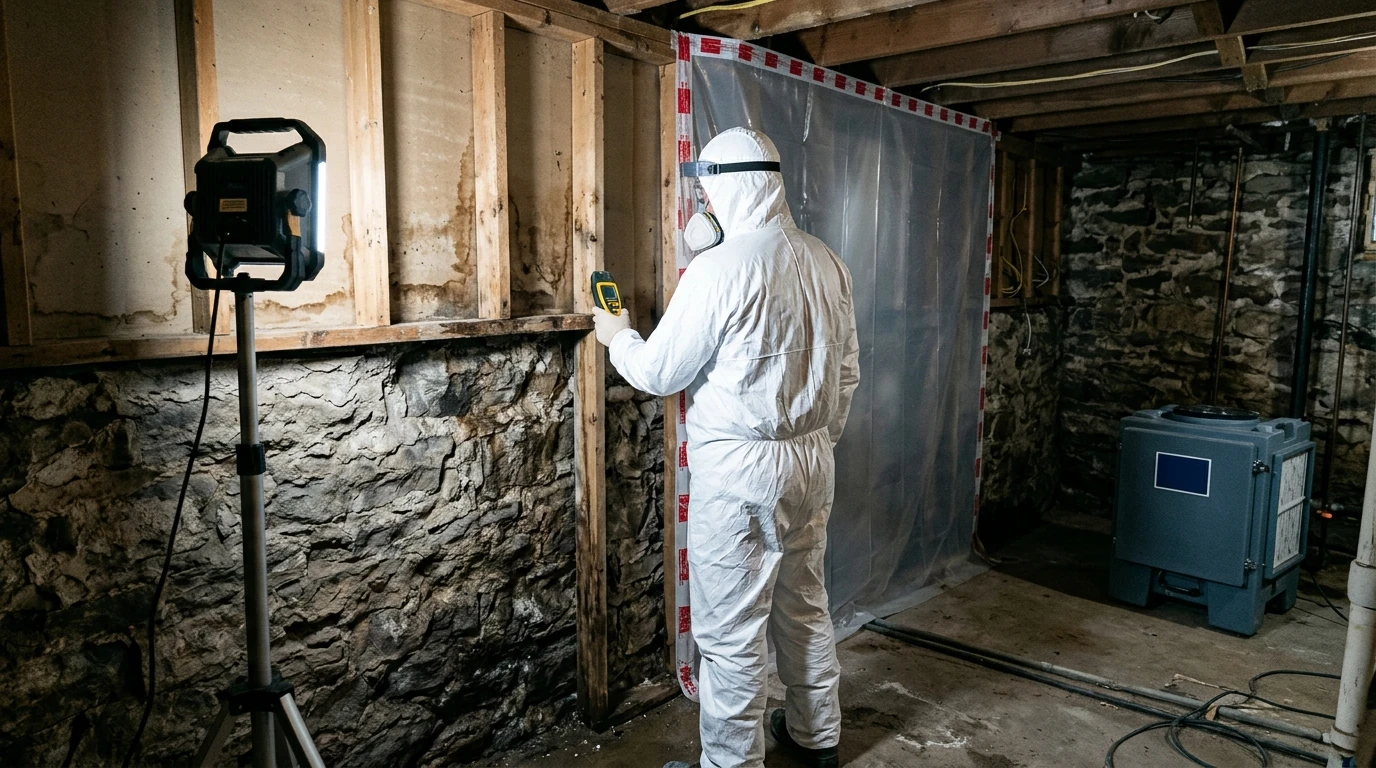
On the actual visit, expect a technician to photograph the damage for your records, set up poly sheeting containment before disturbing anything, run a HEPA air scrubber during removal, and write a scope of work before any demolition starts. Homeowners insurance sometimes covers the mold removal if it followed a sudden, covered loss like a burst pipe, but it’s typically excluded when the moisture came from a gradual leak or an uninsured flood, so check what your policy actually covers before assuming.
If you’re staring at a damp patch on the basement wall right now, the fastest useful step is getting someone to look at it in person rather than guessing from a photo. Schedule a mold assessment at (724) 981-1441 and have the source of the moisture confirmed before anything gets cleaned or covered up.